












Nanoassemblies formed from hydrophilic block copolymers and multivalent ions
文献情報
出版日
2004-03-03
DOI
10.1039/B314521M
インパクトファクター
3.676
著者
Nicolas Sanson, Frédéric Bouyer, Corine Gérardin, Martin In
原文を見る
要旨
We recently reported on the controlled formation of highly stable metal hydroxide nanoparticles. Growth control and stabilization of particles were achieved by performing hydrolysis and polycondensation reactions of polymer-complexed metal cations, the polymers being double hydrophilic block copolymers (DHBCs). The present paper focuses on the characterization of the intermediate species in the formation process, namely the mixture of multivalent metal cations plus the oppositely charged polyelectrolyte–neutral block copolymers. Complexation of metal cations by the anionic block of the DHBCs leads to the spontaneous formation of colloidal objects. Small angle neutron scattering experiments show that the aggregates exhibit a well defined core–corona architecture: the core is compact and homogeneous while the diffuse corona is constituted of polymer segments in a good solvent. The core formation is due to the water insoluble metal cation–polyacrylate complex while the corona is constituted of the water soluble neutral polymer blocks. Cryo-TEM images allowed the revelation of well-dispersed inorganic-rich domains. The presence of the longer neutral blocks prevents macroscopic phase separation of the complex and leads to the formation of hybrid micellar aggregates.
関連文献
Synthesis of protectin D1 analogs: novel pro-resolution and radiotracer agents
J. E. Tungen, M. Aursnes, S. Ramon, R. A. Colas, C. N. Serhan, S. Nuruddin, F. Willoch, T. V. Hansen
2018-08-31
Paper
DOI: 10.1039/C8OB01232F
Synthesis and evaluation of N,S-compounds as chiral ligands for transfer hydrogenation of acetophenone
Jenny K. Ekegren, Peter Roth, Klas Källström, Tibor Tarnai, Pher G. Andersson
2002-12-09
Paper
DOI: 10.1039/B208907F
Copper-catalyzed oxidative multicomponent reaction: synthesis of imidazo fused heterocycles with molecular oxygen
Xianwei Li, Tianzhang Wang, Yu-Jing Lu, Shaomin Ji, Yanping Huo, Bifu Liu
2018-08-02
Paper
DOI: 10.1039/C8OB01532E
Preparation of polysubstituted dihydrofurans through a PhI(OAc)2-promoted haloenolcyclization of olefinic dicarbonyl compounds
Ji Liu, Qing-Yun Liu, Xing-Xiao Fang, Gong-Qing Liu, Yong Ling
2018-09-24
Paper
DOI: 10.1039/C8OB02161A
Assignment of absolute configuration of a chiral phenyl-substituted dihydrofuroangelicin
Gennaro Pescitelli, Nina Berova, Tom L. Xiao, Roman V. Rozhkov, Richard C. Larock, Daniel W. Armstrong
2002-12-03
Paper
DOI: 10.1039/B207652G
Optimized synthesis and indium complex formation with the bifunctional chelator NODIA-Me
Jason P. Holland, Harald Scherer, Stephan Maus, Tobias Stemler, Hendrik Bohnenberger, Samer Ezziddin, Philipp Kurz
2018-09-24
Paper
DOI: 10.1039/C8OB01981A
Synthesis of novel chiral phosphinocyrhetrenyloxazoline ligands and their application in asymmetric catalysis
Carsten Bolm, Li Xiao, Martin Kesselgruber
2002-11-26
Paper
DOI: 10.1039/B208345K
Metal-free synthesis of N-sulfonylformamidines via skeletal reconstruction of sulfonyl oximonitriles
Feng Li, Ziyan Wu, Jingjing Wang, Siyuan Zhang, Jiaxin Yu, Zhen Yuan, Jingya Liu, Renzeng Shen, Yao Zhou
2021-12-02
Research Article
DOI: 10.1039/D1QO01665B
Dirhodium(ii)/P(t-Bu)3 catalyzed tandem reaction of α,β-unsaturated aldehydes with arylboronic acids
Ziling Ma, Yuanhua Wang
2018-09-20
Paper
DOI: 10.1039/C8OB01997E
こちらもおすすめ
化合物よくある質問
3-(2-オキサプロピル)ベンzoic酸はどのように合成されますか?
3-(2-オキサプロピル)ベンzoic酸は、ベンzoic酸とプロパノ酸をヒドロキシム化合物として反応させて生成します。具体的には、ベンzoic酸とプロパノ酸を反...
205927-63-53-(2-Oxopropyl)benzo...
114873-01-73-Fluoro-N-{[(2-meth...
化合物よくある質問
4-メチル-4-ピペリジニル-1-ピロリドイン甲酸の主な用途は何ですか?
4-メチル-4-ピペリジニル-1-ピロリドイン甲酸は、主に医薬品の合成材料や研究用物質として使用されます。さらに、一部の薬理学的研究にも応用されています。
885523-47-7(4-Methyl-4-piperidi...
化合物よくある質問
Biotin-PEG3-oxyamine HCl塩について、適切な化合物名称に適用される法規ガイドラインは何ですか?
Biotin-PEG3-oxyamine HCl塩は、GHS( Globally Harmonized System of Classification and...
1786206-22-1Biotin-PEG3-oxyamine...
化合物よくある質問
N-(4-イソチオシアネートフェニル)-2-メトキシアリニンはどのように合成されますか?
N-(4-イソチオシアネートフェニル)-2-メトキシアリニンは、4-イソチオシアノフェノールと2-メトキシアリニルアミンのアミニド反応を用いて合成されます。この...
915919-57-2N-(4-Isothiocyanatop...
化合物よくある質問
金粉蕨亭2'-O-葡萄糖甙の主な用途は何ですか?
金粉蕨亭2'-O-葡萄糖甙は主に薬理研究や医薬品製造に使用され、抗炎症作用や抗がん作用などがあります。また、その構造や性質から、合成化学や化学生理学の研究にも用...
76947-60-92-(7-Hydroxy-2,2,4,6...
化合物よくある質問
2-(2-ニトロフェニル)酢酸ヒドライドの物理化学的性質は何ですか?
2-(2-ニトロフェニル)酢酸ヒドライドのCAS番号は114953-81-0です。この化合物は白色結晶性粉末で、分子量は244.12です。水溶性は限られており、...
114953-81-02-(2-Nitrophenyl)ace...
化合物よくある質問
5-(ヒドロキシメチル)-2-チオキソ-2,3-ジヒドロピリミジン-4(1H)-オンを取り扱う際の実験室安全事項は何ですか?
この化合物は高活性のため、取り扱いには注意が必要です。PPE(個人保護具)としてゴーグル、ガントリー、および防滴シールドを着用することが推奨されます。ドラフトチ...
93185-31-05-(Hydroxymethyl)-2-...
化合物よくある質問
11-脱氢血栓烷 b2の市場動向や研究トレンドはどうですか?
11-脱氢血栓烷 b2は、血栓溶解・抗凝固作用に関する研究で注目を集めています。特に心血管疾患の治療法開発において、市場の需要が高まっています。研究トレンドとし...
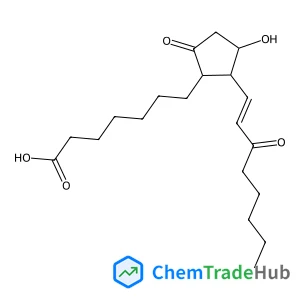
67910-12-77-{(2R,3S,4S)-4-Hydr...
化合物よくある質問
3,3-二甲基哌啶-4-酮はどのように保存すればよいですか?
3,3-二甲基哌啶-4-酮は避光、常温、乾燥した場所で保存してください。容器は密閉し、遠くから火源を離して保管することを確認してください。
150668-82-93,3-Dimethyl-4-piper...
掲載誌
Physical Chemistry Chemical Physics

CiteScore:
5.5
自己引用率:
10.3%
年間論文数:
3036
Physical Chemistry Chemical Physics (PCCP) is an international journal co-owned by 19 physical chemistry and physics societies from around the world. This journal publishes original, cutting-edge research in physical chemistry, chemical physics and biophysical chemistry. To be suitable for publication in PCCP, articles must include significant innovation and/or insight into physical chemistry; this is the most important criterion that reviewers and Editors will judge against when evaluating submissions. The journal has a broad scope and welcomes contributions spanning experiment, theory, computation and data science. Topical coverage includes spectroscopy, dynamics, kinetics, statistical mechanics, thermodynamics, electrochemistry, catalysis, surface science, quantum mechanics, quantum computing and machine learning. Interdisciplinary research areas such as polymers and soft matter, materials, nanoscience, energy, surfaces/interfaces, and biophysical chemistry are welcomed if they demonstrate significant innovation and/or insight into physical chemistry. Joined experimental/theoretical studies are particularly appreciated when complementary and based on up-to-date approaches.
おすすめ化合物
![2-[({[(2-Methyl-2-propanyl)oxy]carbonyl}amino)methyl]isonicotinic acid structure](https://static.chemtradehub.com/structs/473/473924-63-9-973b.webp "2-[({[(2-Methyl-2-propanyl)oxy]carbonyl}amino)methyl]isonicotinic acid structure")
2-[({[(2-Methyl-2-propanyl)oxy]carbonyl}amino)methyl]isonicotinic acid
CAS番号:
473924-63-9
分子式:
C12H16N2O4
おすすめサプライヤー






免責事項
このページに表示される学術雑誌情報は、参考および研究目的のみを目的としています。当社は雑誌出版社とは提携しておらず、投稿の取り扱いも行っておりません。出版に関するお問い合わせは、各雑誌出版社に直接ご連絡ください。
表示されている情報に誤りがある場合は、support@chemtradehub.com までご連絡ください。迅速に確認し、対応いたします。