












70 years of defect physical chemistry
文献情報
出版日
2003-05-12
DOI
10.1039/B301881B
インパクトファクター
3.676
著者
Alan B. Lidiard
原文を見る
要旨
As an introduction to this conference this article gives a brief review of the development of the role of defects in solid state physical chemistry over the past 70 years, with the principal emphasis on the fundamental theoretical ideas. The considerations are divided into (i) structure and states, (ii) atomic and ionic mobilities and (iii) transport processes and chemical reactions. The usefulness of the fundamental theory of defects in crystalline solids to the understanding of chemical reactions in the solid state was already apparent in the 1930's, although some scepticism remained until the 1950's. Subsequent decades have witnessed an increased sophistication of the theory, an increased precision and range of the experimental studies and an increased confidence in the application of the understanding to materials of practical interest.
関連文献
Solution vs. gas phase relative stability of the choline/acetylcholine cavitand complexes
Hassan Abdoul-Carime, Bernadette Farizon, Michel Farizon, Jean-Christophe Mulatier, Jean-Pierre Dutasta, Henry Chermette
2015-01-12
Paper
DOI: 10.1039/C4CP05354K
A practical guide to using boron doped diamond in electrochemical research
2014-12-18
Perspective
DOI: 10.1039/C4CP04022H
A quantitative prediction of the viscosity of ionic liquids using Sσ-profile molecular descriptors
Xiangping Zhang, Suojiang Zhang
2014-12-17
Paper
DOI: 10.1039/C4CP04712E
Nanometer-sized dynamic entities in an aqueous system
E. Mamontov, P. Zolnierczuk, M. Ohl
2015-01-05
Paper
DOI: 10.1039/C4CP05081A
Pressure-induced phase transition of BiOF: novel two-dimensional layered structures
Dawei Zhou, Chunying Pu, Chaozheng He, Cheng Lu, Gang Bao
2015-01-06
Paper
DOI: 10.1039/C4CP05142D
Rectification inversion in oxygen substituted graphyne–graphene-based heterojunctions
Wen-kai Zhao, Bin Cui, Chang-feng Fang, Guo-min Ji, Jing-fen Zhao, Xiang-ru Kong, Dong-qing Zou, Dong-mei Li
2014-12-03
Paper
DOI: 10.1039/C4CP04859H
Cyano-substituted oligo(p-phenylene vinylene) single-crystal with balanced hole and electron injection and transport for ambipolar field-effect transistors
Jian Deng, Jia Tang, Yuanxiang Xu, Liqun Liu, Yan Wang, Zengqi Xie, Yuguang Ma
2014-12-04
Paper
DOI: 10.1039/C4CP04265D
Performance improvement of multilayer InSe transistors with optimized metal contacts
Xin Zhou, Wei Quan Tian, PingAn Hu
2014-12-11
Paper
DOI: 10.1039/C4CP04968C
7Li in situ 1D NMR imaging of a lithium ion battery
K. Zick, T. Oerther, F. M. Schappacher, G. Brunklaus
2015-01-05
Paper
DOI: 10.1039/C4CP05021E
The origin of the absorption spectra of porphyrin N- and dithiaporphyrin S-oxides in their neutral and protonated states
Torsten Bruhn, Christian Brückner
2014-12-11
Paper
DOI: 10.1039/C4CP04675G
こちらもおすすめ
化合物よくある質問
2-ブロモ-9,9-ジフェニル-9H-フルオレンの主な用途は何ですか?
2-溴-9,9-二苯基芴は、医薬品、工業材料、有機合成の研究分野で応用されます。特に、レーザー材料や機能性ポリマーの合成に使用されることがあります。また、蛍光色...
474918-32-62-Bromo-9,9-diphenyl...
化合物よくある質問
四氯化铱の市場動向や研究トレンドはどうですか?
四氯化铱の市場は研究開発分野で注目されており、特にナノ技術や金属有機框架(MOFs)の分野での需要が増加傾向にあります。価格は安定しており、中国や韓国での生産が...
207399-11-9Tetrachloroiridium h...
882-06-44-Nitrocinnamic acid
化合物よくある質問
1-(4-溴-3-氟苯基)-2-氯乙酮を含む廃棄物はどのように処理すべきですか?
1-(4-溴-3-氟苯基)-2-氯乙酮 (CAS番号: 1260857-14-4) の廃棄物は専門的な廃棄処理が必要です。まず、廃棄物は密閉された容器に収集し、...
1260857-14-41-(4-Bromo-3-fluorop...
化合物よくある質問
苦参酚Kとは何ですか?
苦参酚Kは、CAS番号101236-49-1を持つ化合物で、主に天然由来の生薬から抽出されます。この化合物は、抗炎症作用や抗癌作用を持つことが報告されています。
101236-49-1Kushenol K
化合物よくある質問
POTASSIUM (1-(TERTBUTOXYCARBONYL)AZETIDIN-3-YL)TRIFLUOROBORATE を含む廃棄物はどのように処理すべきですか?
POTASSIUM (1-(TERTBUTOXYCARBONYL)AZETIDIN-3-YL)TRIFLUOROBORATE を含む廃棄物は、まず安全なエント...
1430219-73-0Potassium (1-(tert-b...
化合物よくある質問
4-庚基-4’-联苯羧酸の市場動向や研究トレンドはどうですか?
4-庚基-4’-聯苯羧酸は、特殊化学品や合成化学の分野で用いられる化学物質ですが、市場動向としては、研究開発の進展とともに需要が増加しています。また、環境配慮型...
58573-94-74'-Heptyl-4-biphenyl...
化合物よくある質問
6-ブロモ-3-メトキシ-1-フェニル-1H-インドゾールを含む廃棄物はどのように処理すべきですか?
6-ブロモ-3-メトキシ-1-フェニル-1H-インドゾールを含む廃棄物は、適切な化学廃棄処理が必要です。通常、廃棄物は密閉容器に収集され、専門の廃棄処理業者に引...
1332527-03-36-Bromo-3-methoxy-1-...
化合物よくある質問
4,4-二甲基-2-吡咯烷酮はどの業界で使用されていますか?
4,4-二甲基-2-吡咯烷酮は医薬、ポリマー、センサー、半導体などの業界で広く使用されています。特に溶媒としての性能が高く評価されています。
66899-02-34,4-dimethylpyrrolid...
51312-42-6Sodium Phosphotungst...
掲載誌
Physical Chemistry Chemical Physics

CiteScore:
5.5
自己引用率:
10.3%
年間論文数:
3036
Physical Chemistry Chemical Physics (PCCP) is an international journal co-owned by 19 physical chemistry and physics societies from around the world. This journal publishes original, cutting-edge research in physical chemistry, chemical physics and biophysical chemistry. To be suitable for publication in PCCP, articles must include significant innovation and/or insight into physical chemistry; this is the most important criterion that reviewers and Editors will judge against when evaluating submissions. The journal has a broad scope and welcomes contributions spanning experiment, theory, computation and data science. Topical coverage includes spectroscopy, dynamics, kinetics, statistical mechanics, thermodynamics, electrochemistry, catalysis, surface science, quantum mechanics, quantum computing and machine learning. Interdisciplinary research areas such as polymers and soft matter, materials, nanoscience, energy, surfaces/interfaces, and biophysical chemistry are welcomed if they demonstrate significant innovation and/or insight into physical chemistry. Joined experimental/theoretical studies are particularly appreciated when complementary and based on up-to-date approaches.
おすすめ化合物
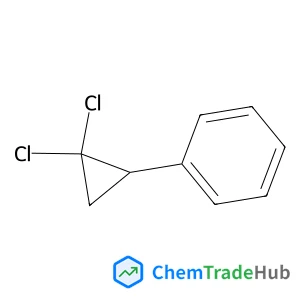
![[4-(Heptyloxy)phenyl]boronic acid structure](https://static.chemtradehub.com/structs/136/136370-19-9-ad33.webp "[4-(Heptyloxy)phenyl]boronic acid structure")
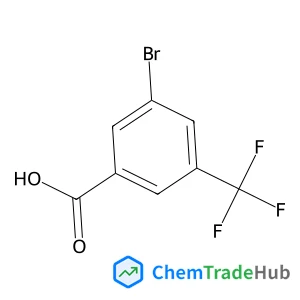
![[4-Amino-2-(methylsulfanyl)-5-pyrimidinyl]methanol structure](https://static.chemtradehub.com/structs/588/588-36-3-fc73.webp "[4-Amino-2-(methylsulfanyl)-5-pyrimidinyl]methanol structure")
おすすめサプライヤー





免責事項
このページに表示される学術雑誌情報は、参考および研究目的のみを目的としています。当社は雑誌出版社とは提携しておらず、投稿の取り扱いも行っておりません。出版に関するお問い合わせは、各雑誌出版社に直接ご連絡ください。
表示されている情報に誤りがある場合は、support@chemtradehub.com までご連絡ください。迅速に確認し、対応いたします。