


Identification and study of vacancies in titanium monoxide by means of positron annihilation techniques
文献情報
出版日
2003-02-28
DOI
10.1039/B300147B
インパクトファクター
3.676
著者
Wolfgang Sprengel, Hans-Eckhardt Schaefer
原文を見る
要旨
Structural vacancies are of interest for an understanding of the crystal structure and the properties of metal oxides. Here we report on the identification and study of structural vacancies in titanium monoxide TiOy with a B1 (NaCl) structure. Structural vacancies were identified by coincident Doppler broadening studies of the positron–electron annihilation radiation. The analysis shows that the nearest-neighbor atoms of vacancies are oxygen atoms. Taking into account the B1 structure of titanium monoxide this means that vacancies are located on the titanium sublattice. Positron trapping in titanium vacancies allows the study of the electronic structure of these vacancies by positron lifetime spectroscopy which shows that the valence electron density in the titanium vacancy increases with decreasing oxygen content y in TiOy. The increase of the valence electron density is accompanied by a decrease of the mean number of nearest-neighbor oxygen atoms in the vicinity of the titanium vacancy from 6 to 5 atoms.
おすすめジャーナル

Ceramics International

Journal of the Royal Society of New Zealand

Experimental Techniques

Composite Structures

Bulletin of the Korean Chemical Society

Geotextiles and Geomembranes

Natural Product Reports

Composites Science and Technology

Ferroelectrics Letters Section

Journal of Analytical Atomic Spectrometry
関連文献
Pressure-induced molten globule state of human acetylcholinesterase: structural and dynamical changes monitored by neutron scattering
R. Schweins
2014-12-11
Paper
DOI: 10.1039/C4CP02992E
Abstraction and addition kinetics of C2H radicals with CH4, C2H6, C3H8, C2H4, and C3H6: CVT/SCT/ISPE and hybrid meta-DFT methods
Manas Ranjan Dash, B. Rajakumar
2014-12-09
Paper
DOI: 10.1039/C4CP04677C
7Li in situ 1D NMR imaging of a lithium ion battery
K. Zick, T. Oerther, F. M. Schappacher, G. Brunklaus
2015-01-05
Paper
DOI: 10.1039/C4CP05021E
The role of oxygen vacancies and their location in the magnetic properties of Ce1−xCuxO2−δ nanorods
M. I. B. Bernardi, A. Mesquita, F. Béron, K. R. Pirota, A. O. de Zevallos, A. C. Doriguetto, H. B. de Carvalho
2014-12-02
Paper
DOI: 10.1039/C4CP04879B
Interaction and charge transfer between isolated thylakoids and multi-walled carbon nanotubes
Herlina Arianita Dewi, Lianxi Zheng, Sierin Lim
2014-12-22
Paper
DOI: 10.1039/C4CP04575K
Accurate calibration and control of relative humidity close to 100% by X-raying a DOPC multilayer
Yicong Ma, Sajal K. Ghosh, Sambhunath Bera, Zhang Jiang, Stephanie Tristram-Nagle, Laurence B. Lurio, Sunil K. Sinha
2014-12-15
Paper
DOI: 10.1039/C4CP04407J
Aggregation induced emission enhancement of 4,4′-bis(diethylamino)benzophenone with an exceptionally large blue shift and its potential use as glucose sensor
Prativa Mazumdar, Debasish Das, Gobinda Prasad Sahoo, Guillermo Salgado-Morán, Ajay Misra
2014-11-26
Paper
DOI: 10.1039/C4CP03772C
Exploring the binding mechanisms of MIF to CXCR2 using theoretical approaches
Lei Xu, Youyong Li, Dan Li, Peng Xu, Sheng Tian, Huiyong Sun, Hui Liu, Tingjun Hou
2014-12-11
Paper
DOI: 10.1039/C4CP05095A
The effect of sugar stereochemistry on protein self-assembly: the case of β-casein micellization in different aldohexose solutions
Ofer Setter
2014-12-16
Paper
DOI: 10.1039/C4CP03686G
Splitting and joining in carbon nanotube/nanoribbon/nanotetrahedron growth
Takayuki Hasegawa, Hideo Kohno
2014-12-22
Communication
DOI: 10.1039/C4CP05139D
こちらもおすすめ
化合物よくある質問
2-ブロモ-9,9-ジフェニル-9H-フルオレンの主な用途は何ですか?
2-溴-9,9-二苯基芴は、医薬品、工業材料、有機合成の研究分野で応用されます。特に、レーザー材料や機能性ポリマーの合成に使用されることがあります。また、蛍光色...
474918-32-62-Bromo-9,9-diphenyl...
化合物よくある質問
四氯化铱の市場動向や研究トレンドはどうですか?
四氯化铱の市場は研究開発分野で注目されており、特にナノ技術や金属有機框架(MOFs)の分野での需要が増加傾向にあります。価格は安定しており、中国や韓国での生産が...
207399-11-9Tetrachloroiridium h...
882-06-44-Nitrocinnamic acid
化合物よくある質問
1-(4-溴-3-氟苯基)-2-氯乙酮を含む廃棄物はどのように処理すべきですか?
1-(4-溴-3-氟苯基)-2-氯乙酮 (CAS番号: 1260857-14-4) の廃棄物は専門的な廃棄処理が必要です。まず、廃棄物は密閉された容器に収集し、...
1260857-14-41-(4-Bromo-3-fluorop...
化合物よくある質問
苦参酚Kとは何ですか?
苦参酚Kは、CAS番号101236-49-1を持つ化合物で、主に天然由来の生薬から抽出されます。この化合物は、抗炎症作用や抗癌作用を持つことが報告されています。
101236-49-1Kushenol K
化合物よくある質問
POTASSIUM (1-(TERTBUTOXYCARBONYL)AZETIDIN-3-YL)TRIFLUOROBORATE を含む廃棄物はどのように処理すべきですか?
POTASSIUM (1-(TERTBUTOXYCARBONYL)AZETIDIN-3-YL)TRIFLUOROBORATE を含む廃棄物は、まず安全なエント...
1430219-73-0Potassium (1-(tert-b...
化合物よくある質問
4-庚基-4’-联苯羧酸の市場動向や研究トレンドはどうですか?
4-庚基-4’-聯苯羧酸は、特殊化学品や合成化学の分野で用いられる化学物質ですが、市場動向としては、研究開発の進展とともに需要が増加しています。また、環境配慮型...
58573-94-74'-Heptyl-4-biphenyl...
化合物よくある質問
6-ブロモ-3-メトキシ-1-フェニル-1H-インドゾールを含む廃棄物はどのように処理すべきですか?
6-ブロモ-3-メトキシ-1-フェニル-1H-インドゾールを含む廃棄物は、適切な化学廃棄処理が必要です。通常、廃棄物は密閉容器に収集され、専門の廃棄処理業者に引...
1332527-03-36-Bromo-3-methoxy-1-...
化合物よくある質問
4,4-二甲基-2-吡咯烷酮はどの業界で使用されていますか?
4,4-二甲基-2-吡咯烷酮は医薬、ポリマー、センサー、半導体などの業界で広く使用されています。特に溶媒としての性能が高く評価されています。
66899-02-34,4-dimethylpyrrolid...
51312-42-6Sodium Phosphotungst...
掲載誌
Physical Chemistry Chemical Physics

CiteScore:
5.5
自己引用率:
10.3%
年間論文数:
3036
Physical Chemistry Chemical Physics (PCCP) is an international journal co-owned by 19 physical chemistry and physics societies from around the world. This journal publishes original, cutting-edge research in physical chemistry, chemical physics and biophysical chemistry. To be suitable for publication in PCCP, articles must include significant innovation and/or insight into physical chemistry; this is the most important criterion that reviewers and Editors will judge against when evaluating submissions. The journal has a broad scope and welcomes contributions spanning experiment, theory, computation and data science. Topical coverage includes spectroscopy, dynamics, kinetics, statistical mechanics, thermodynamics, electrochemistry, catalysis, surface science, quantum mechanics, quantum computing and machine learning. Interdisciplinary research areas such as polymers and soft matter, materials, nanoscience, energy, surfaces/interfaces, and biophysical chemistry are welcomed if they demonstrate significant innovation and/or insight into physical chemistry. Joined experimental/theoretical studies are particularly appreciated when complementary and based on up-to-date approaches.
おすすめ化合物
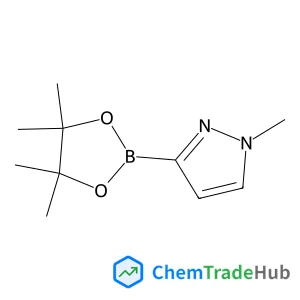
1-Methyl-3-(4,4,5,5-tetramethyl-1,3,2-dioxaborolan-2-yl)-1H-pyrazole
CAS番号:
1020174-04-2
分子式:
C10H17BN2O2
おすすめサプライヤー





免責事項
このページに表示される学術雑誌情報は、参考および研究目的のみを目的としています。当社は雑誌出版社とは提携しておらず、投稿の取り扱いも行っておりません。出版に関するお問い合わせは、各雑誌出版社に直接ご連絡ください。
表示されている情報に誤りがある場合は、support@chemtradehub.com までご連絡ください。迅速に確認し、対応いたします。