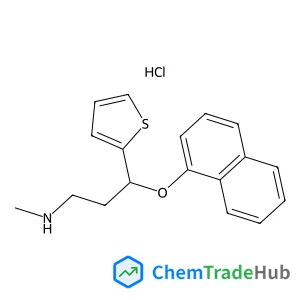
N-Methyl-3-(1-naphthyloxy)-3-(2-thienyl)-1-propanamine hydrochloride (1:1)
CAS番号:
1188266-11-6
分子式:
C18H20ClNOS
Paola Baiocco, Anna Maria Barreca, Maura Fabbrini, Carlo Galli, Patrizia Gentili
The oxidation of benzyl alcohols with the enzyme laccase, under mediation by appropriate mediator compounds, yields carbonylic products, whereas laccase can not oxidise these non-phenolic substrates directly. The oxidation step is performed by the oxidised form of the mediator (Medox), generated on its interaction with laccase. The Medox can follow either an electron transfer (ET) or a radical hydrogen atom transfer (HAT) route of oxidation of the substrates. Experimental evidence is reported that enables unambiguous assessment of the occurrence of either one the oxidation routes with each of the investigated mediators, namely, ABTS, HBT, HPI and VLA. Support to the conclusions is provided by (i) investigating the intermolecular selectivity of oxidation with appropriate substrates, (ii) attempting Hammett correlations for the oxidation of a series of 4-X-substituted benzyl alcohols, (iii) measuring the kinetic isotope effect, (iv) investigating the product pattern with suitable probe precursors. Based on these points, a HAT mechanism results to be followed by the laccase–HBT, laccase–HPI and laccase–VLA systems, whereas an ET route appears feasible in the case of the laccase–ABTS system.
Serena Biella, Michele Rossi
DOI: 10.1039/B210506C
Jörgen Ohlsson, Anders Sundin, Ulf J. Nilsson
DOI: 10.1039/B210649C
Haidoo Kwen, Sean Tomlinson, Eric A. Maatta, Céline Dablemont, René Thouvenot, Anna Proust, Pierre Gouzerh
DOI: 10.1039/B209173A
Hakim Karoui, Antal Rockenbauer, Sylvie Pietri, Paul Tordo
DOI: 10.1039/B209787G
Michael Doran, Alexander J. Norquist, Dermot O’Hare
DOI: 10.1039/B210272B
Ken-ichi Fujita, Maki Owaki, Ryohei Yamaguchi
DOI: 10.1039/B209855E
Kenji Miyatake, Hua Zhou, Hiroyuki Uchida, Masahiro Watanabe
DOI: 10.1039/B210296J
DOI: 10.1039/B209352A
Jerry L. Atwood, Leonard J. Barbour, Agoston Jerga
DOI: 10.1039/B209718B
DOI: 10.1039/B210400H
3-イチチルビフェニルは、ビフェニルとイチプロピオニトリルを回収率約90%で反応させて合成されます。触媒は通常、亜リチウムホウ素を用います。
8-溴-5-三氟甲基喹啉は、5-トリフルオロメチル-2-メチル-1,3-ベンゼンジオールをブロモエタノールと反応させて生成します。この反応は塩基性条件下で行われ...
ジメチル4-(4,4,5,5-テトラメチル-1,3,2-ドioxaborolan-2-基)-2,6-ピリジンジカルボイル酸フェニルアミニドの代替品としては、4-...
N-(3,5-ヘキサクロロ-4-ピリドインイル)-8-メチオキシ-5-キノリンカーボン酸の市場動向は、主に産業用途での需要により影響を受けます。研究トレンドとし...
イソステアロイルグリセリルは一般的に安全性が高いとされていますが、過度な使用や個人差により皮�owsん炎などの反応が起こる可能性があります。使用前に医師に相談す...
1-(二苯甲基)-3,3-二氟-氮杂环丁烷の市場動向は、医薬品や合成化学の研究分野で注目を集めています。新興研究は、該当化合物の合成改良と生体内での作用メカニズ...
3-チオフェンスチオールのCAS番号は7774-73-4です。結晶性の白色粉末で、分子量は122.17です。この化合物は水に微溶解し、エタノールやジクロロメタン...
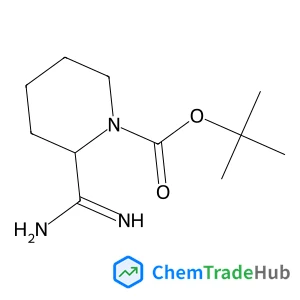
2-Methyl-2-propanyl (2S)-2-(aminomethyl)-1-piperidinecarboxylateは一定の安全性基準を満たしていま...
CAS番号1316822-90-8の化合物は安全性に関しては評価が不足していますが、一般的には生物学的に活性な物質であり、取り扱いには適切な安全防護措置が必要で...
Tert-butyl 2-(2-羟基乙基)哌嗪-1-羧酸は、冷暗所で保存し、直射日光から遠ざけてください。容器は密閉し、高湿度や高温を避けて保管してください。

Organic & Biomolecular Chemistry (OBC) publishes original and high impact research and reviews in organic chemistry. We welcome research that shows new or significantly improved protocols or methodologies in total synthesis, synthetic methodology or physical and theoretical organic chemistry as well as research that shows a significant advance in the organic chemistry or molecular design aspects of chemical biology, catalysis, supramolecular and macromolecular chemistry, theoretical chemistry, mechanism-oriented physical organic chemistry, medicinal chemistry or natural products. Articles published in the journal should report new work which makes a highly-significant impact in the field. Routine and incremental work is generally not suitable for publication in the journal. More details about key areas of our scope are below. In all cases authors should include in their article clear rationale for why their research has been carried out.
![1-(1-Benzyl-1,2,3,6-tetrahydropyridin-4-yl)-1H-benzo[d]imidazol-2(3H)-one structure](https://static.chemtradehub.com/structs/603/60373-71-9-7dfb.webp "1-(1-Benzyl-1,2,3,6-tetrahydropyridin-4-yl)-1H-benzo[d]imidazol-2(3H)-one structure")