












Bibliography of metals in foods and biological materials
文献情報
出版日
DOI
10.1039/AN942670357B
インパクトファクター
4.616
著者
原文を見る
要旨
The first page of this article is displayed as the abstract.
関連文献
Rotationally resolved infrared spectroscopy of a jet-cooled phenyl radical in the gas phase
Erin N. Sharp, Melanie A. Roberts, David J. Nesbitt
2008-10-03
Communication
DOI: 10.1039/B813256A
Effect of the electrostatic microenvironment on the observed redox potential of electroactive supramolecular bioconjugates
Basit Yameen, Wolfgang Knoll
2008-10-14
Paper
DOI: 10.1039/B806445H
Power spectral density analysis and photoconducting behavior in copper(ii) phthalocyanine nanostructured thin films
Santanu Karan, Biswanath Mallik
2008-09-30
Paper
DOI: 10.1039/B809648A
Photo-degradation of yperite over V, Fe and Mn-doped titania–silica photocatalysts
Ştefan Neaţu, Vasile I. Pârvulescu, Gabriel Epure, Emilia Preda, Vasile Şomoghi, Alessandro Damin, Silvia Bordiga, Adriano Zecchina
2008-09-23
Paper
DOI: 10.1039/B810200G
Carbohydrate–protein recognition probed by density functional theory and ab initio calculations including dispersive interactions
Rajesh K. Raju, Anitha Ramraj, Mark A. Vincent, Ian H. Hillier, Neil A. Burton
2008-09-23
Paper
DOI: 10.1039/B809164A
Electrical conductivity and oxygen nonstoichiometry of acceptor (Ga)-doped titania
Doh-Kwon Lee, Han-Ill Yoo
2008-10-09
Paper
DOI: 10.1039/B811319J
The molecular structure of selenium dibromide as determined by combined gas-phase electron diffraction–mass spectrometric experiments and quantum chemical calculations
Sergey A. Shlykov, Anton V. Titov, Heinz Oberhammer, Nina I. Giricheva, Georgiy V. Girichev
2008-09-22
Paper
DOI: 10.1039/B808071B
Possible pore size effects on the state of tris(8-quinolinato)aluminum(iii) (Alq3) adsorbed in mesoporous silicas and their temperature dependence
Motohiro Tagaya, Makoto Ogawa
2008-10-09
Paper
DOI: 10.1039/B807593J
Use of molecular electrostatic potential for quantitative assessment of inductive effect
Cherumuttathu H. Suresh, P. Alexander, K. Periya Vijayalakshmi, P. K. Sajith, Shridhar R. Gadre
2008-09-24
Paper
DOI: 10.1039/B809561B
こちらもおすすめ
化合物よくある質問
四氢-3-呋喃羧酰胺を含む廃棄物はどのように処理すべきですか?
四氢-3-呋喃羧酰胺を含む廃棄物の処理は、まず安全に収集し、化学的処理または専門廃棄処理を行うことが推奨されます。高温焼却は一般的な選択肢ですが、環境保護の観点...
871677-92-8Tetrahydro-3-furanca...
化合物よくある質問
DIMETHYL 3-AMINO-2,5-THIOPHENEDICARBOXYLATEについて「に適用される法規ガイドラインは何ですか」
DIMETHYL 3-AMINO-2,5-THIOPHENEDICARBOXYLATE(CAS番号: 785803-74-9)は、GHS( Globally H...
785803-74-9Dimethyl 3-amino-2,5...
化合物よくある質問
5-フェニル-2,2'-ビピリジンはどのように合成されますか?
5-フェニル-2,2'-ビピリジンは、ピリジン環とフェニル基を有する化合物から合成されます。一般的な合成方法は、4-ブロミノ苯と2,2'-ビピリジンの窒素上的ウ...
156972-80-45-Phenyl-2,2'-bipyri...
化合物よくある質問
三溴甲基苯砜とは何ですか?
三溴甲基苯砜はCAS番号17025-47-7の化合物で、(Tribromomethyl)sulfonyl]benzeneと呼ばれています。この物質は、芳香族化合...
17025-47-7[(Tribromomethyl)sul...
化合物よくある質問
四氢吡喃-4,4-二甲酸二甲酯を含む廃棄物はどのように処理すべきですか?
四氢吡喃-4,4-二甲酸二甲酯の廃棄物は、専門の廃棄処理業者に委託して安全に処理することが推奨されます。具体的には、反応性の点から常温で保存し、容器は密閉状態で...
149777-00-4Dimethyl tetrahydro-...
化合物よくある質問
N-叔丁氧羰基-N-甲乙二胺はどのように合成されますか?
N-叔丁氧羰基-N-甲乙二胺は、N-叔丁氧羰基アミンとプロピニルアミンのジアミン反応により合成されます。反応は無機触媒なしで行え、選択性と収率は良好です。
121492-06-62-Methyl-2-propanyl ...
化合物よくある質問
1,2-プロパンジオール-D6はどのように合成されますか?
1,2-プロパンジオール-D6は、プロパン-1,2-ジオールをD6同位体と交換反応を行うことで合成されます。この反応は触媒を必要とし、選択性と収率が良好です。
52910-80-21,2-Propane-d6-diol
化合物よくある質問
4,4'-異プロピルジキレートとは何ですか?
4,4'-異プロピルジキレートは、CAS番号7418-16-8の化合物で、4,4'-(2,2-プロパネディイル)ジシクロヘキサンカーボン酸は、白色の粉末またはク...
7418-16-84,4'-(2,2-Propanediy...
化合物よくある質問
2-メチル-2-プロパンチル (2S)-4-酸化-2-(1,3-チアゾリジン-3-イルカルベニル)-1-ピロリジンカルボキシレートの主な用途は何ですか?
この化合物は主に医薬品の開発に関与しており、特に抗炎症薬や神経保護剤の研究に利用されます。また、有機合成の中間体として工業製品の製造にも応用されることがあります...
401564-36-12-Methyl-2-propanyl ...
化合物よくある質問
ナトリウム5'-O-{ヘキシロキシ[(ヘキシロキシフォスフィニルオキシ)フィロホスフィル]アデノシン}を含む廃棄物はどのように処理すべきですか?
ナトリウム5'-O-{ヘキシロキシ[(ヘキシロキシフォスフィニルオキシ)フィロホスフィル]アデノシン}を含む廃棄物は、適切な化学廃棄処理施設に引き渡す必要があり...
1172-42-5Sodium 5'-O-{hydroxy...
掲載誌
Analyst

CiteScore:
7.8
自己引用率:
5.6%
年間論文数:
653
Analyst publishes analytical and bioanalytical research that reports premier fundamental discoveries and inventions, and the applications of those discoveries, unconfined by traditional discipline barriers.
おすすめ化合物
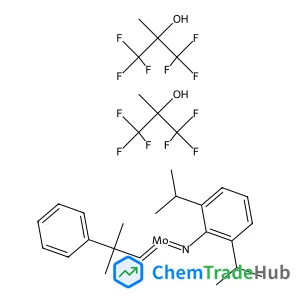
2,6-Diisopropylphenylimidoneophylidene molybdenum(VI) bis(hexafluoro-t-butoxide)
CAS番号:
139220-25-0
分子式:
C30H37F12MoNO2
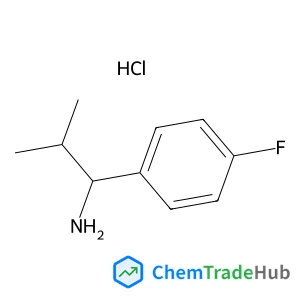
(1R)-1-(4-Fluorophenyl)-2-methyl-1-propanamine hydrochloride (1:1)
CAS番号:
1213329-40-8
分子式:
C10H15ClFN
おすすめサプライヤー






免責事項
このページに表示される学術雑誌情報は、参考および研究目的のみを目的としています。当社は雑誌出版社とは提携しておらず、投稿の取り扱いも行っておりません。出版に関するお問い合わせは、各雑誌出版社に直接ご連絡ください。
表示されている情報に誤りがある場合は、support@chemtradehub.com までご連絡ください。迅速に確認し、対応いたします。