












![N-[(E)-Phenylmethylene]benzenesulfonamide structure](https://static.chemtradehub.com/structs/139/13909-34-7-8167.webp "N-[(E)-Phenylmethylene]benzenesulfonamide structure")
Effect of heat treatment on boron impurity in Vycor. Part I. Near infrared spectra and ab initio calculations of the vibrations of model molecules for surface boranols
文献情報
出版日
2000-03-29
DOI
10.1039/A909397D
インパクトファクター
3.676
著者
Cédric Carteret, André Burneau
原文を見る
要旨
Near infrared spectra of surface boranol groups on a preheated Vycor silica glass were observed and interpreted with the help of ab initio calculations of the vibrational properties of BOH groups anchored to silica or to B2O3 clusters. The spectra of deuterated samples were also obtained. A set of narrow lines corresponds to overtone and combination transitions for normal modes involving mainly the hydroxy group, that is the νOH stretching, the δOH bending and the τOH torsion around BO bond. Hot bands at 25°C, whose origin is the τOH level at 530 cm−1, are revealed by cooling the sample at −173°C. A sample evacuated at 760°C displays mainly isolated boranol groups and some very weakly perturbed species, likely vicinal groups, bonded to silica. A thorough analysis of the anharmonic properties of isolated boranol is given. The spectrum assignment is extrapolated to transitions hidden by the very strong absorptions of the bulk material. Fermi resonances appear in diads for species (SiO)2BOH because the 2τOH overtone is close to δOH, near 1030 cm−1.
関連文献
Ultrafast capture of electrons ejected by photoionization leading to the formation of a charge-separated state at a high energy level
Tomomi Kawakami, Masafumi Koga, Hikaru Sotome, Hiroshi Miyasaka
2020-06-08
Paper
DOI: 10.1039/D0CP02029J
Synthesis of a photo-responsive single-walled nanoscroll and its photo-reactivity in a nano-layered microenvironment
Syed Zahid Hassan, Yu Nabetani, Ayaka Matsumoto, Tsutomu Shiragami, Zhiwei Tong, Hiroshi Tachibana, Haruo Inoue
2019-08-21
Paper
DOI: 10.1039/C9CP03835C
The influence of silica surface groups on the Li-ion conductivity of LiBH4/SiO2 nanocomposites
Peter Ngene, Sander F. H. Lambregts, Didier Blanchard, Tejs Vegge, Hans Hagemann, Petra E. de Jongh
2019-09-28
Paper
DOI: 10.1039/C9CP04235K
Anisotropic relaxation in NADH excited states studied by polarization-modulation pump–probe transient spectroscopy
Ioanna A. Gorbunova, Maxim E. Sasin, Yaroslav M. Beltukov, Alexander A. Semenov, Oleg S. Vasyutinskii
2020-07-14
Paper
DOI: 10.1039/D0CP02496A
Strain modulated ferromagnetic phase transitions in monolayer FeCl2 through exchange competitions: the first-principle and Monte Carlo simulations
Ya Yang, Peiyin Guo, Yongsong Luo
2020-07-03
Paper
DOI: 10.1039/D0CP01422B
Large cluster ions: soft local probes and tools for organic and bio surfaces
Arnaud Delcorte, Vincent Delmez, Christine Dupont-Gillain, Clément Lauzin, Hannah Jefford, Mykhailo Chundak, Claude Poleunis, Konstantin Moshkunov
2020-06-16
Perspective
DOI: 10.1039/D0CP02398A
Sulfur doped Li1.3Al0.3Ti1.7(PO4)3 solid electrolytes with enhanced ionic conductivity and a reduced activation energy barrier
Mine Kırkbınar
2020-07-02
Paper
DOI: 10.1039/D0CP03442H
Beyond the Coulson–Fischer point: characterizing single excitation CI and TDDFT for excited states in single bond dissociations
Diptarka Hait, Adam Rettig
2019-09-19
Paper
DOI: 10.1039/C9CP04452C
Dynamics of the reaction CH2I + O2 probed via infrared emission of CO, CO2, OH and H2CO
Ting-Yu Chen
2020-07-13
Paper
DOI: 10.1039/D0CP01940B
Structural or population dynamics: what is revealed by the time-resolved photoelectron spectroscopy of 1,3-cyclohexadiene? A study with an ensemble density functional theory method
Michael Filatov, Seunghoon Lee, Hiroya Nakata, Cheol Ho Choi
2020-07-20
Paper
DOI: 10.1039/D0CP02963G
こちらもおすすめ
化合物よくある質問
6- bromo-1-cyclopropyl-1H-benzimidazoleの市場動向や研究トレンドはどうですか?
6- bromo-1-cyclopropyl-1H-benzimidazoleは、抗炎症、抗ウイルス作用を持つことが報告されており、新薬開発の研究対象として注目...
1416713-53-56-Bromo-1-cyclopropy...
化合物よくある質問
環氧プロpanol-d5を取り扱う際の実験室安全事項は何ですか?
取り扱う際には、防護眼鏡と手袋を使用し、ドラフトチャンバー内で操作することを推奨します。漏洩時には適切な手順で処理し、安全データシートを常に参照してください。
1246819-20-4Glycidol-d5
化合物よくある質問
2,2’-ジメチル-3,3’-ビピリジンはどのように合成されますか?
2,2’-ジメチル-3,3’-ビピリジンは、ピリジンと2-メチルアクリルアミドを有機合成反応で合成します。この反応では、ピリジンと2-メチルアクリルアミドを含有...
86156-55-02,2’-Dimethyl-3,3’-b...
化合物よくある質問
6-甲基ピリジン-2-ボリック酸の主な用途は何ですか?
6-甲基ピリジン-2-ボリック酸は、合成化学、医薬品合成、以及研究用途などに広く使用され、特に組換えDNA技術や分子生物学の研究において重要な役割を果たします。
372963-50-3(6-Methyl-2-pyridiny...
化合物よくある質問
(R)-3-(1-甲基-2-氧環己基)プロpano酸メチルは安全ですか?
(R)-3-(1-甲基-2-氧環己基)プロpano酸メチルは一定の安全性がありますが、直接的な皮膚接触や吸入は避けるべきです。使用する際は適切な個々の安全データ...
94089-47-1methyl 3-[(1R)-1-met...
化合物よくある質問
ketorolacはどのように保存すればよいですか?
ketorolacは、密封して遮光容器に保管し、直射日光や高温を避けて保存してください。温度は常温で保存し、湿度をなるべく低く保つことが推奨されます。
74103-06-3rac Ketorolac
化合物よくある質問
L-2,3-二氨基丙酸二盐酸盐を取り扱う際の実験室安全事項は何ですか?
L-2,3-二氨基丙酸二盐酸盐は腐食性が強く、皮膚や粘膜に刺激を与える可能性があります。取り扱う際は、防塵マスク、ゴーグル、手袋を使用し、適切な排気設備を使用し...
19777-68-5(S)-2,3-Diaminopropa...
化合物よくある質問
2-(4-溴ピリジン-2-基)乙腈の物理化学的性質は何ですか?
2-(4-溴ピリジン-2-基)乙腈のCAS番号は312325-73-8です。主に結晶形態で存在し、分子量は159.01 g/molです。この化合物は水に溶けやす...
312325-73-8(4-Bromo-2-pyridinyl...
化合物よくある質問
3-フローロ-[1,1-ベンジレン]-3,4-ジカルボン酸を取り扱う際の実験室安全事項は何ですか?
この化合物は毒性は低いですが、直接的な接触や吸入に注意が必要です。PPE(個人防護具)を着用し、ドラフトチャンバーを使用して操作することを推奨します。また、漏洩...
1261915-32-53'-Fluoro-[1,1'-biph...
化合物よくある質問
3-(1-氧代-1,3-二氢-2H-2-异吲哚)丙酸の主な用途は何ですか?
3-(1-氧代-1,3-二氢-2H-2-异吲哚)丙酸は、薬理学研究や医薬品製造において広く用いられる化合物です。また、工業的な用途でも一部の化学反応の触媒や助剤...
83747-30-23-(1-Oxo-1,3-dihydro...
掲載誌
Physical Chemistry Chemical Physics

CiteScore:
5.5
自己引用率:
10.3%
年間論文数:
3036
Physical Chemistry Chemical Physics (PCCP) is an international journal co-owned by 19 physical chemistry and physics societies from around the world. This journal publishes original, cutting-edge research in physical chemistry, chemical physics and biophysical chemistry. To be suitable for publication in PCCP, articles must include significant innovation and/or insight into physical chemistry; this is the most important criterion that reviewers and Editors will judge against when evaluating submissions. The journal has a broad scope and welcomes contributions spanning experiment, theory, computation and data science. Topical coverage includes spectroscopy, dynamics, kinetics, statistical mechanics, thermodynamics, electrochemistry, catalysis, surface science, quantum mechanics, quantum computing and machine learning. Interdisciplinary research areas such as polymers and soft matter, materials, nanoscience, energy, surfaces/interfaces, and biophysical chemistry are welcomed if they demonstrate significant innovation and/or insight into physical chemistry. Joined experimental/theoretical studies are particularly appreciated when complementary and based on up-to-date approaches.
おすすめ化合物
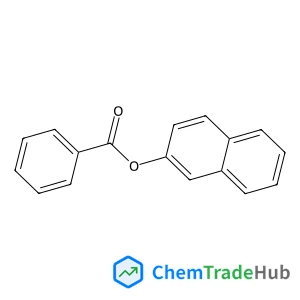
![(2S)-2-({[(2-Methyl-2-propanyl)oxy]carbonyl}amino)-4-pentynoic acid structure](https://static.chemtradehub.com/structs/630/63039-48-5-b66d.webp "(2S)-2-({[(2-Methyl-2-propanyl)oxy]carbonyl}amino)-4-pentynoic acid structure")
おすすめサプライヤー





免責事項
このページに表示される学術雑誌情報は、参考および研究目的のみを目的としています。当社は雑誌出版社とは提携しておらず、投稿の取り扱いも行っておりません。出版に関するお問い合わせは、各雑誌出版社に直接ご連絡ください。
表示されている情報に誤りがある場合は、support@chemtradehub.com までご連絡ください。迅速に確認し、対応いたします。