












State specific dynamics of the H−+H2→H2+H− reaction: Energy resolved total reaction probabilities by the time-dependent wave packet method
文献情報
出版日
2000-01-07
DOI
10.1039/A907521F
インパクトファクター
3.676
著者
Susanta Mahapatra
原文を見る
要旨
Reagent ro-vibrational state-selected and energy resolved total reaction probabilities of the title reaction are calculated on the diatomics-in-molecules potential energy surface of Belyaev et al. (Chem. Phys., 1997, 220, 43). A three dimensional time-dependent wave packet (WP) method for the total angular momentum J=0 is employed for the purpose. The reaction probabilities are obtained by the time–energy mapping of the reactive flux of the WP across a dividing surface in the asymptotic product channel. While the initial vibrational excitation of reagent H2 is shown, in general, to decrease the reaction probability at low and moderate energies, the initial rotational excitation does not lead to any such general trend. Existence of resonances is indicated in the reaction with ro-vibrationally hot H2 molecules. The energetic threshold and other dynamical features of the reaction are in accord with the experimental findings.
関連文献
High resolution Dopplerimetry of correlated angular and quantum state-resolved CO2 scattering dynamics at the gas–liquid interface
Bradford G. Perkins, Jr., David J. Nesbitt
2010-10-01
Paper
DOI: 10.1039/C0CP00578A
Two-color sum frequency generation study of poly(9,9-dioctylfluorene)/electrode interfaces
Takayuki Miyamae, Kiyomi Tsukagoshi, Wataru Mizutani
2010-10-08
Communication
DOI: 10.1039/C0CP00838A
Melting entropy of nanocrystals: an approach from statistical physics
A. Safaei, M. Attarian Shandiz
2010-10-28
Paper
DOI: 10.1039/C004237D
In trap fragmentation and optical characterization of rotaxanes
Anouk M. Rijs, Isabelle Compagnon, Alissa Silva, Jeffrey S. Hannam, David A. Leigh, Euan R. Kay, Philippe Dugourd
2010-08-19
Paper
DOI: 10.1039/C0CP00207K
Two-proton migration in 1,3-butadiene in intense laser fields
Tomoya Okino, Katsunori Nakai, Kaoru Yamanouchi, Stefan Roither, Xinhua Xie, Daniil Kartashov, Li Zhang, Andrius Baltuska, Markus Kitzler
2010-08-23
Communication
DOI: 10.1039/C0CP00628A
Zirconate pyrochlores under high pressure
F. X. Zhang, M. Lang, Rodney C. Ewing
2010-08-18
Paper
DOI: 10.1039/C0CP00278J
Physics of DNA: unravelling hidden abilities encoded in the structure of ‘the most important molecule’‡
Alexei A. Kornyshev
2010-08-10
Perspective
DOI: 10.1039/C004107F
Water–titanate intercalated nanotubes: fabrication, polarization, and giant dielectric property
Wanbiao Hu, Liping Li, Wenming Tong, Guangshe Li
2010-08-23
Paper
DOI: 10.1039/C0CP00280A
こちらもおすすめ
化合物よくある質問
(S)-四氢呋喃-3-羧酸の物理化学的性質は何ですか?
CAS番号168395-26-4の(S)-四氢呋喃-3-羧酸は、白色の結晶が特徴的な性質を持ちます。分子量は128.08であり、水に溶けやすく、アルコールなど...
168395-26-4(3S)-Tetrahydro-3-fu...
化合物よくある質問
塩基性硫黄化合物1,3-ジメチル-1-[5-(三氟甲基)-1,3,4-硫杂环己二酮-2-基]尿素を含む廃棄物はどのように処理すべきですか?
塩基性硫黄化合物1,3-ジメチル-1-[5-(三氟甲基)-1,3,4-硫杂环己二酮-2-基]尿素を含む廃棄物は、専門的な廃棄処理施設で焼却処理を行うべきです。ま...
25366-23-81,3-Dimethyl-1-[5-(t...
化合物よくある質問
インドリジン-2-カルボン酸は安全ですか?
インドリジン-2-カルボン酸は一般的に安全ですが、過度に濃い状態では刺激性があります。取り扱いには適切な防護具を使用し、直接触れや吸入を避ける必要があります。
3189-48-8Indolizine-2-carboxy...
化合物よくある質問
5-甲基-2-(3-ピリジニル)-1,3-テイゾール-4-オールの市場動向や研究トレンドはどうですか?
5-甲基-2-(3-ピリジニル)-1,3-テイゾール-4-オールは、医薬品や農薬、および合成化学の分野において研究が進められています。市場動向としては、化学物質...
131786-48-65-Methyl-2-(3-pyridi...
化合物よくある質問
4,4',4''-(嘧啶-2,4,6-三基)三苯甲醛はどのように保存すればよいですか?
4,4',4''-(嘧啶-2,4,6-三基)三苯甲醛は、密閉容器に保管し、避けておくことが重要です。室温で保管し、直射日光を避けてください。
2230887-23-54,4',4''-(2,4,6-Pyri...
化合物よくある質問
(3aR)-1,3,3-トリフェニルテトラヒドロ-3H-ピロロ[1,2-c][1,3,2]-オキザボロロールについて、適用される法規ガイドラインは何ですか?
(3aR)-1,3,3-トリフェニルテトラヒドロ-3H-ピロロ[1,2-c][1,3,2]-オキザボロロールは、GHS(国際危険物識別ルール)の分類が適用されま...
145238-45-5(3aR)-1,3,3-Tripheny...
102-83-0N,N-Dibutyl-1,3-prop...
化合物よくある質問
6-(4-氯苯氧基)吡啶-3-胺の代替品はありますか?
6-(4-氯苯氧基)吡啶-3-胺の代替品としては、他の芳香族アミン化合物や類似の除草剤が考えられます。ただし、他の化合物と同様に、代替品の選択には安全性と効果性...
75926-64-66-(4-Chlorophenoxy)-...
79408-85-84-Methyl-2-oxo-2H-ch...
化合物よくある質問
3-フェニル-3,4-ジヒドロ-2H-1,4-ベンゾキサジンを取り扱う際の実験室安全事項は何ですか?
3-フェニル-3,4-ジヒドロ-2H-1,4-ベンゾキサジンを取り扱う際は、防塵マスク、ゴーグル、ゴム手袋を使用し、ドラフトチャンバー内で作業することを推奨しま...
70310-30-43-Phenyl-3,4-dihydro...
掲載誌
Physical Chemistry Chemical Physics

CiteScore:
5.5
自己引用率:
10.3%
年間論文数:
3036
Physical Chemistry Chemical Physics (PCCP) is an international journal co-owned by 19 physical chemistry and physics societies from around the world. This journal publishes original, cutting-edge research in physical chemistry, chemical physics and biophysical chemistry. To be suitable for publication in PCCP, articles must include significant innovation and/or insight into physical chemistry; this is the most important criterion that reviewers and Editors will judge against when evaluating submissions. The journal has a broad scope and welcomes contributions spanning experiment, theory, computation and data science. Topical coverage includes spectroscopy, dynamics, kinetics, statistical mechanics, thermodynamics, electrochemistry, catalysis, surface science, quantum mechanics, quantum computing and machine learning. Interdisciplinary research areas such as polymers and soft matter, materials, nanoscience, energy, surfaces/interfaces, and biophysical chemistry are welcomed if they demonstrate significant innovation and/or insight into physical chemistry. Joined experimental/theoretical studies are particularly appreciated when complementary and based on up-to-date approaches.
おすすめ化合物
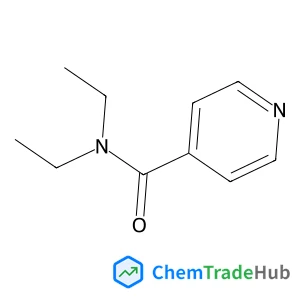
![4-[(1-Methyl-1H-pyrrol-2-yl)methylene]-1,3(2H,4H)-isoquinolinedione structure](https://static.chemtradehub.com/structs/110/1104546-89-5-a600.webp "4-[(1-Methyl-1H-pyrrol-2-yl)methylene]-1,3(2H,4H)-isoquinolinedione structure")
4-[(1-Methyl-1H-pyrrol-2-yl)methylene]-1,3(2H,4H)-isoquinolinedione
CAS番号:
1104546-89-5
分子式:
C15H12N2O2
おすすめサプライヤー





免責事項
このページに表示される学術雑誌情報は、参考および研究目的のみを目的としています。当社は雑誌出版社とは提携しておらず、投稿の取り扱いも行っておりません。出版に関するお問い合わせは、各雑誌出版社に直接ご連絡ください。
表示されている情報に誤りがある場合は、support@chemtradehub.com までご連絡ください。迅速に確認し、対応いたします。