













Molecular Catalysis
基本情報
略称:
MOL CATAL
インパクトファクター:
3.9
ISSN:
2468-8231
研究分野:
CHEMICAL
h-index:
144
自己引用率:
12.8%
年間論文数:
699
SCI収録状況:
Science Citation Index Expanded
ジャーナルウェブサイト:
https://www.sciencedirect.com/journal/molecular-catalysis
ジャーナル紹介:
Molecular Catalysis publishes full papers that are original, rigorous, and scholarly contributions examining the molecular and atomic aspects of catalytic activation and reaction mechanisms. The fields covered are: Heterogeneous catalysis including immobilized molecular catalysts Homogeneous catalysis including organocatalysis, organometallic catalysis and biocatalysis Photo- and electrochemistry Theoretical aspects of catalysis analyzed by computational methods Manuscripts submitted to Molecular Catalysis ideally fall into the field of chemical synthesis, i.e. the preparation of chemical compounds used as pharmaceutical building blocks, fine chemicals, commodity chemicals or as bulk chemicals (or as precursors for them). Manuscripts dealing with non-synthetic topics such as degradation reactions (e.g. photocatalysis for the degradation of dyes/pollutants), (bio)sensors or fuel cells will not be considered for publication in Molecular Catalysis. Contributions that do not fall within the above aims and scope will be rejected at the editorial level. Examples are papers that are limited to: Routine preparation and characterization of catalytic materials Routine synthetic organic applications of catalysis Routine computational studies that merely reproduces experimental data Since the scopes of the Elsevier journals Molecular Catalysis, Applied Catalysis A: General, Applied Catalysis B: Environmental, and Catalysis Communications are complementary, an appropriate submission to each journal could be borderline, in which case the advice of another Editor will be sought, possibly redirecting the submission to either Applied Catalysis A: General, Applied Catalysis B: Environmental, or Catalysis Communications (for letters) with the author(s)'s agreement. Molecular Catalysis publishes regularly full papers; special issues on well-defined topics are published only by invitation. However, proposal from authors are welcome anytime and enquiries regarding the submission of special issues should be directed to the Editors. Any special issue should contain at least 30 articles featuring work from leading experts in the area and/or from leading institutes. Review and Perspective articles are normally published by invitation. Perspectives are short articles covering current areas of interest for molecular catalysis audience in the form of personal accounts. The length of a published perspective ranges from 1500 to 2000 words (excluding figures, structures, photographs, schemes, tables, etc.) with at least 20 or more references. A new article format called "Ongoing Story" will focus on a still open molecular catalysis research showing the developments in the understanding by a specialist area. The length of a published "Ongoing story" ranges from 500 to 1000 words (excluding figures, structures, photographs, schemes, tables, etc.). Guidelines for catalyst characterization and reporting experimental results: Every manuscript published in Molecular Catalysis has to provide sufficient experimental detail to reproduce the experiments and calculations reported. Also, the identity of the products (especially if a new product is synthesized) has to be established together with the yield and its purity. Catalyst characterization: To establish the identity of new catalysts a precise synthesis and purification procedure is inevitable as well as sufficient spectroscopic (e.g. UV-Vis, NMR etc.), crystallographic and chromatographic identification (ideally placed into the supporting information). In case of enzyme catalysts, a detailed description and documentation (e.g. SDS-gels etc) of the enzyme preparation (such as expression system, induction, fermentation conditions, downstream processing and enzyme purification) has to be provided. Catalyst activity assays have to be described in detail (including reagents, assay conditions and activity calculations). Reaction conditions: A detailed description of the reaction conditions comprises: solvent composition (if appropriate buffer strength, pH etc.), reaction temperature, pressure, shaking- or stirring etc. Whereas possible, the concentrations of all reagents must be given in molar concentrations. This applies in particular to time courses shown in the manuscript. Authors should refrain from showing %-conversions but rather show molar concentrations of products and starting materials. To evaluate the efficiency of a catalyst, turnover numbers and turnover frequencies (together with the conditions and equations for their calculation) should be included in the manuscript text. Statements on efficiency and/or environmental benignity: In general, authors should refrain from claims of 'efficiency' and/or environmental benignity ('greenness') unless these claims are substantiated by a quantitative comparison with a method of the state-of-the-art. Manuscripts using such terms excessively without quantitative justification will not be considered for publication. Plagiarism: All manuscripts submitted to Molecular Catalysis are routinely screened with respect to originality of concept, content, and writing. It is not appropriate for an author to reuse wording from publicly available sources (including the authors' own publications) no matter if cited (or not). Manuscripts with a plagiarism level (similarity index) above 10%, including self-plagiarism will be automatically rejected at Editorial level.
CiteScore
CiteScore
6.9
SJR
0.718
SNIP
0.744
| 分野 | ランク | パーセンタイル |
|---|---|---|
ChemistryPhysical and Theoretical Chemistry |
47 / 189 | 75% |
ジャーナル統計
号/年
Time to first decision: 15days
Review time: 59days
Submission to acceptance: 77days
Acceptance to publication: 8days
査読期間
$3110
論文処理料
投稿情報
投稿サイト:
https://www.editorialmanager.com/MOLCAA収録タイプ:
Full-length, or regular papers
Reviews of specialized topics
Reviews of specialized topics
関連論文
Proceedings of the Society of Public Analysts and other Analytical Chemists
Other
DOI: 10.1039/AN938630775A
Proceedings of the Society of Public Analysts and other Analytical Chemists
Other
DOI: 10.1039/AN939640077A
Spectrophotometric terms and symbols. Report of a panel appointed by the Publication Committee
Other
DOI: 10.1039/AN942670227A
こちらもおすすめ
化合物よくある質問
1-{3-[5-(エチルカルボンイル)-2,4-ジメチル-1H-ピロロール-3-基]プロパニル}ピペリジン-4-カルボン酸について、適用される法規ガイドラインは何ですか?
この化合物はCAS番号1142209-81-1であり、GHS分類では corrosive (腐食性物質) と classified (分類物質) として指定され...
1142209-81-11-{3-[5-(Ethoxycarbo...
化合物よくある質問
2,2-二氟-1,3-ベンゾジオキサン-5-カルボキシlic酸とは何ですか?
2,2-二氟-1,3-ベンゾジオキサン-5-カルボキシlic酸は、CAS番号656-46-2の化合物で、化学式はC8H4F2O4です。この化合物は白色の結晶性粉...
656-46-22,2-Difluoro-1,3-ben...
化合物よくある質問
8-氯-4-色原酮の代替品はありますか?
8-氯-4-色原酮(CAS番号: 49701-11-3)の代替品には、他の色原酮類似物や、構造が似ている化合物があります。例えば、8-メチル-4-色原酮や、他の...
49701-11-38-Chloro-2,3-dihydro...
化合物よくある質問
エチル6,6-ジメチル-4,5,6,7-テトラヒドロ-1H-インドアゼー-3-カルボキシレートとは何ですか?
エチル6,6-ジメチル-4,5,6,7-テトラヒドロ-1H-インドアゼー-3-カルボキシレートは、CAS番号1233243-56-5を有する化合物です。これは有...
1233243-56-5Ethyl 6,6-dimethyl-4...
化合物よくある質問
4-叔丁基-6-氯-嘧啶に適用される法規ガイドラインは何ですか?
4-叔丁基-6-氯-嘧啶はCAS番号3435-24-3で、GHS分類では毒性物質とみなし、GHSの危険性分類が適用されます。REACH規則では登録が必要で、Eu...
3435-24-34-Tert-butyl-6-chlor...
化合物よくある質問
維库溴铵杂质Bはどのように合成されますか?
維库溴铵杂质Bは、アンドロステンデンから始まり、一連の合成反応、包括的な選択性と高い収率で合成されます。具体的には、ブロミド化、酸化、ジマーゼ反応、アミド化など...
50587-95-6(2beta,3alpha,5alpha...
化合物よくある質問
2-(4-氟苄基)-吡咯烷の物理化学的性質は何ですか?
CAS番号350017-04-8の2-(4-氟苄基)-吡咯烷は、結晶性の白色粉末です。分子量は199.17 g/molで、水に溶けにくいです。化学反応では比較的...
350017-04-82-(4-Fluorobenzyl)py...
化合物よくある質問
3-喹啉甲醛(2-チロール-8-エチル)は安全ですか?
3-喹啉甲醛(2-チロール-8-エチル)は一定の毒性を持つため、取扱には注意が必要です。使用する際は適切な防護具を着用し、密閉容器で保管・搬送し、直接的な接触を...
335196-05-92-Chloro-8-ethyl-3-q...
化合物よくある質問
エチル3-(ヒドロキシメチル)-1H-ピロール-2-カルボキシレートはどのように保存すればよいですか?
エチル3-(ヒドロキシメチル)-1H-ピロール-2-カルボキシレートは、室温(25℃)以下で保存し、直射日光を避け、乾燥した環境で保管することが推奨されます。ま...
75448-69-0Ethyl 3-(hydroxymeth...
119410-05-88-Chloro-11-(4-piper...
おすすめ化合物
![Bis[(1,2,3,4,5-eta)-1-(diphenylphosphino)cyclopentadienyl]iron structure](https://static.chemtradehub.com/structs/121/12150-46-8-ecd2.webp "Bis[(1,2,3,4,5-eta)-1-(diphenylphosphino)cyclopentadienyl]iron structure")
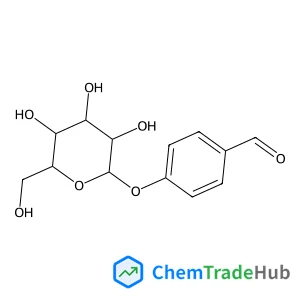
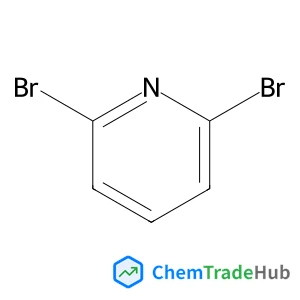

![3-[(4-Nitrobenzyl)oxy]-3-oxopropanoic Acid structure](https://static.chemtradehub.com/structs/773/77359-11-6-0d04.webp "3-[(4-Nitrobenzyl)oxy]-3-oxopropanoic Acid structure")

![2-Bromodibenzo[b,d]furan structure](https://static.chemtradehub.com/structs/86-/86-76-0-1814.webp "2-Bromodibenzo[b,d]furan structure")
おすすめサプライヤー





免責事項
このページに表示される学術雑誌情報は、参考および研究目的のみを目的としています。当社は雑誌出版社とは提携しておらず、投稿の取り扱いも行っておりません。出版に関するお問い合わせは、各雑誌出版社に直接ご連絡ください。
表示されている情報に誤りがある場合は、support@chemtradehub.com までご連絡ください。迅速に確認し、対応いたします。