



International Journal of Material Forming
基本情報
略称:
INT J MATER FORM
インパクトファクター:
2.6
ISSN:
1960-6206
研究分野:
ENGINEERING TECHNOLOGY
h-index:
30
自己引用率:
7.7%
年間論文数:
69
SCI収録状況:
Science Citation Index Expanded
ジャーナルウェブサイト:
https://www.springer.com/journal/12289
ジャーナル紹介:
The International Journal of Material Forming is the official Journal of the European Scientific Association for material FORMing (ESAFORM) (www.esaform.org). The Journal publishes and disseminates original research in the field of material forming. The research should constitute major achievements in the understanding, modeling or simulation of material forming processes. In this respect ‘forming’ implies a deliberate deformation of material. The journal establishes a platform of communication between engineers and scientists, covering all forming processes, including sheet forming, bulk forming, powder forming, forming in near-melt conditions (injection moulding, thixoforming, film blowing etc.), micro-forming, hydro-forming, thermo-forming, incremental forming etc. Other manufacturing technologies like machining and cutting can be included if the focus of the work is on plastic deformations. All materials (metals, ceramics, polymers, composites, glass, wood, fibre reinforced materials, materials in food processing, biomaterials, nano-materials, shape memory alloys etc.) and approaches (micro-macro modelling, thermo-mechanical modelling, numerical simulation including new and advanced numerical strategies, experimental analysis, inverse analysis, model identification, optimization, design and control of forming tools and machines, wear and friction, mechanical behavior and formability of materials etc.) are concerned. Papers should describe new forming processes, experiments, models or modelling techniques, related to forming or the relation between process conditions and product properties. In general, simulation results should be validated by experiments unless the focus is purely on novel modelling techniques. New models or modelling techniques should have a broad applicability in forming simulations and should not be restricted to one particular shape. Results of analytical or numerical models that are not translated into new knowledge or are not supported by experimental validation will not be accepted. Similarly, submissions that describe experimental results without thorough evaluation and conclusion and thus not leading to new knowledge, will be rejected. The relevance for forming technologies and the novelty of the work should be clearly described in the Abstract.
CiteScore
CiteScore
5.1
SJR
0.484
SNIP
1.474
| 分野 | ランク | パーセンタイル |
|---|---|---|
Materials ScienceGeneral Materials Science |
185 / 463 | 60% |
ジャーナル統計
号/年
Submission to first decision (median): 8 days
査読期間
£2590/$3890/€2990
論文処理料
投稿情報
投稿サイト:
https://www.editorialmanager.com/IJFOおすすめジャーナル

Faraday Discussions

Contact Lens & Anterior Eye

Green Chemistry

Nature Reviews Drug Discovery

Current Pharmaceutical Biotechnology

Photochemical & Photobiological Sciences

Journal of Enzyme inhibition and Medicinal Chemistry

Coloration Technology

European Journal of Organic Chemistry

Angewandte Chemie International Edition
関連論文
Nano-design of quantum dot-based photocatalysts for hydrogen generation using advanced surface molecular chemistry
Dalal Noureldine, Tayirjan Isimjan, Bin Lin, Silvano Del Gobbo, Mutalifu Abulikemu, Mohamed Nejib Hedhili, Dalaver H. Anjum, Kazuhiro Takanabe
2014-11-12
Paper
DOI: 10.1039/C4CP04365K
Non-universal tracer diffusion in crowded media of non-inert obstacles
Surya K. Ghosh, Andrey G. Cherstvy
2014-11-26
Paper
DOI: 10.1039/C4CP03599B
Schiff base ligands and their transition metal complexes in the mixtures of ionic liquid + organic solvent: a thermodynamic study
Hemayat Shekaari, Amir Kazempour, Maryam Khoshalhan
2014-11-25
Paper
DOI: 10.1039/C4CP04432K
On the nature of hydrogen bonds to platinum(ii) – which interaction can predict their strength?
Rocío Sánchez-de-Armas, Mårten S. G. Ahlquist
2014-11-12
Communication
DOI: 10.1039/C4CP04657A
Intra-residue interactions in proteins: interplay between serine or cysteine side chains and backbone conformations, revealed by laser spectroscopy of isolated model peptides
Himansu S. Biswal
2014-11-27
Paper
DOI: 10.1039/C4CP04449E
Correction: High throughput first-principles calculations of bixbyite oxides for TCO applications
Nasrin Sarmadian, Rolando Saniz, Bart Partoens, Dirk Lamoen, Kalpana Volety, Guido Huyberechts, Johan Paul
2014-12-01
Correction
DOI: 10.1039/C4CP90183E
DFT studies of oxygen dissociation on the 116-atom platinum truncated octahedron particle
Paul C. Jennings, Roy L. Johnston
2014-07-15
Paper
DOI: 10.1039/C4CP02147A
Surface redox chemistry and mechanochemistry of insulating polystyrene nanospheres
Thomas S. Varley, Martin Rosillo-Lopez, Sandeep Sehmi, Nathan Hollingsworth, Katherine B. Holt
2014-11-26
Paper
DOI: 10.1039/C4CP03938F
The key role of polymer grafted nanoparticles in the phase miscibility of an LCST mixture
Goutam Prasanna Kar, Avanish Bharati, Priti Xavier, Giridhar Madras, Suryasarathi Bose
2014-09-17
Paper
DOI: 10.1039/C4CP02925A
The planar electric double layer capacitance for the solvent primitive model electrolyte
Stanisław Lamperski, Monika Płuciennik, Christopher W. Outhwaite
2014-11-12
Paper
DOI: 10.1039/C4CP03513E
こちらもおすすめ
化合物よくある質問
1-{3-[5-(エチルカルボンイル)-2,4-ジメチル-1H-ピロロール-3-基]プロパニル}ピペリジン-4-カルボン酸について、適用される法規ガイドラインは何ですか?
この化合物はCAS番号1142209-81-1であり、GHS分類では corrosive (腐食性物質) と classified (分類物質) として指定され...
1142209-81-11-{3-[5-(Ethoxycarbo...
化合物よくある質問
2,2-二氟-1,3-ベンゾジオキサン-5-カルボキシlic酸とは何ですか?
2,2-二氟-1,3-ベンゾジオキサン-5-カルボキシlic酸は、CAS番号656-46-2の化合物で、化学式はC8H4F2O4です。この化合物は白色の結晶性粉...
656-46-22,2-Difluoro-1,3-ben...
化合物よくある質問
8-氯-4-色原酮の代替品はありますか?
8-氯-4-色原酮(CAS番号: 49701-11-3)の代替品には、他の色原酮類似物や、構造が似ている化合物があります。例えば、8-メチル-4-色原酮や、他の...
49701-11-38-Chloro-2,3-dihydro...
化合物よくある質問
エチル6,6-ジメチル-4,5,6,7-テトラヒドロ-1H-インドアゼー-3-カルボキシレートとは何ですか?
エチル6,6-ジメチル-4,5,6,7-テトラヒドロ-1H-インドアゼー-3-カルボキシレートは、CAS番号1233243-56-5を有する化合物です。これは有...
1233243-56-5Ethyl 6,6-dimethyl-4...
化合物よくある質問
4-叔丁基-6-氯-嘧啶に適用される法規ガイドラインは何ですか?
4-叔丁基-6-氯-嘧啶はCAS番号3435-24-3で、GHS分類では毒性物質とみなし、GHSの危険性分類が適用されます。REACH規則では登録が必要で、Eu...
3435-24-34-Tert-butyl-6-chlor...
化合物よくある質問
維库溴铵杂质Bはどのように合成されますか?
維库溴铵杂质Bは、アンドロステンデンから始まり、一連の合成反応、包括的な選択性と高い収率で合成されます。具体的には、ブロミド化、酸化、ジマーゼ反応、アミド化など...
50587-95-6(2beta,3alpha,5alpha...
化合物よくある質問
2-(4-氟苄基)-吡咯烷の物理化学的性質は何ですか?
CAS番号350017-04-8の2-(4-氟苄基)-吡咯烷は、結晶性の白色粉末です。分子量は199.17 g/molで、水に溶けにくいです。化学反応では比較的...
350017-04-82-(4-Fluorobenzyl)py...
化合物よくある質問
3-喹啉甲醛(2-チロール-8-エチル)は安全ですか?
3-喹啉甲醛(2-チロール-8-エチル)は一定の毒性を持つため、取扱には注意が必要です。使用する際は適切な防護具を着用し、密閉容器で保管・搬送し、直接的な接触を...
335196-05-92-Chloro-8-ethyl-3-q...
化合物よくある質問
エチル3-(ヒドロキシメチル)-1H-ピロール-2-カルボキシレートはどのように保存すればよいですか?
エチル3-(ヒドロキシメチル)-1H-ピロール-2-カルボキシレートは、室温(25℃)以下で保存し、直射日光を避け、乾燥した環境で保管することが推奨されます。ま...
75448-69-0Ethyl 3-(hydroxymeth...
119410-05-88-Chloro-11-(4-piper...
おすすめ化合物
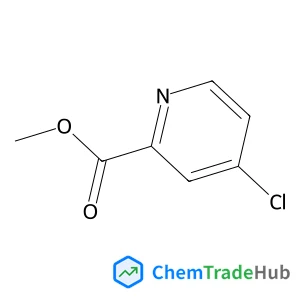
![3-[(4-Nitrobenzyl)oxy]-3-oxopropanoic Acid structure](https://static.chemtradehub.com/structs/773/77359-11-6-0d04.webp "3-[(4-Nitrobenzyl)oxy]-3-oxopropanoic Acid structure")



おすすめサプライヤー


免責事項
このページに表示される学術雑誌情報は、参考および研究目的のみを目的としています。当社は雑誌出版社とは提携しておらず、投稿の取り扱いも行っておりません。出版に関するお問い合わせは、各雑誌出版社に直接ご連絡ください。
表示されている情報に誤りがある場合は、support@chemtradehub.com までご連絡ください。迅速に確認し、対応いたします。