













Enhancing drug delivery with supramolecular amphiphilic macrocycle nanoparticles: selective targeting of CDK4/6 inhibitor palbociclib to melanoma
文献情報
出版日
2023-12-11
DOI
10.1039/D3BM01888A
インパクトファクター
6.843
著者
Mohamed F. Attia, Edikan A. Ogunnaike, Megan Pitz, Nancy M. Elbaz, Dillip K. Panda, Angela Alexander-Bryant, Sourav Saha, Daniel C. Whitehead
原文を見る
要旨
Drug delivery systems based on amphiphilic supramolecular macrocycles have garnered increased attention over the past two decades due to their ability to successfully formulate nanoparticles. Macrocyclic (MC) materials can self-assemble at lower concentrations without the need for surfactants and polymers, but surfactants are required to form and stabilize nanoparticles at higher concentrations. Using MCs to deliver both hydrophilic and hydrophobic guest molecules is advantageous. We developed two novel types of amphiphilic macrocycle nanoparticles (MC NPs) capable of delivering either Nile Red (NR) (a hydrophobic model) or Rhodamine B (RhB) (a hydrophilic model) fluorescent dyes. We extensively characterized the materials using various techniques to determine size, morphology, stability, hemolysis, fluorescence, loading efficiency (LE), and loading capacity (LC). We then loaded the CDK4/6 inhibitor Palbociclib (Palb) into both MC NPs using a solvent diffusion method. This yielded Palb-MC NPs in the size range of 65–90 nm. They exhibited high stability over time and in fetal bovine serum with negligible toxicity against erythrocytes. Cytotoxicity was minimal when tested against RAW macrophages, human fibroblast HDFn, and adipose stromal cells (ASCs) at higher concentrations of MC NPs. Cell viability studies were conducted with different concentrations of MC NPs, Palb-MC NPs, and free Palb against RAW macrophages, human U-87 GBM, and human M14 melanoma cell lines in vitro. Flow cytometry experiments revealed that blank MC NPs and Palb-MC NPs were selectively targeted to melanoma cells, resulting in cell death compared to the other two cell lines. Future work will focus on studying the biological effect of MC NPs including their binding affinity with molecules/receptors expressed on the M14 and other melanoma cell surfaces by molecular docking simulations. Subsequently, we will evaluate the MCs as a component of combination therapy in a murine melanoma model.
関連文献
Facile preparation and cell imaging applications of fluorescent organic nanoparticles that combine AIE dye and ring-opening polymerization
Xiqi Zhang, Xiaoyong Zhang, Bin Yang, Junfeng Hui, Meiying Liu, Zhenguo Chi, Siwei Liu, Jiarui Xu, Yen Wei
2013-09-10
Communication
DOI: 10.1039/C3PY01143G
Synthesis of water-soluble polyisocyanates with the oligo(ethylene glycol) side-chain as new thermoresponsive polymers
Naoya Sakai, Mingoo Jin, Shin-ichiro Sato, Toshifumi Satoh, Toyoji Kakuchi
2013-10-02
Paper
DOI: 10.1039/C3PY00972F
One-pot synthesis of responsive sulfobetaine nanoparticles by RAFT polymerisation: the effect of branching on the UCST cloud point
Helen Willcock, Annhelen Lu, Claire F. Hansell, Emma Chapman, Ian R. Collins, Rachel K. O'Reilly
2013-10-25
Paper
DOI: 10.1039/C3PY00998J
The use of a carbon paste electrode mixed with multiwalled carbon nanotube/electroactive polyimide composites as an electrode for sensing ascorbic acid
Tsao-Cheng Huang, Lu-Chen Yeh, Hsiu-Ying Huang, Zheng-Yong Nian, Yi-Chun Yeh, Yi-Chen Chou, Jui-Ming Yeh, Mei-Hui Tsai
2013-09-05
Paper
DOI: 10.1039/C3PY00787A
Anomalous high photovoltages observed in shish kebab-like organic p–n junction nanostructures
Daniel L. Jacobs, Benjamin R. Bunes, Helin Huang, Xiaomei Yang, Ling Zang
2013-08-30
Communication
DOI: 10.1039/C3PY01026K
Photo-induced cobalt-mediated radical polymerization of vinyl acetate
Xuelang Miao, Wei Zhu, Zhengbiao Zhang, Wei Zhang, Xiulin Zhu, Jian Zhu
2013-08-28
Paper
DOI: 10.1039/C3PY00913K
Micellar-cluster association of ureidopyrimidone functionalized monochelic polybutadiene
Sachin Laxman Bobade, Thomas Malmgren
2013-09-09
Paper
DOI: 10.1039/C3PY01002C
RAFT/MADIX (co)polymerization of vinyl trifluoroacetate: a means to many ends
Jean-Daniel Marty, Mathias Destarac
2013-10-01
Paper
DOI: 10.1039/C3PY01109G
Poly(methacrylic acid) complexation of amphotericin B to treat neglected diseases
Ji-won Choi, Denis Martin, Vanessa Yardley, Keith Powell, Antony Godwin
2013-10-08
Paper
DOI: 10.1039/C3PY01051A
こちらもおすすめ
28770-01-62-(2-Isopropyl-1,3-o...
化合物よくある質問
「邻羟基阿托伐他汀内酯标准品」に適用される法規ガイドelinesは何ですか?
CAS番号163217-74-1の「邻羟基阿托伐他汀内酯标准品」は、GHS分類では危険物に分類されず、主にREACH規則とFDA/EPAの管理対象となります。R...
163217-74-1ortho-Hydroxy Atorva...
化合物よくある質問
メチル(3R)-3-アミノ-2,3-ジヒドロ-1-ベンゾファンラニン-5-カルボイル酸塩塩酸塩の主な用途は何ですか?
メチル(3R)-3-アミノ-2,3-ジヒドロ-1-ベンゾファンラニン-5-カルボイル酸塩塩酸塩は、医薬品や合成化学の研究に広く用いられます。また、特定の薬物の前...
2241594-15-8Methyl (3R)-3-amino-...
化合物よくある質問
トランス-4-メチルピロリジン-3-オール塩酸塩はどのように合成されますか?
トランス-4-メチルピロリジン-3-オール塩酸塩は、4-メチルピロリジンの塩酸塩化によって合成されます。一般的な合成方法では、4-メチルピロリジンを塩酸に加えて...
265108-42-7trans-4-Methylpyrrol...
化合物よくある質問
硫雜環丁烷-1,1-二氧化物は安全ですか?
硫雜環丁烷-1,1-二氧化物は安全ではありません。毒性は報告されていませんが、高温下で分解し、可燃性があるため、高圧ガスは注意が必要です。密閉した容器で保管し、...
5687-92-3Thietane 1,1-dioxide
6054-10-02H, 8H-Benzo[1,2-b
化合物よくある質問
9-ヒドロキシエリプチシネ塩酸塩はどのように合成されますか?
9-ヒドロキシエリプチシネ塩酸塩は、エリプチシネから塩酸を添加することで合成されます。選択性は高いですが、収率は約70%です。
52238-35-49-Hydroxyellipticine...
化合物よくある質問
5-塩素-2-(メチルアミノ)フェニル-(2-塩素フェニル)メタン酮の物理化学的性質は何ですか?
5-塩素-2-(メチルアミノ)フェニル-(2-塩素フェニル)メタン酮のCAS番号は5621-86-3です。この化合物は白色の結晶性粉末で、分子量は415.03で...
5621-86-3[5-Chloro-2-(methyla...
化合物よくある質問
1-[2-(4-甲氧基-苯氧基)-乙基]-哌嗪はどのように保存すればよいですか?
1-[2-(4-甲氧基-苯氧基)-乙基]-哌嗪は、直射日光を避けて暗所に、室温(15-25℃)で保管し、密閉容器に入れることで安定性を保つことができます。
117132-44-21-[2-(4-Methoxy-phen...
化合物よくある質問
2-[3-(4-甲氧基フェニル)プロピル]-4,4,5,5-四メチル-1,3,2-ドイボロロールアンの主な用途は何ですか?
2-[3-(4-甲氧基フェニル)プロピル]-4,4,5,5-四メチル-1,3,2-ドイボロロールアンは、医薬品の合成、有機合成化学、および新材料の研究で使用され...
1073371-72-82-[3-(4-Methoxypheny...
掲載誌
Biomaterials Science
CiteScore:
11.5
自己引用率:
3.4%
年間論文数:
492
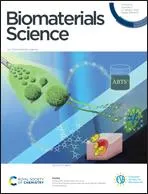
Biomaterials Science is an international high impact journal exploring the science of biomaterials and their translation towards clinical use. Its scope encompasses new concepts in biomaterials design, studies into the interaction of biomaterials with the body, and the use of materials to answer fundamental biological questions. Papers do not necessarily need to report a new biomaterial but should provide novel insight into the biological applications of the biomaterial. Articles that primarily focus on demonstrating novel materials chemistry and bring a molecular picture to bear on a given material’s suitability as a biomaterial are more suited to our companion journal, Journal of Materials Chemistry B. Biomaterials Science publishes primary research and review-type articles in the following areas: molecular design of biomaterials, including translation of emerging chemistries to biomaterials science of cells and materials at the nanoscale and microscale materials as model systems for stem cell and human biology materials for tissue engineering and regenerative medicine (Nano)materials and (nano)systems for therapeutic delivery interactions at the biointerface biologically inspired and biomimetic materials, including bio-inspired self-assembly systems and cell-inspired synthetic tools next-generation biomaterials tools and methods
おすすめ化合物

おすすめサプライヤー





免責事項
このページに表示される学術雑誌情報は、参考および研究目的のみを目的としています。当社は雑誌出版社とは提携しておらず、投稿の取り扱いも行っておりません。出版に関するお問い合わせは、各雑誌出版社に直接ご連絡ください。
表示されている情報に誤りがある場合は、support@chemtradehub.com までご連絡ください。迅速に確認し、対応いたします。