


![S-[2,3-Bis(palmitoyloxy)propyl]-N-[(9H-fluoren-9-ylmethoxy)(hydroxy)methylene]cysteine structure](https://static.chemtradehub.com/structs/210/210532-98-2-f6a7.webp "S-[2,3-Bis(palmitoyloxy)propyl]-N-[(9H-fluoren-9-ylmethoxy)(hydroxy)methylene]cysteine structure")
Nano-in-nano enteric protein delivery system: coaxial Eudragit® L100-55 fibers containing poly(N-vinylcaprolactam) nanogels
文献情報
出版日
2023-11-22
DOI
10.1039/D3BM01422C
インパクトファクター
6.843
著者
Ana Sonzogni, Guadalupe Rivero, Verónica Gonzalez, Gustavo Abraham, Roque Minari
原文を見る
要旨
Oral protein delivery holds significant promise as an effective therapeutic strategy for treating a wide range of diseases. However, effective absorption of proteins faces challenges due to biological barriers such as harsh conditions of the stomach and the low permeability of mucous membranes. To address these challenges, this article presents a novel nano-in-nano platform designed for enteric protein delivery. This platform, obtained by electrospinning, involves a coaxial arrangement comprising poly(N-vinylcaprolactam) nanogels (NGs) enclosed within nanofibers of Eudragit® L100-55 (EU), a pH-responsive polymer. The pH-selective solubility of EU ensures the protection of NGs during their passage through the stomach, where the fibers remain intact at low pH, and releases them in the intestine where EU dissolves. The switchable characteristic of this nano-in-nano platform is confirmed by using NGs loaded with a model protein (ovalbumin), which is selectively released when the intestinal pH is achieved. The versatility of this nano-in-nano delivery platform is demonstrated by the ability to modify the fibers dissolution profile simply by adjusting the concentration of EU used in the electrospinning process. Furthermore, by tuning the properties of NGs, the potential applications of this platform can be further extended, paving the way for diverse therapeutic possibilities.
おすすめジャーナル

Current Opinion in Colloid & Interface Science

Crystallography Reports

Acta Materialia

Chemical Communications

Current Opinion in Solid State & Materials Science

Organic Process Research & Development

Russian Journal of Coordination Chemistry

Russian Journal of Applied Chemistry

New Journal of Chemistry

Russian Journal of Organic Chemistry
関連文献
Photosensitizer-conjugated redox-responsive dextran theranostic nanoparticles for near-infrared cancer imaging and photodynamic therapy
Peng Liu, Caixia Yue, Zonghai Sheng, Guanhui Gao, Mingxing Li, Huqiang Yi, Cuifang Zheng, Bi Wang, Lintao Cai
2013-09-20
Paper
DOI: 10.1039/C3PY01173A
Post-metalation of porous aromatic frameworks for highly efficient carbon capture from CO2 + N2 and CH4 + N2 mixtures
Heping Ma, Hao Ren, Xiaoqin Zou, Shuang Meng, Fuxing Sun
2013-07-24
Paper
DOI: 10.1039/C3PY00647F
Salt-induced reentrant hydrogel of poly(ethylene glycol)–poly(lactide-co-glycolide) block copolymers
Ting Li, Tianyuan Ci, Liang Chen, Lin Yu, Jiandong Ding
2013-09-26
Paper
DOI: 10.1039/C3PY01107K
Acetyl protected thiol methacrylic polymers as effective ligands to keep quantum dots in luminescent standby mode
Marta Liras, Isabel Quijada-Garrido, Marta Palacios-Cuesta, Sonia Muñoz-Durieux, Olga García
2013-08-30
Paper
DOI: 10.1039/C3PY00987D
Hyperbranched polyisobutylenes for self-healing polymers
D. Döhler, P. Zare, W. H. Binder
2013-10-03
Paper
DOI: 10.1039/C3PY01151H
A novel route for polymerisation of thiophene based conducting polymers using trace-free oxidants
Jimy Hadiono So, David Mayevsky, Orawan Winther-Jensen, Bjorn Winther-Jensen
2013-10-10
Communication
DOI: 10.1039/C3PY01265D
Growing polymers from peptides and proteins: a biomedical perspective
Yizhi Qi
2013-10-11
Review Article
DOI: 10.1039/C3PY01089A
Binding and supramolecular organization of homo- and heterotelechelic oligomers in solutions
Jessalyn Cortese, Corinne Soulié-Ziakovic, Ludwik Leibler
2013-07-19
Paper
DOI: 10.1039/C3PY00638G
Polymer-modified gold nanoparticles via RAFT polymerization: a detailed study for a biosensing application
Masaki Takara, Masayuki Toyoshima, Hirokazu Seto, Yu Hoshino, Yoshiko Miura
2013-09-20
Paper
DOI: 10.1039/C3PY01001E
On the effect of using RAFT and FRP for the bulk synthesis of acrylic and methacrylic molecularly imprinted polymers
Carlo Gonzato, Pamela Pasetto, Fahmi Bedoui, Pierre-Emmanuel Mazeran, Karsten Haupt
2013-10-24
Paper
DOI: 10.1039/C3PY01246H
こちらもおすすめ
28770-01-62-(2-Isopropyl-1,3-o...
化合物よくある質問
「邻羟基阿托伐他汀内酯标准品」に適用される法規ガイドelinesは何ですか?
CAS番号163217-74-1の「邻羟基阿托伐他汀内酯标准品」は、GHS分類では危険物に分類されず、主にREACH規則とFDA/EPAの管理対象となります。R...
163217-74-1ortho-Hydroxy Atorva...
化合物よくある質問
メチル(3R)-3-アミノ-2,3-ジヒドロ-1-ベンゾファンラニン-5-カルボイル酸塩塩酸塩の主な用途は何ですか?
メチル(3R)-3-アミノ-2,3-ジヒドロ-1-ベンゾファンラニン-5-カルボイル酸塩塩酸塩は、医薬品や合成化学の研究に広く用いられます。また、特定の薬物の前...
2241594-15-8Methyl (3R)-3-amino-...
化合物よくある質問
トランス-4-メチルピロリジン-3-オール塩酸塩はどのように合成されますか?
トランス-4-メチルピロリジン-3-オール塩酸塩は、4-メチルピロリジンの塩酸塩化によって合成されます。一般的な合成方法では、4-メチルピロリジンを塩酸に加えて...
265108-42-7trans-4-Methylpyrrol...
化合物よくある質問
硫雜環丁烷-1,1-二氧化物は安全ですか?
硫雜環丁烷-1,1-二氧化物は安全ではありません。毒性は報告されていませんが、高温下で分解し、可燃性があるため、高圧ガスは注意が必要です。密閉した容器で保管し、...
5687-92-3Thietane 1,1-dioxide
6054-10-02H, 8H-Benzo[1,2-b
化合物よくある質問
9-ヒドロキシエリプチシネ塩酸塩はどのように合成されますか?
9-ヒドロキシエリプチシネ塩酸塩は、エリプチシネから塩酸を添加することで合成されます。選択性は高いですが、収率は約70%です。
52238-35-49-Hydroxyellipticine...
化合物よくある質問
5-塩素-2-(メチルアミノ)フェニル-(2-塩素フェニル)メタン酮の物理化学的性質は何ですか?
5-塩素-2-(メチルアミノ)フェニル-(2-塩素フェニル)メタン酮のCAS番号は5621-86-3です。この化合物は白色の結晶性粉末で、分子量は415.03で...
5621-86-3[5-Chloro-2-(methyla...
化合物よくある質問
1-[2-(4-甲氧基-苯氧基)-乙基]-哌嗪はどのように保存すればよいですか?
1-[2-(4-甲氧基-苯氧基)-乙基]-哌嗪は、直射日光を避けて暗所に、室温(15-25℃)で保管し、密閉容器に入れることで安定性を保つことができます。
117132-44-21-[2-(4-Methoxy-phen...
化合物よくある質問
2-[3-(4-甲氧基フェニル)プロピル]-4,4,5,5-四メチル-1,3,2-ドイボロロールアンの主な用途は何ですか?
2-[3-(4-甲氧基フェニル)プロピル]-4,4,5,5-四メチル-1,3,2-ドイボロロールアンは、医薬品の合成、有機合成化学、および新材料の研究で使用され...
1073371-72-82-[3-(4-Methoxypheny...
掲載誌
Biomaterials Science
CiteScore:
11.5
自己引用率:
3.4%
年間論文数:
492
Biomaterials Science is an international high impact journal exploring the science of biomaterials and their translation towards clinical use. Its scope encompasses new concepts in biomaterials design, studies into the interaction of biomaterials with the body, and the use of materials to answer fundamental biological questions. Papers do not necessarily need to report a new biomaterial but should provide novel insight into the biological applications of the biomaterial. Articles that primarily focus on demonstrating novel materials chemistry and bring a molecular picture to bear on a given material’s suitability as a biomaterial are more suited to our companion journal, Journal of Materials Chemistry B. Biomaterials Science publishes primary research and review-type articles in the following areas: molecular design of biomaterials, including translation of emerging chemistries to biomaterials science of cells and materials at the nanoscale and microscale materials as model systems for stem cell and human biology materials for tissue engineering and regenerative medicine (Nano)materials and (nano)systems for therapeutic delivery interactions at the biointerface biologically inspired and biomimetic materials, including bio-inspired self-assembly systems and cell-inspired synthetic tools next-generation biomaterials tools and methods
おすすめ化合物
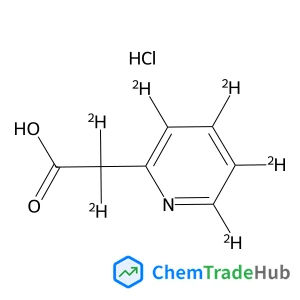
2,2-dideuterio-2-(3,4,5,6-tetradeuterio-2-pyridyl)acetic acid;hydrochloride
CAS番号:
1329799-67-8
分子式:
C7H2ClD6NO2
phosphoryl}methyl 4-methylbenzenesulfonate structure](https://static.chemtradehub.com/structs/864/864068-45-1-ba7c.webp "{[3-(Hexadecyloxy)propoxy](hydroxy)phosphoryl}methyl 4-methylbenzenesulfonate structure")
{[3-(Hexadecyloxy)propoxy](hydroxy)phosphoryl}methyl 4-methylbenzenesulfonate
CAS番号:
864068-45-1
分子式:
C27H49O7PS

おすすめサプライヤー





免責事項
このページに表示される学術雑誌情報は、参考および研究目的のみを目的としています。当社は雑誌出版社とは提携しておらず、投稿の取り扱いも行っておりません。出版に関するお問い合わせは、各雑誌出版社に直接ご連絡ください。
表示されている情報に誤りがある場合は、support@chemtradehub.com までご連絡ください。迅速に確認し、対応いたします。