
2,2-dideuterio-2-(3,4,5,6-tetradeuterio-2-pyridyl)acetic acid;hydrochloride
CAS番号:
1329799-67-8
分子式:
C7H2ClD6NO2
Yingying Li, Shan Gao, Yu Zhang, Zhijing He, Jianbo Ji, Xiaoye Yang, Lei Ye, Lixia Zhao
The eyes have a complicated microenvironment with many clearance mechanisms, making it challenging for effective drug delivery to the targeted areas of the eyes. Substrate transport mediated by active transporters is an important way to change drug metabolism in the ocular microenvironment. We designed multifunctional, dual-adaptive nanomicelles (GSCQ@NTB) which could overcome multiple physiological barriers by acting on both the efflux transporter and influx transporter to achieve deep delivery of the P-gp substrate in the cornea. Specifically, an effective “triple” antiangiogenic agent, nintedanib (NTB), was loaded into the biocompatible micelles. The expression of the efflux transporter was reversed by grafting quercetin. The peptide (glycylsarcosine, GS) was modified to target the influx transporter “Peptide Transporter-1” (PepT-1). Quercetin (QRT) and nintedanib (NTB) were transported to the cornea cooperatively, achieving long retention on the ocular surface and high compatibility. In a New Zealand rabbit model, within 8 hours after local administration, GSCQ@NTB was enriched in corneal stromal neovascularization and effectively inhibited the progress of neovascularization. Its effectiveness is slightly better than that in the first-line clinical application of steroids. In this study, we introduce the preparation of a dual adaptive nano-micelle system, which may provide an effective non-invasive treatment for corneal neovascularization.

Russian Journal of Bioorganic Chemistry

Current Opinion in Solid State & Materials Science

Russian Journal of Coordination Chemistry

Crystallography Reports

Russian Journal of General Chemistry

Acta Materialia

Journal of Peptide Science

New Journal of Chemistry

Journal of Saudi Chemical Society

Russian Journal of Applied Chemistry
Xiang Luo, Shijie Xie, Jun Liu, Haibin Hu, Jing Jiang, Wei Huang, Haiyang Gao, Dongshan Zhou, Zhongyuan Lü, Deyue Yan
DOI: 10.1039/C3PY00896G
Susanne Boye, Mihaela Cernescu, Hartmut Komber, Bernhard Brutschy, Dietmar Appelhans
DOI: 10.1039/C3PY01152F
Lin Yang, Yaling Lin, Lianshi Wang, Anqiang Zhang
DOI: 10.1039/C3PY01005H
Bunyamin Karagoz, Hien T. Duong, Johan S. Basuki, Cyrille Boyer
DOI: 10.1039/C3PY01306E
Christopher Waldron, Qiang Zhang, Zaidong Li, Vasiliki Nikolaou, Gabit Nurumbetov, Jamie Godfrey, Ronan McHale, Gokhan Yilmaz, Rajan K. Randev, Mony Girault, Kayleigh McEwan, David M. Haddleton, Martijn Droesbeke, Alice J. Haddleton, Paul Wilson, Alexandre Simula, Jennifer Collins, Danielle J. Lloyd, James A. Burns, Christopher Summers, Claudia Houben, Athina Anastasaki, Muxiu Li, C. Remzi Becer, Jenny K. Kiviaho, Nuttapol Risangud
DOI: 10.1039/C3PY01075A
Zhijia Liu, Ping Yao
DOI: 10.1039/C3PY01083J
Dahlia N. Amato, Gregory A. Strange, John P. Swanson, Anton D. Chavez, Suzanne E. Roy, Kim L. Varney, Craig A. Machado, Douglas V. Amato, Philip J. Costanzo
DOI: 10.1039/C3PY01024D
Jimy Hadiono So, David Mayevsky, Orawan Winther-Jensen, Bjorn Winther-Jensen
DOI: 10.1039/C3PY01265D
Helen Willcock, Annhelen Lu, Claire F. Hansell, Emma Chapman, Ian R. Collins, Rachel K. O'Reilly
DOI: 10.1039/C3PY00998J
CAS番号163217-74-1の「邻羟基阿托伐他汀内酯标准品」は、GHS分類では危険物に分類されず、主にREACH規則とFDA/EPAの管理対象となります。R...
メチル(3R)-3-アミノ-2,3-ジヒドロ-1-ベンゾファンラニン-5-カルボイル酸塩塩酸塩は、医薬品や合成化学の研究に広く用いられます。また、特定の薬物の前...
トランス-4-メチルピロリジン-3-オール塩酸塩は、4-メチルピロリジンの塩酸塩化によって合成されます。一般的な合成方法では、4-メチルピロリジンを塩酸に加えて...
硫雜環丁烷-1,1-二氧化物は安全ではありません。毒性は報告されていませんが、高温下で分解し、可燃性があるため、高圧ガスは注意が必要です。密閉した容器で保管し、...
9-ヒドロキシエリプチシネ塩酸塩は、エリプチシネから塩酸を添加することで合成されます。選択性は高いですが、収率は約70%です。
5-塩素-2-(メチルアミノ)フェニル-(2-塩素フェニル)メタン酮のCAS番号は5621-86-3です。この化合物は白色の結晶性粉末で、分子量は415.03で...
1-[2-(4-甲氧基-苯氧基)-乙基]-哌嗪は、直射日光を避けて暗所に、室温(15-25℃)で保管し、密閉容器に入れることで安定性を保つことができます。
2-[3-(4-甲氧基フェニル)プロピル]-4,4,5,5-四メチル-1,3,2-ドイボロロールアンは、医薬品の合成、有機合成化学、および新材料の研究で使用され...
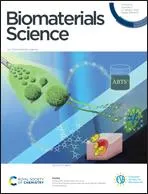
Biomaterials Science is an international high impact journal exploring the science of biomaterials and their translation towards clinical use. Its scope encompasses new concepts in biomaterials design, studies into the interaction of biomaterials with the body, and the use of materials to answer fundamental biological questions. Papers do not necessarily need to report a new biomaterial but should provide novel insight into the biological applications of the biomaterial. Articles that primarily focus on demonstrating novel materials chemistry and bring a molecular picture to bear on a given material’s suitability as a biomaterial are more suited to our companion journal, Journal of Materials Chemistry B. Biomaterials Science publishes primary research and review-type articles in the following areas: molecular design of biomaterials, including translation of emerging chemistries to biomaterials science of cells and materials at the nanoscale and microscale materials as model systems for stem cell and human biology materials for tissue engineering and regenerative medicine (Nano)materials and (nano)systems for therapeutic delivery interactions at the biointerface biologically inspired and biomimetic materials, including bio-inspired self-assembly systems and cell-inspired synthetic tools next-generation biomaterials tools and methods