phosphoryl}methyl 4-methylbenzenesulfonate structure](https://static.chemtradehub.com/structs/864/864068-45-1-ba7c.webp "{[3-(Hexadecyloxy)propoxy](hydroxy)phosphoryl}methyl 4-methylbenzenesulfonate structure")
{[3-(Hexadecyloxy)propoxy](hydroxy)phosphoryl}methyl 4-methylbenzenesulfonate
CAS番号:
864068-45-1
分子式:
C27H49O7PS
Shanshan Zhou, Zongxin Li, Yan Li, Xiaoyao Wang, Kun Deng
Breast cancer is presently the most common form of malignant tumour globally, and its precise diagnosis is vital for enhancing patient survival rates and their quality of life. Exosomes, which are small extracellular vesicles containing proteins and nucleic acid molecules, have emerged as ideal cancer markers for liquid biopsy-based diagnostics. Nevertheless, the current methods for isolating exosomes present challenges for clinical implementation. Although immunoaffinity-based microfluidics hold potential for exosome-based cancer diagnostics, existing microfluidic chips struggle to capture and release intact, high-purity, and highly specific exosomes effectively. To surmount these obstacles, we developed the HBEXO-Chip, an innovative immunoaffinity microfluidic device that employs cleavable linker chemistry technology. This chip enables rapid isolation and detection of breast cancer-derived exosomes in peripheral blood. The fishbone-like microfluidic chip design of the HBEXO-Chip heightens the binding likelihood between specific exosomes and antibodies, significantly augmenting capture efficiency. Furthermore, the gentle reaction conditions of the cleavable linker chemistry retain the exosomes' membrane structure's integrity during the release process, which is advantageous for downstream experimental analysis. Our study demonstrated the effectiveness of the HBEXO-Chip in distinguishing breast cancer patients, patients with benign breast tumours, and healthy controls. By quantitatively analysing Epcam+ exosomes in clinical plasma samples, this technology platform provides a quick, user-friendly, highly sensitive, and specific assay for detecting tumour exosomes in peripheral blood, making it a valuable liquid biopsy tool for clinicians to diagnose breast cancer.

Journal of Natural Medicines

Russian Chemical Bulletin

Russian Journal of Coordination Chemistry

New Journal of Chemistry

Saudi Pharmaceutical Journal

Organic Process Research & Development

Current Opinion in Solid State & Materials Science

Journal of Peptide Science

Current Opinion in Colloid & Interface Science

Russian Journal of Applied Chemistry
John J. Garcia, Stephen A. Miller
DOI: 10.1039/C3PY01185B
Cen Zhou, Jia Tian, Ji-Liang Wang, Dan-Wei Zhang, Xin Zhao, Yi Liu, Zhan-Ting Li
DOI: 10.1039/C3PY01006F
Jimy Hadiono So, David Mayevsky, Orawan Winther-Jensen, Bjorn Winther-Jensen
DOI: 10.1039/C3PY01265D
Marta Liras, Isabel Quijada-Garrido, Marta Palacios-Cuesta, Sonia Muñoz-Durieux, Olga García
DOI: 10.1039/C3PY00987D
Shampa R. Samanta, Virgil Percec
DOI: 10.1039/C3PY01008B
Mohamad-Ali Tehfe, Frédéric Dumur, Pu Xiao, Marie Delgove, Bernadette Graff, Jean-Pierre Fouassier, Didier Gigmes, Jacques Lalevée
DOI: 10.1039/C3PY00922J
Huiying Liao, Ke Zhang, Gangsheng Tong, Guyu Xiao, Deyue Yan
DOI: 10.1039/C3PY00821E
Ying-Hsuan Chou, Sanae Takasugi, Raita Goseki, Takashi Ishizone, Wen-Chang Chen
DOI: 10.1039/C3PY01124K
Zhijia Liu, Ping Yao
DOI: 10.1039/C3PY01083J
Christophe Navarro
DOI: 10.1039/C3PY00935A
CAS番号163217-74-1の「邻羟基阿托伐他汀内酯标准品」は、GHS分類では危険物に分類されず、主にREACH規則とFDA/EPAの管理対象となります。R...
メチル(3R)-3-アミノ-2,3-ジヒドロ-1-ベンゾファンラニン-5-カルボイル酸塩塩酸塩は、医薬品や合成化学の研究に広く用いられます。また、特定の薬物の前...
トランス-4-メチルピロリジン-3-オール塩酸塩は、4-メチルピロリジンの塩酸塩化によって合成されます。一般的な合成方法では、4-メチルピロリジンを塩酸に加えて...
硫雜環丁烷-1,1-二氧化物は安全ではありません。毒性は報告されていませんが、高温下で分解し、可燃性があるため、高圧ガスは注意が必要です。密閉した容器で保管し、...
9-ヒドロキシエリプチシネ塩酸塩は、エリプチシネから塩酸を添加することで合成されます。選択性は高いですが、収率は約70%です。
5-塩素-2-(メチルアミノ)フェニル-(2-塩素フェニル)メタン酮のCAS番号は5621-86-3です。この化合物は白色の結晶性粉末で、分子量は415.03で...
1-[2-(4-甲氧基-苯氧基)-乙基]-哌嗪は、直射日光を避けて暗所に、室温(15-25℃)で保管し、密閉容器に入れることで安定性を保つことができます。
2-[3-(4-甲氧基フェニル)プロピル]-4,4,5,5-四メチル-1,3,2-ドイボロロールアンは、医薬品の合成、有機合成化学、および新材料の研究で使用され...
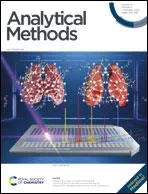
Analytical Methods welcomes early applications of new analytical and bioanalytical methods and technology demonstrating the potential for societal impact. We require that methods and technology reported in the journal are sufficiently innovative, robust, accurate, and compared to other available methods for the intended application. Developments with interdisciplinary approaches are particularly welcome. Systems should be proven with suitably complex and analytically challenging samples. We encourage developments within, but not limited to, the following technologies and applications: global health, point-of-care and molecular diagnostics biosensors and bioengineering drug development and pharmaceutical analysis applied microfluidics and nanotechnology omics studies, such as proteomics, metabolomics or glycomics environmental, agricultural and food science neuroscience biochemical and clinical analysis forensic analysis industrial process and method development
![1-[(4-Methylphenyl)sulfonyl]-3-(4,4,5,5-tetramethyl-1,3,2-dioxaborolan-2-yl)-1H-pyrrolo[2,3-b]pyridine-5-carbonitrile structure](https://static.chemtradehub.com/structs/143/1434747-57-5-fc0d.webp "1-[(4-Methylphenyl)sulfonyl]-3-(4,4,5,5-tetramethyl-1,3,2-dioxaborolan-2-yl)-1H-pyrrolo[2,3-b]pyridine-5-carbonitrile structure")