












![1-[(4-Methylphenyl)sulfonyl]-3-(4,4,5,5-tetramethyl-1,3,2-dioxaborolan-2-yl)-1H-pyrrolo[2,3-b]pyridine-5-carbonitrile structure](https://static.chemtradehub.com/structs/143/1434747-57-5-fc0d.webp "1-[(4-Methylphenyl)sulfonyl]-3-(4,4,5,5-tetramethyl-1,3,2-dioxaborolan-2-yl)-1H-pyrrolo[2,3-b]pyridine-5-carbonitrile structure")
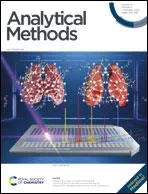
A low-cost optofluidic platform for the colorimetric assessment of bacterial activity in domestic wastewater
文献情報
出版日
2023-11-02
DOI
10.1039/D3AY01612A
インパクトファクター
2.896
著者
Prajal Chettri, Kalathur Mohan Ganesh, Sahashransu Satyajeet Mahapatra, A. S. Vishwanathan, Shailesh Srivastava
原文を見る
要旨
Optofluidic chips represent a cost-effective platform for the development of miniaturized devices to perform biochemical reactions at a microscale. The dye reduction-based electron-transfer activity monitoring (DREAM) assay is a colorimetric approach that has been adopted for the rapid assessment of bacterial activity in bioreactors used in bioremediation and industrial biotechnology. A three-layered PMMA-based optofluidic chip having laser-machined microchannels coupled with a detection system comprising an LED source and a photodiode interfaced with a microcontroller for automation constituted the experimental setup. Data acquisition was executed using a user-friendly graphical user interface (GUI) that enabled real-time monitoring of bacterial activity. A performance comparison study was performed to assess the viability of replacing expensive spectrophotometers with an inexpensive photodiode for optoelectronic automation. Bacterial activity across different growth phases of a bacterial culture, initiated using untreated domestic wastewater, was assessed by the detector on the basis of voltage readings corresponding to the rate of decrease in the blue color intensity. The highest activity observed corresponded to the log phase of the growth curve. The optimal time for measurement of bacterial activity within the log phase of the growth curve was identified using different dilutions of untreated domestic wastewater. Furthermore, the device showed comparable sensitivities for samples from different time points in a bacterial growth curve and for different dilutions of untreated domestic wastewater samples. The device also demonstrated a linear response in the assessment of bacterial activity as a function of the change in strength of untreated domestic wastewater. This is the first report on colorimetric assessment of bacterial activity using a low-cost photodiode-based device at the microscale constructed using off-the-shelf components.
おすすめジャーナル
関連文献
Effect of chemically modified graphene oxide on the phase separation behaviour and properties of an epoxy/polyetherimide binary system
Guijun Yu, Peiyi Wu
2013-07-31
Paper
DOI: 10.1039/C3PY00878A
Enzyme-mediated fast injectable hydrogels based on chitosan–glycolic acid/tyrosine: preparation, characterization, and chondrocyte culture
Rong Jin, Chao Lin, Aoneng Cao
2013-08-14
Paper
DOI: 10.1039/C3PY00864A
Synthesis of antimicrobial silsesquioxane–silica hybrids by hydrolytic co-condensation of alkoxysilanes
Shi-qiang Gong, D. Jeevanie Epasinghe, Wei Zhang, Bin Zhou, Li-na Niu, Heonjune Ryou, Ashraf A. Eid, Andrea Frassetto, Cynthia K. Y. Yiu, Dwayne D. Arola, Jing Mao, David H. Pashley, Franklin R. Tay
2013-08-14
Paper
DOI: 10.1039/C3PY00635B
Selective O-acyl ring-opening of β-butyrolactone catalyzed by trifluoromethane sulfonic acid: application to the preparation of well-defined block copolymers
Christophe Navarro
2013-08-07
Paper
DOI: 10.1039/C3PY00935A
Versatile injectable supramolecular hydrogels containing drug loaded micelles for delivery of various drugs
Zhijia Liu, Ping Yao
2013-10-14
Paper
DOI: 10.1039/C3PY01083J
(Meth)acrylic monomers with heteroatom-containing ester side chains: a systematic PLP-SEC and polymerization study
Marek Stach, Anna Chovancová, Andrea M. Misske, Igor Lacík
2013-09-03
Paper
DOI: 10.1039/C3PY00948C
Neutral linear amphiphilic homopolymers prepared by atom transfer radical polymerization
Yi Wang, Alina M. Alb, Jibao He, Scott M. Grayson
2013-09-19
Paper
DOI: 10.1039/C3PY00916E
Combining surface topography with polymer chemistry: exploring new interfacial biological phenomena
Dan Li, Qing Zheng, Yanwei Wang, Hong Chen
2013-07-29
Review Article
DOI: 10.1039/C3PY00739A
Synthesis and solid state helix to helix rearrangement of poly(phenylacetylene) bearing n-octyl alkyl side chains
Asahi Motoshige, Yoshiaki Yoshida, Ranko Motoshige
2013-09-26
Paper
DOI: 10.1039/C3PY01000G
Hyperbranched polyisobutylenes for self-healing polymers
D. Döhler, P. Zare, W. H. Binder
2013-10-03
Paper
DOI: 10.1039/C3PY01151H
こちらもおすすめ
28770-01-62-(2-Isopropyl-1,3-o...
化合物よくある質問
「邻羟基阿托伐他汀内酯标准品」に適用される法規ガイドelinesは何ですか?
CAS番号163217-74-1の「邻羟基阿托伐他汀内酯标准品」は、GHS分類では危険物に分類されず、主にREACH規則とFDA/EPAの管理対象となります。R...
163217-74-1ortho-Hydroxy Atorva...
化合物よくある質問
メチル(3R)-3-アミノ-2,3-ジヒドロ-1-ベンゾファンラニン-5-カルボイル酸塩塩酸塩の主な用途は何ですか?
メチル(3R)-3-アミノ-2,3-ジヒドロ-1-ベンゾファンラニン-5-カルボイル酸塩塩酸塩は、医薬品や合成化学の研究に広く用いられます。また、特定の薬物の前...
2241594-15-8Methyl (3R)-3-amino-...
化合物よくある質問
トランス-4-メチルピロリジン-3-オール塩酸塩はどのように合成されますか?
トランス-4-メチルピロリジン-3-オール塩酸塩は、4-メチルピロリジンの塩酸塩化によって合成されます。一般的な合成方法では、4-メチルピロリジンを塩酸に加えて...
265108-42-7trans-4-Methylpyrrol...
化合物よくある質問
硫雜環丁烷-1,1-二氧化物は安全ですか?
硫雜環丁烷-1,1-二氧化物は安全ではありません。毒性は報告されていませんが、高温下で分解し、可燃性があるため、高圧ガスは注意が必要です。密閉した容器で保管し、...
5687-92-3Thietane 1,1-dioxide
6054-10-02H, 8H-Benzo[1,2-b
化合物よくある質問
9-ヒドロキシエリプチシネ塩酸塩はどのように合成されますか?
9-ヒドロキシエリプチシネ塩酸塩は、エリプチシネから塩酸を添加することで合成されます。選択性は高いですが、収率は約70%です。
52238-35-49-Hydroxyellipticine...
化合物よくある質問
5-塩素-2-(メチルアミノ)フェニル-(2-塩素フェニル)メタン酮の物理化学的性質は何ですか?
5-塩素-2-(メチルアミノ)フェニル-(2-塩素フェニル)メタン酮のCAS番号は5621-86-3です。この化合物は白色の結晶性粉末で、分子量は415.03で...
5621-86-3[5-Chloro-2-(methyla...
化合物よくある質問
1-[2-(4-甲氧基-苯氧基)-乙基]-哌嗪はどのように保存すればよいですか?
1-[2-(4-甲氧基-苯氧基)-乙基]-哌嗪は、直射日光を避けて暗所に、室温(15-25℃)で保管し、密閉容器に入れることで安定性を保つことができます。
117132-44-21-[2-(4-Methoxy-phen...
化合物よくある質問
2-[3-(4-甲氧基フェニル)プロピル]-4,4,5,5-四メチル-1,3,2-ドイボロロールアンの主な用途は何ですか?
2-[3-(4-甲氧基フェニル)プロピル]-4,4,5,5-四メチル-1,3,2-ドイボロロールアンは、医薬品の合成、有機合成化学、および新材料の研究で使用され...
1073371-72-82-[3-(4-Methoxypheny...
掲載誌
Analytical Methods
CiteScore:
5.1
自己引用率:
3.7%
年間論文数:
655
Analytical Methods welcomes early applications of new analytical and bioanalytical methods and technology demonstrating the potential for societal impact. We require that methods and technology reported in the journal are sufficiently innovative, robust, accurate, and compared to other available methods for the intended application. Developments with interdisciplinary approaches are particularly welcome. Systems should be proven with suitably complex and analytically challenging samples. We encourage developments within, but not limited to, the following technologies and applications: global health, point-of-care and molecular diagnostics biosensors and bioengineering drug development and pharmaceutical analysis applied microfluidics and nanotechnology omics studies, such as proteomics, metabolomics or glycomics environmental, agricultural and food science neuroscience biochemical and clinical analysis forensic analysis industrial process and method development
おすすめ化合物
![N-[2-(4-Hydroxyphenoxy)-4-nitrophenyl]methanesulfonamide structure](https://static.chemtradehub.com/structs/109/109032-22-6-7c88.webp "N-[2-(4-Hydroxyphenoxy)-4-nitrophenyl]methanesulfonamide structure")
phosphoryl}methyl 4-methylbenzenesulfonate structure](https://static.chemtradehub.com/structs/864/864068-45-1-ba7c.webp "{[3-(Hexadecyloxy)propoxy](hydroxy)phosphoryl}methyl 4-methylbenzenesulfonate structure")
{[3-(Hexadecyloxy)propoxy](hydroxy)phosphoryl}methyl 4-methylbenzenesulfonate
CAS番号:
864068-45-1
分子式:
C27H49O7PS
おすすめサプライヤー





免責事項
このページに表示される学術雑誌情報は、参考および研究目的のみを目的としています。当社は雑誌出版社とは提携しておらず、投稿の取り扱いも行っておりません。出版に関するお問い合わせは、各雑誌出版社に直接ご連絡ください。
表示されている情報に誤りがある場合は、support@chemtradehub.com までご連絡ください。迅速に確認し、対応いたします。