
2,2-dideuterio-2-(3,4,5,6-tetradeuterio-2-pyridyl)acetic acid;hydrochloride
CAS番号:
1329799-67-8
分子式:
C7H2ClD6NO2
Greicy Kelly Cerqueira Caldas, Guilherme de Abreu Souza, Alan Silva de Menezes, Silma Regina Ferreira Pereira, Rita de Cássia Silva Luz, Flavio Santos Damos
This work describes the development of a membraneless, self-powered immunosensor exploiting a photoelectrochemical system based on two photoelectrodes for cardiac troponin I (cTn). An electrode based on CaBi2Ta2O9 combined with bismuth oxyiodides (BiOI/Bi4O5I2/Bi5O7I) was modified with the cTnI antibody (anti-cTnI) and applied in a photoelectrochemical cell as a photoanode. To perform the cTnI detection exploiting a self-powered photoelectrochemical setup, the immunosensor (anti-cTnI/BiOI/Bi4O5I2/Bi5O7I/CaBi2Ta2O9/FTO) was coupled to a photoelectrochemical cell containing a photocathode based on CuBi2O4 (CBO/FTO) for zero-biased photoelectrochemical immunosensing of cardiac troponin I (cTnI) biomarker. For comparison purposes, the photoanode was applied for cTnI detection in a three-electrode electrochemical cell. The spectroscopic, structural, and morphological characteristics of the photoelectrochemical (PEC) materials were evaluated using scanning electron microscopy (SEM), energy-dispersive X-ray spectroscopy (EDS), and X-ray diffraction (XRD). Electrochemical impedance spectroscopy (EIS) measurements were performed in the presence and absence of light to investigate the effects of photons on the charge transfer resistance of the photoanode. The influence of the cTnI biomarker on the photoelectrochemical response of the anti-cTnI antibody-modified photoelectrochemical platform (anti-cTnI/BiOI/Bi4O5I2/Bi5O7I/CaBi2Ta2O9/FTO) was evaluated by measuring the photocurrent of the system. The immunosensor presented a linear response ranging from 1 pg mL−1 to 200 ng mL−1 as well as a mean recovery percentage between 95.7% and 108.0% in real human serum samples for the cTnI biomarker.

Journal of Saudi Chemical Society

Current Opinion in Colloid & Interface Science

Russian Journal of Organic Chemistry

Current Opinion in Solid State & Materials Science

Journal of Natural Medicines

Chemical Communications

Crystallography Reports

Drug Discovery Today

Acta Materialia

Russian Journal of Bioorganic Chemistry
Guowei Wang, Junlian Huang
DOI: 10.1039/C3PY00872J
Zhijia Liu, Ping Yao
DOI: 10.1039/C3PY01083J
Qijing Chen, Yuanyuan Xu, Xueteng Cao, Lianjie Qin, Zesheng An
DOI: 10.1039/C3PY00942D
Shampa R. Samanta, Hao-Jan Sun, David M. Haddleton, Virgil Percec
DOI: 10.1039/C3PY01007D
Shi-qiang Gong, D. Jeevanie Epasinghe, Wei Zhang, Bin Zhou, Li-na Niu, Heonjune Ryou, Ashraf A. Eid, Andrea Frassetto, Cynthia K. Y. Yiu, Dwayne D. Arola, Jing Mao, David H. Pashley, Franklin R. Tay
DOI: 10.1039/C3PY00635B
Marta Liras, Isabel Quijada-Garrido, Marta Palacios-Cuesta, Sonia Muñoz-Durieux, Olga García
DOI: 10.1039/C3PY00987D
Joji Ohshita, Makoto Nakashima, Daiki Tanaka, Yasushi Morihara, Hiroyuki Fueno, Kazuyoshi Tanaka
DOI: 10.1039/C3PY01157G
Helen Willcock, Annhelen Lu, Claire F. Hansell, Emma Chapman, Ian R. Collins, Rachel K. O'Reilly
DOI: 10.1039/C3PY00998J
Ying-Hsuan Chou, Sanae Takasugi, Raita Goseki, Takashi Ishizone, Wen-Chang Chen
DOI: 10.1039/C3PY01124K
Jean-Daniel Marty, Mathias Destarac
DOI: 10.1039/C3PY01109G
CAS番号163217-74-1の「邻羟基阿托伐他汀内酯标准品」は、GHS分類では危険物に分類されず、主にREACH規則とFDA/EPAの管理対象となります。R...
メチル(3R)-3-アミノ-2,3-ジヒドロ-1-ベンゾファンラニン-5-カルボイル酸塩塩酸塩は、医薬品や合成化学の研究に広く用いられます。また、特定の薬物の前...
トランス-4-メチルピロリジン-3-オール塩酸塩は、4-メチルピロリジンの塩酸塩化によって合成されます。一般的な合成方法では、4-メチルピロリジンを塩酸に加えて...
硫雜環丁烷-1,1-二氧化物は安全ではありません。毒性は報告されていませんが、高温下で分解し、可燃性があるため、高圧ガスは注意が必要です。密閉した容器で保管し、...
9-ヒドロキシエリプチシネ塩酸塩は、エリプチシネから塩酸を添加することで合成されます。選択性は高いですが、収率は約70%です。
5-塩素-2-(メチルアミノ)フェニル-(2-塩素フェニル)メタン酮のCAS番号は5621-86-3です。この化合物は白色の結晶性粉末で、分子量は415.03で...
1-[2-(4-甲氧基-苯氧基)-乙基]-哌嗪は、直射日光を避けて暗所に、室温(15-25℃)で保管し、密閉容器に入れることで安定性を保つことができます。
2-[3-(4-甲氧基フェニル)プロピル]-4,4,5,5-四メチル-1,3,2-ドイボロロールアンは、医薬品の合成、有機合成化学、および新材料の研究で使用され...
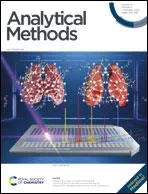
Analytical Methods welcomes early applications of new analytical and bioanalytical methods and technology demonstrating the potential for societal impact. We require that methods and technology reported in the journal are sufficiently innovative, robust, accurate, and compared to other available methods for the intended application. Developments with interdisciplinary approaches are particularly welcome. Systems should be proven with suitably complex and analytically challenging samples. We encourage developments within, but not limited to, the following technologies and applications: global health, point-of-care and molecular diagnostics biosensors and bioengineering drug development and pharmaceutical analysis applied microfluidics and nanotechnology omics studies, such as proteomics, metabolomics or glycomics environmental, agricultural and food science neuroscience biochemical and clinical analysis forensic analysis industrial process and method development
![1-[(4-Methylphenyl)sulfonyl]-3-(4,4,5,5-tetramethyl-1,3,2-dioxaborolan-2-yl)-1H-pyrrolo[2,3-b]pyridine-5-carbonitrile structure](https://static.chemtradehub.com/structs/143/1434747-57-5-fc0d.webp "1-[(4-Methylphenyl)sulfonyl]-3-(4,4,5,5-tetramethyl-1,3,2-dioxaborolan-2-yl)-1H-pyrrolo[2,3-b]pyridine-5-carbonitrile structure")