












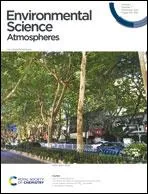
Evaluation of low-cost gas sensors to quantify intra-urban variability of atmospheric pollutants
文献情報
出版日
2023-03-06
DOI
10.1039/D2EA00165A
インパクトファクター
0
著者
Ohad Zivan, Alessandro Bigi, Grazia Ghermandi
原文を見る
要旨
Low-cost air quality monitoring units were tested within the context of the European research project TRAFAIR. This study aims to quantify the intra-urban variability of atmospheric pollutants by means of a low-cost sensor network, which was deployed across the urban area of Modena, in the Po Valley (Italy) for the assessment of air quality in the city. Each sensor unit featured a set of electrochemical cells responding to NO, NO2 and O3 delivering a current/voltage proportional to the mixing ratio of the target atmospheric pollutant. Each unit was calibrated using field colocation next to an urban regulatory air quality monitoring station in the city. A machine learning Random Forest algorithm was used as a calibration model and different configurations of the model were applied. The results from these configurations were compared in terms of their prediction performance and consistency of the explanatory variable role within the model. A significant variability in all pollutants across town was revealed by the units, highlighting areas impacted by local sources.
おすすめジャーナル
関連文献
Self-activation and activation of Cu(0) wire for SET-LRP mediated by fluorinated alcohols
Shampa R. Samanta, Hao-Jan Sun, David M. Haddleton, Virgil Percec
2013-08-01
Paper
DOI: 10.1039/C3PY01007D
Growing polymers from peptides and proteins: a biomedical perspective
Yizhi Qi
2013-10-11
Review Article
DOI: 10.1039/C3PY01089A
Hyperbranched polyisobutylenes for self-healing polymers
D. Döhler, P. Zare, W. H. Binder
2013-10-03
Paper
DOI: 10.1039/C3PY01151H
Combined in situ infrared and mass spectrometric analysis of high-energy heavy ion induced degradation of polyvinyl polymers
Wolfgang Ensinger
2013-10-01
Paper
DOI: 10.1039/C3PY01062G
Enzyme-mediated fast injectable hydrogels based on chitosan–glycolic acid/tyrosine: preparation, characterization, and chondrocyte culture
Rong Jin, Chao Lin, Aoneng Cao
2013-08-14
Paper
DOI: 10.1039/C3PY00864A
The relationship between the degree of branching and glass transition temperature of branched polyethylene: experiment and simulation
Xiang Luo, Shijie Xie, Jun Liu, Haibin Hu, Jing Jiang, Wei Huang, Haiyang Gao, Dongshan Zhou, Zhongyuan Lü, Deyue Yan
2013-10-23
Paper
DOI: 10.1039/C3PY00896G
Glutathione-triggered disassembly of isothermally responsive polymer nanoparticles obtained by nanoprecipitation of hydrophilic polymers
Daniel J. Phillips, Joseph P. Patterson, Rachel K. O'Reilly, Matthew I. Gibson
2013-08-15
Paper
DOI: 10.1039/C3PY00991B
Acetyl protected thiol methacrylic polymers as effective ligands to keep quantum dots in luminescent standby mode
Marta Liras, Isabel Quijada-Garrido, Marta Palacios-Cuesta, Sonia Muñoz-Durieux, Olga García
2013-08-30
Paper
DOI: 10.1039/C3PY00987D
The use of a carbon paste electrode mixed with multiwalled carbon nanotube/electroactive polyimide composites as an electrode for sensing ascorbic acid
Tsao-Cheng Huang, Lu-Chen Yeh, Hsiu-Ying Huang, Zheng-Yong Nian, Yi-Chun Yeh, Yi-Chen Chou, Jui-Ming Yeh, Mei-Hui Tsai
2013-09-05
Paper
DOI: 10.1039/C3PY00787A
こちらもおすすめ
28770-01-62-(2-Isopropyl-1,3-o...
化合物よくある質問
「邻羟基阿托伐他汀内酯标准品」に適用される法規ガイドelinesは何ですか?
CAS番号163217-74-1の「邻羟基阿托伐他汀内酯标准品」は、GHS分類では危険物に分類されず、主にREACH規則とFDA/EPAの管理対象となります。R...
163217-74-1ortho-Hydroxy Atorva...
化合物よくある質問
メチル(3R)-3-アミノ-2,3-ジヒドロ-1-ベンゾファンラニン-5-カルボイル酸塩塩酸塩の主な用途は何ですか?
メチル(3R)-3-アミノ-2,3-ジヒドロ-1-ベンゾファンラニン-5-カルボイル酸塩塩酸塩は、医薬品や合成化学の研究に広く用いられます。また、特定の薬物の前...
2241594-15-8Methyl (3R)-3-amino-...
化合物よくある質問
トランス-4-メチルピロリジン-3-オール塩酸塩はどのように合成されますか?
トランス-4-メチルピロリジン-3-オール塩酸塩は、4-メチルピロリジンの塩酸塩化によって合成されます。一般的な合成方法では、4-メチルピロリジンを塩酸に加えて...
265108-42-7trans-4-Methylpyrrol...
化合物よくある質問
硫雜環丁烷-1,1-二氧化物は安全ですか?
硫雜環丁烷-1,1-二氧化物は安全ではありません。毒性は報告されていませんが、高温下で分解し、可燃性があるため、高圧ガスは注意が必要です。密閉した容器で保管し、...
5687-92-3Thietane 1,1-dioxide
6054-10-02H, 8H-Benzo[1,2-b
化合物よくある質問
9-ヒドロキシエリプチシネ塩酸塩はどのように合成されますか?
9-ヒドロキシエリプチシネ塩酸塩は、エリプチシネから塩酸を添加することで合成されます。選択性は高いですが、収率は約70%です。
52238-35-49-Hydroxyellipticine...
化合物よくある質問
5-塩素-2-(メチルアミノ)フェニル-(2-塩素フェニル)メタン酮の物理化学的性質は何ですか?
5-塩素-2-(メチルアミノ)フェニル-(2-塩素フェニル)メタン酮のCAS番号は5621-86-3です。この化合物は白色の結晶性粉末で、分子量は415.03で...
5621-86-3[5-Chloro-2-(methyla...
化合物よくある質問
1-[2-(4-甲氧基-苯氧基)-乙基]-哌嗪はどのように保存すればよいですか?
1-[2-(4-甲氧基-苯氧基)-乙基]-哌嗪は、直射日光を避けて暗所に、室温(15-25℃)で保管し、密閉容器に入れることで安定性を保つことができます。
117132-44-21-[2-(4-Methoxy-phen...
化合物よくある質問
2-[3-(4-甲氧基フェニル)プロピル]-4,4,5,5-四メチル-1,3,2-ドイボロロールアンの主な用途は何ですか?
2-[3-(4-甲氧基フェニル)プロピル]-4,4,5,5-四メチル-1,3,2-ドイボロロールアンは、医薬品の合成、有機合成化学、および新材料の研究で使用され...
1073371-72-82-[3-(4-Methoxypheny...
掲載誌
おすすめ化合物
![1-[(4-Methylphenyl)sulfonyl]-3-(4,4,5,5-tetramethyl-1,3,2-dioxaborolan-2-yl)-1H-pyrrolo[2,3-b]pyridine-5-carbonitrile structure](https://static.chemtradehub.com/structs/143/1434747-57-5-fc0d.webp "1-[(4-Methylphenyl)sulfonyl]-3-(4,4,5,5-tetramethyl-1,3,2-dioxaborolan-2-yl)-1H-pyrrolo[2,3-b]pyridine-5-carbonitrile structure")

おすすめサプライヤー




免責事項
このページに表示される学術雑誌情報は、参考および研究目的のみを目的としています。当社は雑誌出版社とは提携しておらず、投稿の取り扱いも行っておりません。出版に関するお問い合わせは、各雑誌出版社に直接ご連絡ください。
表示されている情報に誤りがある場合は、support@chemtradehub.com までご連絡ください。迅速に確認し、対応いたします。