


![S-[2,3-Bis(palmitoyloxy)propyl]-N-[(9H-fluoren-9-ylmethoxy)(hydroxy)methylene]cysteine structure](https://static.chemtradehub.com/structs/210/210532-98-2-f6a7.webp "S-[2,3-Bis(palmitoyloxy)propyl]-N-[(9H-fluoren-9-ylmethoxy)(hydroxy)methylene]cysteine structure")
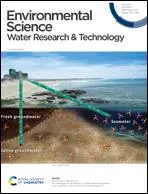
Laboratory efficacy of locally manufactured ceramic water filters in removing Vibrio cholerae
文献情報
出版日
2022-01-26
DOI
10.1039/D1EW00821H
インパクトファクター
4.251
著者
Camille Heylen, Gabrielle String, Daniele Lantagne
原文を見る
要旨
Locally-manufactured ceramic water filters (CWFs) remove Escherichia coli via physical screening, physicochemical mechanisms, and disinfection; performance varies across local production. It was unknown whether CWFs remove Vibrio cholerae, the (smaller and metabolically different than E. coli) bacteria causing cholera. To fill this gap, we tested hydraulic and microbiological (V. cholerae and E. coli) performance of eight different CWFs (in duplicate) produced by established factories in the laboratory for three consecutive days. Four CWFs were silver-impregnated. Across all filters, average Log Reduction Values (LRV) were 1.9–5.7 for V. cholerae and 2.9–7.0 for E. coli on day 1. V. cholerae LRVs were 5.3–5.6 for silver-impregnated filters, and 1.9–4.3 for non-impregnated filters; E. coli LRVs were 5.1–7.0 for silver-impregnated and 2.9–4.0 for non-impregnated filters. The correlation between E. coli and V. cholerae LRVs was non-linear (R2 = 0.003–0.24) for silver-impregnated filters, and linear (R2 = 0.23–0.81) for non-impregnated filters. Our results highlight: 1) high variability in CWF performance; 2) silver disinfection as the most critical mechanism to remove V. cholerae; 3) CWFs can be used in cholera outbreak settings to remove V. cholerae, if silver remains on the filter; and, 4) assessing filter microbiological performance with specific organisms of interest, not only reference organisms, may be necessary.
おすすめジャーナル

Chemistry Education Research and Practice

Crystallography Reports

Organic Process Research & Development

Acta Materialia

Drug Discovery Today

Russian Journal of Coordination Chemistry

Current Opinion in Colloid & Interface Science

Current Opinion in Solid State & Materials Science

Russian Journal of General Chemistry

Russian Chemical Bulletin
関連文献
How well do self-interaction corrections repair the overestimation of static polarizabilities in density functional calculations?
Sharmin Akter, Jorge A. Vargas, Kamal Sharkas, Juan E. Peralta, Koblar A. Jackson
2021-08-10
Paper
DOI: 10.1039/D0CP06512A
First-principles prediction of strain-induced gas-sensing tuning in tin sulfide
Xin Shen, Yinan Bai
2021-08-06
Paper
DOI: 10.1039/D1CP02770K
A Dirac nodal surface semi-metallic carbon-based structure as a universal anode material for metal-ion batteries with high performance
Shouren Zhang, Huili Liu, Yadan Zhang, Shuaiwei Wang, Baocheng Yang
2021-08-06
Paper
DOI: 10.1039/D1CP02306C
Electronic structures and properties of dianionic pentacarbonyls [TM(CO)5]2− (TM = Cr, Mo, W)
Gerui Pei, Cong-Cong Shu, Mengyang Li, Zhong-Ming Sun, Tao Yang
2021-08-03
Paper
DOI: 10.1039/D1CP01592C
Bonding analysis of water clusters using quasi-atomic orbitals
Jorge L. Galvez Vallejo, Juan Duchimaza Heredia, Mark S. Gordon
2021-08-06
Paper
DOI: 10.1039/D1CP02301B
Subtle structure matters: boosting surface-directed photoelectron transfer via the introduction of specific monovalent oxygen vacancies in TiO2
Fei Li, Dong Wang, Xue-Qing Gong
2021-08-18
Paper
DOI: 10.1039/D1CP02787E
Crown ethers in hydrogenated graphene
Kai Guo, Sitong Liu, Haoming Tu, Zhikun Wang, Liang Chen, Haiqing Lin, Maosheng Miao, Jing Xu, Wei Liu
2021-08-12
Paper
DOI: 10.1039/D1CP03069H
Self-catalytic mechanism of prebiotic reactions: from formamide to pterins and guanine
Venelin Enchev, Sofia Slavova
2021-08-24
Paper
DOI: 10.1039/D1CP02158C
Expression of concern: Preparation and characterization of nano-sized Pt–Ru/C catalysts and their superior catalytic activities for methanol and ethanol oxidation
2021-08-18
Expression of Concern
DOI: 10.1039/D1CP90169A
こちらもおすすめ
28770-01-62-(2-Isopropyl-1,3-o...
化合物よくある質問
「邻羟基阿托伐他汀内酯标准品」に適用される法規ガイドelinesは何ですか?
CAS番号163217-74-1の「邻羟基阿托伐他汀内酯标准品」は、GHS分類では危険物に分類されず、主にREACH規則とFDA/EPAの管理対象となります。R...
163217-74-1ortho-Hydroxy Atorva...
化合物よくある質問
メチル(3R)-3-アミノ-2,3-ジヒドロ-1-ベンゾファンラニン-5-カルボイル酸塩塩酸塩の主な用途は何ですか?
メチル(3R)-3-アミノ-2,3-ジヒドロ-1-ベンゾファンラニン-5-カルボイル酸塩塩酸塩は、医薬品や合成化学の研究に広く用いられます。また、特定の薬物の前...
2241594-15-8Methyl (3R)-3-amino-...
化合物よくある質問
トランス-4-メチルピロリジン-3-オール塩酸塩はどのように合成されますか?
トランス-4-メチルピロリジン-3-オール塩酸塩は、4-メチルピロリジンの塩酸塩化によって合成されます。一般的な合成方法では、4-メチルピロリジンを塩酸に加えて...
265108-42-7trans-4-Methylpyrrol...
化合物よくある質問
硫雜環丁烷-1,1-二氧化物は安全ですか?
硫雜環丁烷-1,1-二氧化物は安全ではありません。毒性は報告されていませんが、高温下で分解し、可燃性があるため、高圧ガスは注意が必要です。密閉した容器で保管し、...
5687-92-3Thietane 1,1-dioxide
6054-10-02H, 8H-Benzo[1,2-b
化合物よくある質問
9-ヒドロキシエリプチシネ塩酸塩はどのように合成されますか?
9-ヒドロキシエリプチシネ塩酸塩は、エリプチシネから塩酸を添加することで合成されます。選択性は高いですが、収率は約70%です。
52238-35-49-Hydroxyellipticine...
化合物よくある質問
5-塩素-2-(メチルアミノ)フェニル-(2-塩素フェニル)メタン酮の物理化学的性質は何ですか?
5-塩素-2-(メチルアミノ)フェニル-(2-塩素フェニル)メタン酮のCAS番号は5621-86-3です。この化合物は白色の結晶性粉末で、分子量は415.03で...
5621-86-3[5-Chloro-2-(methyla...
化合物よくある質問
1-[2-(4-甲氧基-苯氧基)-乙基]-哌嗪はどのように保存すればよいですか?
1-[2-(4-甲氧基-苯氧基)-乙基]-哌嗪は、直射日光を避けて暗所に、室温(15-25℃)で保管し、密閉容器に入れることで安定性を保つことができます。
117132-44-21-[2-(4-Methoxy-phen...
化合物よくある質問
2-[3-(4-甲氧基フェニル)プロピル]-4,4,5,5-四メチル-1,3,2-ドイボロロールアンの主な用途は何ですか?
2-[3-(4-甲氧基フェニル)プロピル]-4,4,5,5-四メチル-1,3,2-ドイボロロールアンは、医薬品の合成、有機合成化学、および新材料の研究で使用され...
1073371-72-82-[3-(4-Methoxypheny...
掲載誌
おすすめ化合物
![(2E)-3-(3-Chlorophenyl)-N-{2-[4-(methylsulfonyl)-1-piperazinyl]-2-oxoethyl}acrylamide structure](https://static.chemtradehub.com/structs/250/2505001-54-5-c1e9.webp "(2E)-3-(3-Chlorophenyl)-N-{2-[4-(methylsulfonyl)-1-piperazinyl]-2-oxoethyl}acrylamide structure")
(2E)-3-(3-Chlorophenyl)-N-{2-[4-(methylsulfonyl)-1-piperazinyl]-2-oxoethyl}acrylamide
CAS番号:
2505001-54-5
分子式:
C16H20ClN3O4S
おすすめサプライヤー





免責事項
このページに表示される学術雑誌情報は、参考および研究目的のみを目的としています。当社は雑誌出版社とは提携しておらず、投稿の取り扱いも行っておりません。出版に関するお問い合わせは、各雑誌出版社に直接ご連絡ください。
表示されている情報に誤りがある場合は、support@chemtradehub.com までご連絡ください。迅速に確認し、対応いたします。