


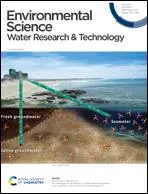
UV light irradiation combined with nitrate for degradation of bisphenol A: kinetics, transformation pathways, and acute toxicity assessment
文献情報
出版日
2022-01-03
DOI
10.1039/D1EW00796C
インパクトファクター
4.251
著者
Zhiquan Li, Fengxun Tan, Xuedong Zhai, Shishun Wang, Xiaoxiang Cheng, Fumiao Zhang, Mingli Li, Qiao Ma
原文を見る
要旨
As an endocrine disruptor, bisphenol A (BPA) is a severe threat to human health. In this study, nitrate (NO3−) photolysis with a low-pressure UV lamp (LP-UV) was employed to degrade BPA in different aqueous solutions. Results showed that BPA could be decomposed efficiently in the UV/NO3− process. Moreover, the contributions of UV irradiation (4.1%), ˙OH (52.7%), and reactive nitrogen species (43.2%) were obtained. The observed rate constant of BPA degradation (kobs) increased with NO3− concentration since more active species were generated in high NO3− concentration. The BPA degradation rate was significantly accelerated as the pH value rose. This was ascribed to the increase of the molar absorption coefficient and the amount of ionic BPA under alkaline conditions. kobs declining with increasing BPA concentration resulted from the inner filter effect and the competition of more generated intermediate products. The increasing kobs with the addition of HCO3−/CO32− (0–10 mM) was explained as the accumulation of ˙NO2 in the presence of HCO3−/CO32− in UV/NO3− process. The effect of Cl− (0–20 mM) could be ignored in this study, which suggested that reactive chlorine radicals degraded BPA effectively. The kobs reduced acutely when NOM (0–5 mgC L−1) existed in the solution, and this could be ascribed to the dual roles of the NOM inner filter effect and reactive radical scavenging effect. Further, several degradation products were detected, and possible transformation pathways were put forward. Remarkably, the acute toxicity of BPA was slightly enhanced then decayed in the UV/NO3− process.
おすすめジャーナル

Saudi Pharmaceutical Journal

Current Opinion in Solid State & Materials Science

Acta Materialia

Journal of Saudi Chemical Society

Drug Discovery Today

Chemical Communications

Russian Journal of Bioorganic Chemistry

Crystallography Reports

Current Opinion in Colloid & Interface Science

Russian Chemical Bulletin
関連文献
Ultrafast energy transfer between lipid-linked chromophores and plant light-harvesting complex II
Minjung Son, Muath Nairat, Tiejun Wei, Christopher D. P. Duffy, Gabriela S. Schlau-Cohen
2021-08-26
Paper
DOI: 10.1039/D1CP01628H
A theoretical study on the intercalation and diffusion of AlF3 in graphite: its application in rechargeable batteries
Adriana E. Candia, Eduardo A. Albanesi, Gustavo D. Ruano
2021-08-26
Paper
DOI: 10.1039/D1CP01855H
Ground and excited electronic structures of metal encapsulated nanocages: the cases of endohedral M@C20H20 (M = K, Rb, Ca, Sr) and M@C36H36 (M = Na, K, Rb)
2021-08-03
Paper
DOI: 10.1039/D1CP03146E
Mechanistic insight into the roles of anions and cations in the degradation of poly(ethylene terephthalate) catalyzed by ionic liquids
Lei Zhou, Xingmei Lu, Yao Li, Xiaoqian Yao, Shenyu Cheng, Gangwei Chen, Chengsheng Ge
2021-08-16
Paper
DOI: 10.1039/D1CP02038B
Crucial impact of exchange between layers on temperature programmed desorption
Tobias Dickbreder, Ralf Bechstein, Angelika Kühnle
2021-08-06
Paper
DOI: 10.1039/D1CP01924D
Deciphering the mechanism of action of 5FDQD and the design of new neutral analogues for the FMN riboswitch: a well-tempered metadynamics simulation study
2021-11-29
Paper
DOI: 10.1039/D1CP01348C
Vacancy-triggered and dopant-assisted NO electrocatalytic reduction over MoS2
Chao Wu
2021-08-16
Paper
DOI: 10.1039/D1CP02764F
First-principles prediction of infrared phonon and dielectric function in biaxial hyperbolic van der Waals crystal α-MoO3
Zhen Tong, Traian Dumitrică
2021-08-11
Paper
DOI: 10.1039/D1CP00682G
Initiation reactions in the high temperature decomposition of styrene
Travis Sikes, Colin Banyon, Rachel A. Schwind, Patrick T. Lynch, Andrea Comandini, Raghu Sivaramakrishnan, Robert S. Tranter
2021-08-23
Paper
DOI: 10.1039/D1CP02437J
The n-type and p-type conductivity mechanisms of the bulk BiOCl photocatalyst from hybrid density functional theory calculations
Bo Kong, Wentao Wang
2021-08-17
Paper
DOI: 10.1039/D1CP02794H
こちらもおすすめ
28770-01-62-(2-Isopropyl-1,3-o...
化合物よくある質問
「邻羟基阿托伐他汀内酯标准品」に適用される法規ガイドelinesは何ですか?
CAS番号163217-74-1の「邻羟基阿托伐他汀内酯标准品」は、GHS分類では危険物に分類されず、主にREACH規則とFDA/EPAの管理対象となります。R...
163217-74-1ortho-Hydroxy Atorva...
化合物よくある質問
メチル(3R)-3-アミノ-2,3-ジヒドロ-1-ベンゾファンラニン-5-カルボイル酸塩塩酸塩の主な用途は何ですか?
メチル(3R)-3-アミノ-2,3-ジヒドロ-1-ベンゾファンラニン-5-カルボイル酸塩塩酸塩は、医薬品や合成化学の研究に広く用いられます。また、特定の薬物の前...
2241594-15-8Methyl (3R)-3-amino-...
化合物よくある質問
トランス-4-メチルピロリジン-3-オール塩酸塩はどのように合成されますか?
トランス-4-メチルピロリジン-3-オール塩酸塩は、4-メチルピロリジンの塩酸塩化によって合成されます。一般的な合成方法では、4-メチルピロリジンを塩酸に加えて...
265108-42-7trans-4-Methylpyrrol...
化合物よくある質問
硫雜環丁烷-1,1-二氧化物は安全ですか?
硫雜環丁烷-1,1-二氧化物は安全ではありません。毒性は報告されていませんが、高温下で分解し、可燃性があるため、高圧ガスは注意が必要です。密閉した容器で保管し、...
5687-92-3Thietane 1,1-dioxide
6054-10-02H, 8H-Benzo[1,2-b
化合物よくある質問
9-ヒドロキシエリプチシネ塩酸塩はどのように合成されますか?
9-ヒドロキシエリプチシネ塩酸塩は、エリプチシネから塩酸を添加することで合成されます。選択性は高いですが、収率は約70%です。
52238-35-49-Hydroxyellipticine...
化合物よくある質問
5-塩素-2-(メチルアミノ)フェニル-(2-塩素フェニル)メタン酮の物理化学的性質は何ですか?
5-塩素-2-(メチルアミノ)フェニル-(2-塩素フェニル)メタン酮のCAS番号は5621-86-3です。この化合物は白色の結晶性粉末で、分子量は415.03で...
5621-86-3[5-Chloro-2-(methyla...
化合物よくある質問
1-[2-(4-甲氧基-苯氧基)-乙基]-哌嗪はどのように保存すればよいですか?
1-[2-(4-甲氧基-苯氧基)-乙基]-哌嗪は、直射日光を避けて暗所に、室温(15-25℃)で保管し、密閉容器に入れることで安定性を保つことができます。
117132-44-21-[2-(4-Methoxy-phen...
化合物よくある質問
2-[3-(4-甲氧基フェニル)プロピル]-4,4,5,5-四メチル-1,3,2-ドイボロロールアンの主な用途は何ですか?
2-[3-(4-甲氧基フェニル)プロピル]-4,4,5,5-四メチル-1,3,2-ドイボロロールアンは、医薬品の合成、有機合成化学、および新材料の研究で使用され...
1073371-72-82-[3-(4-Methoxypheny...
掲載誌
おすすめ化合物

![S-[2,3-Bis(palmitoyloxy)propyl]-N-[(9H-fluoren-9-ylmethoxy)(hydroxy)methylene]cysteine structure](https://static.chemtradehub.com/structs/210/210532-98-2-f6a7.webp "S-[2,3-Bis(palmitoyloxy)propyl]-N-[(9H-fluoren-9-ylmethoxy)(hydroxy)methylene]cysteine structure")
phosphoryl}methyl 4-methylbenzenesulfonate structure](https://static.chemtradehub.com/structs/864/864068-45-1-ba7c.webp "{[3-(Hexadecyloxy)propoxy](hydroxy)phosphoryl}methyl 4-methylbenzenesulfonate structure")
{[3-(Hexadecyloxy)propoxy](hydroxy)phosphoryl}methyl 4-methylbenzenesulfonate
CAS番号:
864068-45-1
分子式:
C27H49O7PS
おすすめサプライヤー





免責事項
このページに表示される学術雑誌情報は、参考および研究目的のみを目的としています。当社は雑誌出版社とは提携しておらず、投稿の取り扱いも行っておりません。出版に関するお問い合わせは、各雑誌出版社に直接ご連絡ください。
表示されている情報に誤りがある場合は、support@chemtradehub.com までご連絡ください。迅速に確認し、対応いたします。