


phosphoryl}methyl 4-methylbenzenesulfonate structure](https://static.chemtradehub.com/structs/864/864068-45-1-ba7c.webp "{[3-(Hexadecyloxy)propoxy](hydroxy)phosphoryl}methyl 4-methylbenzenesulfonate structure")
{[3-(Hexadecyloxy)propoxy](hydroxy)phosphoryl}methyl 4-methylbenzenesulfonate
CAS番号:
864068-45-1
分子式:
C27H49O7PS
The enrichment and separation of phosphorus-containing compounds from wastewater can prevent eutrophication and can be used to recycle non-renewable resources. Herein, we developed a recyclable functionalized polyacrylonitrile fiber (PANAF–Cl) capable of loading an ionic liquid to adsorb phosphate in water. The results demonstrated that the PANAF–Cl reached the adsorption equilibrium within 5 min, with a maximum phosphate adsorption capacity of 15.49 mg P g−1. The fiber exhibited a wide range of pH adaptability with maximum adsorption capacity at the pH value of 5. A pseudo-second-order kinetic model and Langmuir isotherm model could better fit the adsorption of phosphate by the PANAF–Cl, indicating that the adsorption process belongs to monolayer chemisorption. Furthermore, the PANAF–Cl retains its considerable phosphate removal ability when Cl−, NO3−, etc. coexisting ions are included. It also exhibited a low adsorption limit (0.0184 mg P L−1) in actual wastewater and can be recycled at least 5 times. Moreover, the fiber revealed a high removal efficiency of above 90% for phosphate in simulated wastewater under continuous flow conditions. Besides, a “release and catch” ion exchange adsorption mechanism of PANAF–Cl for phosphate is proposed. Altogether, this study concludes that PANAF–Cl as an efficient phosphate adsorbent has high practical value for phosphate recovery and water purification.

Current Opinion in Solid State & Materials Science

Russian Journal of Coordination Chemistry

New Journal of Chemistry

Journal of Natural Medicines

Saudi Pharmaceutical Journal

Journal of Peptide Science

Chemistry Education Research and Practice

Current Opinion in Colloid & Interface Science

Organic Process Research & Development

Nature Medicine
Muhammad Shafiq Bin Mohd Yusof, Yong Liang Lim, Zhi-Heng Loh
DOI: 10.1039/D1CP02975D
William A. Elliott, R. John Clark, James G. Sutjianto, Jeremy C. Palmer, Jeffrey D. Rimer
DOI: 10.1039/D1CP02619D
Martina Požar, Bernarda Lovrinčević, Aurélien Perera
DOI: 10.1039/D1CP02027G
Paramita Ghosh, Nidhi Gupta, Monika Dhankhar, Madhav Ranganathan
DOI: 10.1039/D1CP00069A
Zeng Liang, Kejiang Li, Ziming Wang, Yushan Bu, Jianliang Zhang
DOI: 10.1039/D1CP02595C
Tobias Dickbreder, Ralf Bechstein, Angelika Kühnle
DOI: 10.1039/D1CP01924D
Zachary Morrow, Hyuk-Yong Kwon, C. T. Kelley, Elena Jakubikova
DOI: 10.1039/D1CP03446D
Shouren Zhang, Huili Liu, Yadan Zhang, Shuaiwei Wang, Baocheng Yang
DOI: 10.1039/D1CP02306C
Amit Kumar, Subhasish Mallick, Pradeep Kumar
DOI: 10.1039/D1CP01048D
Rabindranath Paul, Sandip Paul
DOI: 10.1039/D1CP01187A
CAS番号163217-74-1の「邻羟基阿托伐他汀内酯标准品」は、GHS分類では危険物に分類されず、主にREACH規則とFDA/EPAの管理対象となります。R...
メチル(3R)-3-アミノ-2,3-ジヒドロ-1-ベンゾファンラニン-5-カルボイル酸塩塩酸塩は、医薬品や合成化学の研究に広く用いられます。また、特定の薬物の前...
トランス-4-メチルピロリジン-3-オール塩酸塩は、4-メチルピロリジンの塩酸塩化によって合成されます。一般的な合成方法では、4-メチルピロリジンを塩酸に加えて...
硫雜環丁烷-1,1-二氧化物は安全ではありません。毒性は報告されていませんが、高温下で分解し、可燃性があるため、高圧ガスは注意が必要です。密閉した容器で保管し、...
9-ヒドロキシエリプチシネ塩酸塩は、エリプチシネから塩酸を添加することで合成されます。選択性は高いですが、収率は約70%です。
5-塩素-2-(メチルアミノ)フェニル-(2-塩素フェニル)メタン酮のCAS番号は5621-86-3です。この化合物は白色の結晶性粉末で、分子量は415.03で...
1-[2-(4-甲氧基-苯氧基)-乙基]-哌嗪は、直射日光を避けて暗所に、室温(15-25℃)で保管し、密閉容器に入れることで安定性を保つことができます。
2-[3-(4-甲氧基フェニル)プロピル]-4,4,5,5-四メチル-1,3,2-ドイボロロールアンは、医薬品の合成、有機合成化学、および新材料の研究で使用され...
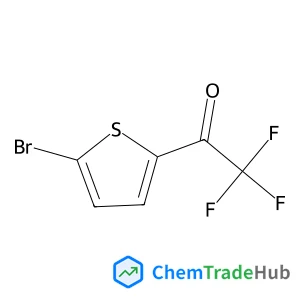
![(3R,5R)-1-[(Benzyloxy)carbonyl]-5-methyl-3-piperidinecarboxylic acid structure](https://static.chemtradehub.com/structs/126/1269757-29-0-c552.webp "(3R,5R)-1-[(Benzyloxy)carbonyl]-5-methyl-3-piperidinecarboxylic acid structure")
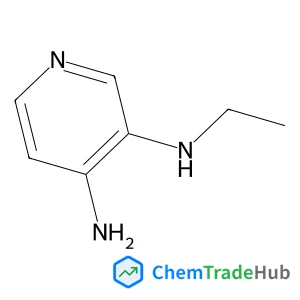
![S-[2,3-Bis(palmitoyloxy)propyl]-N-[(9H-fluoren-9-ylmethoxy)(hydroxy)methylene]cysteine structure](https://static.chemtradehub.com/structs/210/210532-98-2-f6a7.webp "S-[2,3-Bis(palmitoyloxy)propyl]-N-[(9H-fluoren-9-ylmethoxy)(hydroxy)methylene]cysteine structure")


