












First-principles simulation of monolayer hydrogen passivated Bi2O2S2–metal interfaces
文献情報
出版日
2020-03-12
DOI
10.1039/D0CP00058B
インパクトファクター
3.676
著者
Linqiang Xu, Shiqi Liu, Han Zhang, Xiuying Zhang, Jingzhen Li, Jiahuan Yan, Bowen Shi, Jie Yang, Lianqiang Xu, Xiaotian Sun
原文を見る
要旨
Monolayer (ML) MoS2 is one of the most extensively studied two-dimensional (2D) semiconductors. However, it suffers from low carrier mobility and pervasive Schottky contact with metal electrodes. 2D semiconductor Bi2O2S, a sulfur analogue of 2D Bi2O2Se, has been prepared recently. ML fully hydrogen-passivated Bi2O2S2 (Bi2O2S2H2) posseses a comparable band gap (1.92 eV) with ML MoS2 (1.8 eV), but probably has a better device performance than ML MoS2. Based on the density functional theory, the electron and hole mobilities of ML Bi2O2S2H2 at 300 K are calculated to be 16 447–26 699 and 264–968 cm2 V−1 s−1, respectively. Then we firstly characterize the contact properties of ML half hydrogen-passivated Bi2O2S2 (Bi2O2S2H) with four bulk metal electrodes (Ti, Sc, Pd, and Pt) based on ab initio quantum transport simulation. In the lateral direction, a p-type Schottky contact is found in Pd and Pt electrodes, and the corresponding hole Schottky barrier heights (SBHs) are 0.54 and 0.99 eV, respectively. Remarkably, a coveted n-type Ohmic contact appears in Sc and Ti electrodes. Finally, the current on–off ratio of the ML hydrogen-passivated Bi2O2S2 field effect transistor with a Ti electrode reaches 105. Hence, the good intrinsic properties, contact properties, and large switching ability put ML hydrogen-passivated Bi2O2S2 in the rank of potential channel candidates for post-silicon era field effect transistors.
関連文献
Conversion of glucose and cellulose into value-added products in water and ionic liquids
Jinliang Song, Honglei Fan, Jun Ma, Buxing Han
2013-07-31
Tutorial Review
DOI: 10.1039/C3GC41141A
Growing Co–Ni–Se nanosheets on 3D carbon frameworks as advanced dual functional electrodes for supercapacitors and sodium ion batteries
Mingyue Gao, Yanchun Xue, Yutang Zhang, Chengxing Zhu, Haiwei Yu, Xingmei Guo, Shasha Sun, Shenglin Xiong, Qinghong Kong, Junhao Zhang
2022-06-13
Research Article
DOI: 10.1039/D2QI00695B
Synthesis of glycerol 1,2-carbonate by transesterification of glycerol with dimethyl carbonate using triethylamine as a facile separable homogeneous catalyst
Olga Gómez-Jiménez-Aberasturi, Camilo Ramírez-López, Belén Maestro-Madurga
2012-10-02
Paper
DOI: 10.1039/C2GC35992H
Tuning the photophysical properties of luminescent lanthanide complexes through regioselective antenna fluorination
Daniel Kocsi, Andreas Orthaber, K. Eszter Borbas
2022-05-18
Communication
DOI: 10.1039/D2CC01229D
Variation from closed-shell to open shell electronic structures in oligothiophene bis(dioxolene) complexes
Paul D. Miller, David A. Shultz, Joshua Mengell, Lukasz Wojtas
2023-10-09
Edge Article
DOI: 10.1039/D3SC02341A
A general and practical oxidation of alcohols to primary amides under metal-free conditions‡
Jian-Bo Feng, Helfried Neumann, Anahit Pews-Davtyan, Matthias Beller
2013-05-01
Paper
DOI: 10.1039/C3GC40668G
C–H bond chlorination using nickel(ii) complexes of tetradentate amido-quinoline ligands
Sanjay Adhikari, Aniruddha Sarkar, Basab Bijayi Dhar
2022-02-28
Communication
DOI: 10.1039/D2CC00639A
Facile access to 2-hydroxy-2-substituted indole-3-ones via a copper-catalyzed oxidative cyclization of 2-arylethynylanilines
Weiqiang Sun, Xueli Cui, Jing Qu, Xiaojia Cai, Jinhui Hu, Zhuang Xiong, Suqin Guo, Wen-Hua Chen, Jia-Qiang Wu
2023-05-15
Communication
DOI: 10.1039/D3CC01390A
こちらもおすすめ
28770-01-62-(2-Isopropyl-1,3-o...
化合物よくある質問
「邻羟基阿托伐他汀内酯标准品」に適用される法規ガイドelinesは何ですか?
CAS番号163217-74-1の「邻羟基阿托伐他汀内酯标准品」は、GHS分類では危険物に分類されず、主にREACH規則とFDA/EPAの管理対象となります。R...
163217-74-1ortho-Hydroxy Atorva...
化合物よくある質問
メチル(3R)-3-アミノ-2,3-ジヒドロ-1-ベンゾファンラニン-5-カルボイル酸塩塩酸塩の主な用途は何ですか?
メチル(3R)-3-アミノ-2,3-ジヒドロ-1-ベンゾファンラニン-5-カルボイル酸塩塩酸塩は、医薬品や合成化学の研究に広く用いられます。また、特定の薬物の前...
2241594-15-8Methyl (3R)-3-amino-...
化合物よくある質問
トランス-4-メチルピロリジン-3-オール塩酸塩はどのように合成されますか?
トランス-4-メチルピロリジン-3-オール塩酸塩は、4-メチルピロリジンの塩酸塩化によって合成されます。一般的な合成方法では、4-メチルピロリジンを塩酸に加えて...
265108-42-7trans-4-Methylpyrrol...
化合物よくある質問
硫雜環丁烷-1,1-二氧化物は安全ですか?
硫雜環丁烷-1,1-二氧化物は安全ではありません。毒性は報告されていませんが、高温下で分解し、可燃性があるため、高圧ガスは注意が必要です。密閉した容器で保管し、...
5687-92-3Thietane 1,1-dioxide
6054-10-02H, 8H-Benzo[1,2-b
化合物よくある質問
9-ヒドロキシエリプチシネ塩酸塩はどのように合成されますか?
9-ヒドロキシエリプチシネ塩酸塩は、エリプチシネから塩酸を添加することで合成されます。選択性は高いですが、収率は約70%です。
52238-35-49-Hydroxyellipticine...
化合物よくある質問
5-塩素-2-(メチルアミノ)フェニル-(2-塩素フェニル)メタン酮の物理化学的性質は何ですか?
5-塩素-2-(メチルアミノ)フェニル-(2-塩素フェニル)メタン酮のCAS番号は5621-86-3です。この化合物は白色の結晶性粉末で、分子量は415.03で...
5621-86-3[5-Chloro-2-(methyla...
化合物よくある質問
1-[2-(4-甲氧基-苯氧基)-乙基]-哌嗪はどのように保存すればよいですか?
1-[2-(4-甲氧基-苯氧基)-乙基]-哌嗪は、直射日光を避けて暗所に、室温(15-25℃)で保管し、密閉容器に入れることで安定性を保つことができます。
117132-44-21-[2-(4-Methoxy-phen...
化合物よくある質問
2-[3-(4-甲氧基フェニル)プロピル]-4,4,5,5-四メチル-1,3,2-ドイボロロールアンの主な用途は何ですか?
2-[3-(4-甲氧基フェニル)プロピル]-4,4,5,5-四メチル-1,3,2-ドイボロロールアンは、医薬品の合成、有機合成化学、および新材料の研究で使用され...
1073371-72-82-[3-(4-Methoxypheny...
掲載誌
Physical Chemistry Chemical Physics

CiteScore:
5.5
自己引用率:
10.3%
年間論文数:
3036
Physical Chemistry Chemical Physics (PCCP) is an international journal co-owned by 19 physical chemistry and physics societies from around the world. This journal publishes original, cutting-edge research in physical chemistry, chemical physics and biophysical chemistry. To be suitable for publication in PCCP, articles must include significant innovation and/or insight into physical chemistry; this is the most important criterion that reviewers and Editors will judge against when evaluating submissions. The journal has a broad scope and welcomes contributions spanning experiment, theory, computation and data science. Topical coverage includes spectroscopy, dynamics, kinetics, statistical mechanics, thermodynamics, electrochemistry, catalysis, surface science, quantum mechanics, quantum computing and machine learning. Interdisciplinary research areas such as polymers and soft matter, materials, nanoscience, energy, surfaces/interfaces, and biophysical chemistry are welcomed if they demonstrate significant innovation and/or insight into physical chemistry. Joined experimental/theoretical studies are particularly appreciated when complementary and based on up-to-date approaches.
おすすめ化合物
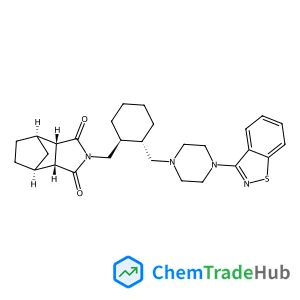
phosphoryl}methyl 4-methylbenzenesulfonate structure](https://static.chemtradehub.com/structs/864/864068-45-1-ba7c.webp "{[3-(Hexadecyloxy)propoxy](hydroxy)phosphoryl}methyl 4-methylbenzenesulfonate structure")
{[3-(Hexadecyloxy)propoxy](hydroxy)phosphoryl}methyl 4-methylbenzenesulfonate
CAS番号:
864068-45-1
分子式:
C27H49O7PS
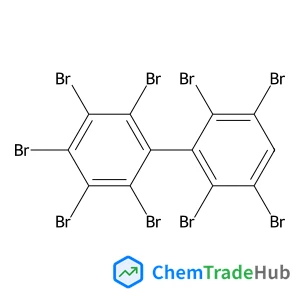
![(3R,5R)-1-[(Benzyloxy)carbonyl]-5-methyl-3-piperidinecarboxylic acid structure](https://static.chemtradehub.com/structs/126/1269757-29-0-c552.webp "(3R,5R)-1-[(Benzyloxy)carbonyl]-5-methyl-3-piperidinecarboxylic acid structure")
(3R,5R)-1-[(Benzyloxy)carbonyl]-5-methyl-3-piperidinecarboxylic acid
CAS番号:
1269757-29-0
分子式:
C15H19NO4
おすすめサプライヤー






免責事項
このページに表示される学術雑誌情報は、参考および研究目的のみを目的としています。当社は雑誌出版社とは提携しておらず、投稿の取り扱いも行っておりません。出版に関するお問い合わせは、各雑誌出版社に直接ご連絡ください。
表示されている情報に誤りがある場合は、support@chemtradehub.com までご連絡ください。迅速に確認し、対応いたします。