












Multiferroic hydrogenated graphene bilayer
文献情報
出版日
2020-03-24
DOI
10.1039/C9CP06469A
インパクトファクター
3.676
著者
Jo Hsueh Lee, Cheng-Hung Cheng, Bo-Rong Liao, Shi-Hsin Lin
原文を見る
要旨
We investigated the multiferroic properties of a hydrogenated graphene bilayer using first-principles calculations. The proposed material is composed of one fully hydrogenated and one semi-hydrogenated graphene monolayer. Inside the van der Waals gap, hydrogen atoms are only adsorbed on either the top or the bottom layer of graphene, thus breaking the centrosymmetry. The calculated electric polarization is 0.137 × 10⁻¹⁰ C m−1, with the transition barrier of switching the polarization being 393 meV per formula unit. We showed that ferroelectricity can be preserved down to atomic thickness. We also studied the domain wall energy and its migration for various domain wall densities, and our results indicate a robust polarization configuration against room temperature thermal fluctuation. As graphene is known to be able to sustain large strain, we further explored ferroelectricity tuning via strain, and found that the polarization can be effectively tuned up to 20% without perturbing the polarization switching barrier. Our results suggest a realizable multiferroic two-dimensional material using the most used two-dimensional material, graphene.
関連文献
Recyclable and efficient polyurethane-Ir catalysts for direct borylation of aromatic compounds
Akihiro Kimura, Haruka Hayama, Hassan Nageh, Yue Wang, Naofumi Naga
2017-11-09
Paper
DOI: 10.1039/C7PY01509G
Glass surface modification via Cu(0)-mediated living radical polymerization of fluorinated and non-fluorinated acrylates
Mojtaba Enayati, Alireza Abbaspourrad
2017-10-18
Paper
DOI: 10.1039/C7PY01530E
Quantitative studies on the p-substituent effect of the phenolic component on the polymerization of benzoxazines
Seishi Ohashi, Daniela Iguchi, Tyler R. Heyl, Hatsuo Ishida
2018-07-12
Paper
DOI: 10.1039/C8PY00760H
Highly efficient luminescent side-chain polymers with short-spacer attached tetraphenylethylene AIEgens via RAFT polymerization capable of naked eye explosive detection
Qian Li, Xiao Li, Zhongying Wu, Yuhao Sun, Jianglin Fang, Dongzhong Chen
2018-07-02
Paper
DOI: 10.1039/C8PY00710A
Main-chain benzoxazine precursor block copolymers
Zeynep Deliballi, Baris Kiskan, Yusuf Yagci
2017-11-28
Paper
DOI: 10.1039/C7PY01873H
The power of the ring: a pH-responsive hydrophobic epoxide monomer for superior micelle stability
Jaeeun Song, L. Palanikumar, Yeongkyu Choi, Inhye Kim, Tae-young Heo, Eungjin Ahn, Soo-Hyung Choi, Eunji Lee, Yuji Shibasaki, Ja-Hyoung Ryu
2017-10-06
Paper
DOI: 10.1039/C7PY01613A
Orange is the new white: rapid curing of an ethylene-glycidyl methacrylate copolymer with a Ti-bisphenolate type catalyst
Massimiliano Mauri, Leo Svenningsson, Thomas Hjertberg, Lars Nordstierna, Oscar Prieto, Christian Müller
2018-01-09
Paper
DOI: 10.1039/C7PY01840A
Nanogel-like UCST triblock copolymer micelles showing large volume expansion before abrupt dissolution
Amélie Augé, Daniel Fortin, Xia Tong, Yue Zhao
2018-08-13
Paper
DOI: 10.1039/C8PY00960K
こちらもおすすめ
28770-01-62-(2-Isopropyl-1,3-o...
化合物よくある質問
「邻羟基阿托伐他汀内酯标准品」に適用される法規ガイドelinesは何ですか?
CAS番号163217-74-1の「邻羟基阿托伐他汀内酯标准品」は、GHS分類では危険物に分類されず、主にREACH規則とFDA/EPAの管理対象となります。R...
163217-74-1ortho-Hydroxy Atorva...
化合物よくある質問
メチル(3R)-3-アミノ-2,3-ジヒドロ-1-ベンゾファンラニン-5-カルボイル酸塩塩酸塩の主な用途は何ですか?
メチル(3R)-3-アミノ-2,3-ジヒドロ-1-ベンゾファンラニン-5-カルボイル酸塩塩酸塩は、医薬品や合成化学の研究に広く用いられます。また、特定の薬物の前...
2241594-15-8Methyl (3R)-3-amino-...
化合物よくある質問
トランス-4-メチルピロリジン-3-オール塩酸塩はどのように合成されますか?
トランス-4-メチルピロリジン-3-オール塩酸塩は、4-メチルピロリジンの塩酸塩化によって合成されます。一般的な合成方法では、4-メチルピロリジンを塩酸に加えて...
265108-42-7trans-4-Methylpyrrol...
化合物よくある質問
硫雜環丁烷-1,1-二氧化物は安全ですか?
硫雜環丁烷-1,1-二氧化物は安全ではありません。毒性は報告されていませんが、高温下で分解し、可燃性があるため、高圧ガスは注意が必要です。密閉した容器で保管し、...
5687-92-3Thietane 1,1-dioxide
6054-10-02H, 8H-Benzo[1,2-b
化合物よくある質問
9-ヒドロキシエリプチシネ塩酸塩はどのように合成されますか?
9-ヒドロキシエリプチシネ塩酸塩は、エリプチシネから塩酸を添加することで合成されます。選択性は高いですが、収率は約70%です。
52238-35-49-Hydroxyellipticine...
化合物よくある質問
5-塩素-2-(メチルアミノ)フェニル-(2-塩素フェニル)メタン酮の物理化学的性質は何ですか?
5-塩素-2-(メチルアミノ)フェニル-(2-塩素フェニル)メタン酮のCAS番号は5621-86-3です。この化合物は白色の結晶性粉末で、分子量は415.03で...
5621-86-3[5-Chloro-2-(methyla...
化合物よくある質問
1-[2-(4-甲氧基-苯氧基)-乙基]-哌嗪はどのように保存すればよいですか?
1-[2-(4-甲氧基-苯氧基)-乙基]-哌嗪は、直射日光を避けて暗所に、室温(15-25℃)で保管し、密閉容器に入れることで安定性を保つことができます。
117132-44-21-[2-(4-Methoxy-phen...
化合物よくある質問
2-[3-(4-甲氧基フェニル)プロピル]-4,4,5,5-四メチル-1,3,2-ドイボロロールアンの主な用途は何ですか?
2-[3-(4-甲氧基フェニル)プロピル]-4,4,5,5-四メチル-1,3,2-ドイボロロールアンは、医薬品の合成、有機合成化学、および新材料の研究で使用され...
1073371-72-82-[3-(4-Methoxypheny...
掲載誌
Physical Chemistry Chemical Physics

CiteScore:
5.5
自己引用率:
10.3%
年間論文数:
3036
Physical Chemistry Chemical Physics (PCCP) is an international journal co-owned by 19 physical chemistry and physics societies from around the world. This journal publishes original, cutting-edge research in physical chemistry, chemical physics and biophysical chemistry. To be suitable for publication in PCCP, articles must include significant innovation and/or insight into physical chemistry; this is the most important criterion that reviewers and Editors will judge against when evaluating submissions. The journal has a broad scope and welcomes contributions spanning experiment, theory, computation and data science. Topical coverage includes spectroscopy, dynamics, kinetics, statistical mechanics, thermodynamics, electrochemistry, catalysis, surface science, quantum mechanics, quantum computing and machine learning. Interdisciplinary research areas such as polymers and soft matter, materials, nanoscience, energy, surfaces/interfaces, and biophysical chemistry are welcomed if they demonstrate significant innovation and/or insight into physical chemistry. Joined experimental/theoretical studies are particularly appreciated when complementary and based on up-to-date approaches.
おすすめ化合物
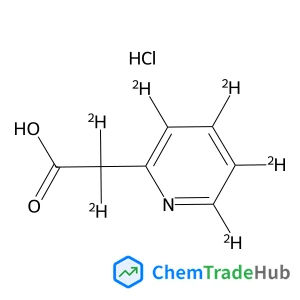
2,2-dideuterio-2-(3,4,5,6-tetradeuterio-2-pyridyl)acetic acid;hydrochloride
CAS番号:
1329799-67-8
分子式:
C7H2ClD6NO2
![S-[2,3-Bis(palmitoyloxy)propyl]-N-[(9H-fluoren-9-ylmethoxy)(hydroxy)methylene]cysteine structure](https://static.chemtradehub.com/structs/210/210532-98-2-f6a7.webp "S-[2,3-Bis(palmitoyloxy)propyl]-N-[(9H-fluoren-9-ylmethoxy)(hydroxy)methylene]cysteine structure")
おすすめサプライヤー





免責事項
このページに表示される学術雑誌情報は、参考および研究目的のみを目的としています。当社は雑誌出版社とは提携しておらず、投稿の取り扱いも行っておりません。出版に関するお問い合わせは、各雑誌出版社に直接ご連絡ください。
表示されている情報に誤りがある場合は、support@chemtradehub.com までご連絡ください。迅速に確認し、対応いたします。