












A revised model of silicon oxidation during the dissolution of silicon in HF/HNO3 mixtures
文献情報
出版日
2019-09-17
DOI
10.1039/C9CP04429A
インパクトファクター
3.676
著者
Anja Rietig, Thomas Langner, Jörg Acker
原文を見る
要旨
The stoichiometry of wet chemical etching of silicon in concentrated HF/HNO3 mixtures was investigated. The formation of nitrogen species enriched in the etching mixture and their reactivity during the etching process was studied. The main focus of the investigations was the comprehensive quantification of the gaseous reaction products using mass spectrometry. Whereas previously it could only be speculated that nitrogen was a product, its formation was detected for the first time. The formation of hydrogen, N2, N2O and NH4+ showed a dependence on the etching bath volume used, which indicates the formation of nitrogen compounds by side reactions. Simultaneously, the ratio of the nitrogen oxides, NO and NO2, formed decreases with increasing etching bath volume, while nitric acid consumption increases, so that the formation of NO2 could also be identified as a side reaction. Based on the stoichiometries obtained, a new reaction scheme for the reduction of nitric acid during etching in HF/HNO3 mixtures and an electron balance for the oxidation of silicon is presented.
関連文献
Synthesis and characterization of poly(ethene–ketone–arylene–ketone)s containing pendant methylthio groups via metal-free catalyzed copolymerization of aryldiynes with DMSO
Weiqiang Fu, Lichao Dong, Jianbing Shi, Bin Tong, Zhengxu Cai, Junge Zhi, Yuping Dong
2018-07-31
Paper
DOI: 10.1039/C8PY00819A
Grafting-from lipase: utilization of a common amino acid residue as a new grafting site
Boyle Cheng
2018-08-17
Paper
DOI: 10.1039/C8PY01026A
Reversible star assembly of polyolefins using interconversion between boroxine and boronic acid
Ryo Tanaka, Naoki Tonoko, Shin-ichi Kihara, Yuushou Nakayama, Takeshi Shiono
2018-06-12
Paper
DOI: 10.1039/C8PY00519B
A one-pot strategy to improve end-capping efficacy in Stille poly-condensations
Jared D. Harris, Kenneth R. Carter
2018-01-19
Paper
DOI: 10.1039/C7PY01761H
Macrocycle-based topological azo-polymers: facile synthesis and unusual photoresponsive properties‡
Wei Song, Ruiyu Jiang, Lei Zhu
2016-12-22
Paper
DOI: 10.1039/C6PY01743F
Exploiting CH/π interactions in robust supramolecular adhesives
Taiki Yamate, Takayuki Fujiwara, Toru Yamaguchi, Hiroshi Suzuki, Motohiro Akazome
2018-07-20
Paper
DOI: 10.1039/C8PY00592C
Precise syntheses of structurally possible all tetrablock quaterpolymers by a methodology combining living anionic polymerization with linking chemistry using 1 : 1 addition reaction
Yuri Matsuo
2017-12-14
Paper
DOI: 10.1039/C7PY01948C
Open-cage silsesquioxane necklace polymers having closed-cage silsesquioxane pendants
Hiroaki Imoto, Ryoichi Katoh, Kensuke Naka
2018-06-26
Communication
DOI: 10.1039/C8PY00758F
Synthesis and characterization of amphiphilic miktoarm star polymers based on sydnone-maleimide double cycloaddition
Jing Zhang, Qingzhong Zhang, Shuaifeng Zhou, Yuping Liu, Wei Huang
2017-11-28
Paper
DOI: 10.1039/C7PY01476G
こちらもおすすめ
28770-01-62-(2-Isopropyl-1,3-o...
化合物よくある質問
「邻羟基阿托伐他汀内酯标准品」に適用される法規ガイドelinesは何ですか?
CAS番号163217-74-1の「邻羟基阿托伐他汀内酯标准品」は、GHS分類では危険物に分類されず、主にREACH規則とFDA/EPAの管理対象となります。R...
163217-74-1ortho-Hydroxy Atorva...
化合物よくある質問
メチル(3R)-3-アミノ-2,3-ジヒドロ-1-ベンゾファンラニン-5-カルボイル酸塩塩酸塩の主な用途は何ですか?
メチル(3R)-3-アミノ-2,3-ジヒドロ-1-ベンゾファンラニン-5-カルボイル酸塩塩酸塩は、医薬品や合成化学の研究に広く用いられます。また、特定の薬物の前...
2241594-15-8Methyl (3R)-3-amino-...
化合物よくある質問
トランス-4-メチルピロリジン-3-オール塩酸塩はどのように合成されますか?
トランス-4-メチルピロリジン-3-オール塩酸塩は、4-メチルピロリジンの塩酸塩化によって合成されます。一般的な合成方法では、4-メチルピロリジンを塩酸に加えて...
265108-42-7trans-4-Methylpyrrol...
化合物よくある質問
硫雜環丁烷-1,1-二氧化物は安全ですか?
硫雜環丁烷-1,1-二氧化物は安全ではありません。毒性は報告されていませんが、高温下で分解し、可燃性があるため、高圧ガスは注意が必要です。密閉した容器で保管し、...
5687-92-3Thietane 1,1-dioxide
6054-10-02H, 8H-Benzo[1,2-b
化合物よくある質問
9-ヒドロキシエリプチシネ塩酸塩はどのように合成されますか?
9-ヒドロキシエリプチシネ塩酸塩は、エリプチシネから塩酸を添加することで合成されます。選択性は高いですが、収率は約70%です。
52238-35-49-Hydroxyellipticine...
化合物よくある質問
5-塩素-2-(メチルアミノ)フェニル-(2-塩素フェニル)メタン酮の物理化学的性質は何ですか?
5-塩素-2-(メチルアミノ)フェニル-(2-塩素フェニル)メタン酮のCAS番号は5621-86-3です。この化合物は白色の結晶性粉末で、分子量は415.03で...
5621-86-3[5-Chloro-2-(methyla...
化合物よくある質問
1-[2-(4-甲氧基-苯氧基)-乙基]-哌嗪はどのように保存すればよいですか?
1-[2-(4-甲氧基-苯氧基)-乙基]-哌嗪は、直射日光を避けて暗所に、室温(15-25℃)で保管し、密閉容器に入れることで安定性を保つことができます。
117132-44-21-[2-(4-Methoxy-phen...
化合物よくある質問
2-[3-(4-甲氧基フェニル)プロピル]-4,4,5,5-四メチル-1,3,2-ドイボロロールアンの主な用途は何ですか?
2-[3-(4-甲氧基フェニル)プロピル]-4,4,5,5-四メチル-1,3,2-ドイボロロールアンは、医薬品の合成、有機合成化学、および新材料の研究で使用され...
1073371-72-82-[3-(4-Methoxypheny...
掲載誌
Physical Chemistry Chemical Physics

CiteScore:
5.5
自己引用率:
10.3%
年間論文数:
3036
Physical Chemistry Chemical Physics (PCCP) is an international journal co-owned by 19 physical chemistry and physics societies from around the world. This journal publishes original, cutting-edge research in physical chemistry, chemical physics and biophysical chemistry. To be suitable for publication in PCCP, articles must include significant innovation and/or insight into physical chemistry; this is the most important criterion that reviewers and Editors will judge against when evaluating submissions. The journal has a broad scope and welcomes contributions spanning experiment, theory, computation and data science. Topical coverage includes spectroscopy, dynamics, kinetics, statistical mechanics, thermodynamics, electrochemistry, catalysis, surface science, quantum mechanics, quantum computing and machine learning. Interdisciplinary research areas such as polymers and soft matter, materials, nanoscience, energy, surfaces/interfaces, and biophysical chemistry are welcomed if they demonstrate significant innovation and/or insight into physical chemistry. Joined experimental/theoretical studies are particularly appreciated when complementary and based on up-to-date approaches.
おすすめ化合物
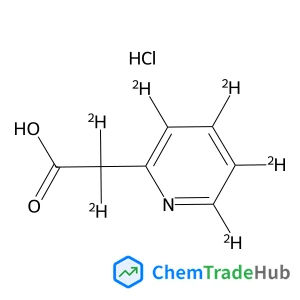
2,2-dideuterio-2-(3,4,5,6-tetradeuterio-2-pyridyl)acetic acid;hydrochloride
CAS番号:
1329799-67-8
分子式:
C7H2ClD6NO2
![1-[(4-Methylphenyl)sulfonyl]-3-(4,4,5,5-tetramethyl-1,3,2-dioxaborolan-2-yl)-1H-pyrrolo[2,3-b]pyridine-5-carbonitrile structure](https://static.chemtradehub.com/structs/143/1434747-57-5-fc0d.webp "1-[(4-Methylphenyl)sulfonyl]-3-(4,4,5,5-tetramethyl-1,3,2-dioxaborolan-2-yl)-1H-pyrrolo[2,3-b]pyridine-5-carbonitrile structure")

おすすめサプライヤー





免責事項
このページに表示される学術雑誌情報は、参考および研究目的のみを目的としています。当社は雑誌出版社とは提携しておらず、投稿の取り扱いも行っておりません。出版に関するお問い合わせは、各雑誌出版社に直接ご連絡ください。
表示されている情報に誤りがある場合は、support@chemtradehub.com までご連絡ください。迅速に確認し、対応いたします。