












Rate dependent structural transition and cycling stability of a lithium-rich layered oxide material
文献情報
出版日
2019-09-06
DOI
10.1039/C9CP04283K
インパクトファクター
3.676
著者
Songyoot Kaewmala, Visittapong Yordsri, Wanwisa Limphirat, Jeffrey Nash, Pimpa Limthongkul
原文を見る
要旨
Lithium-rich layered oxide materials, xLi2MnO3·(1 − x)LiMO2 (M = Mn, Fe, Co, Ni, etc.), are a promising candidate for use as cathode materials in the batteries of electric vehicles (EVs). This is due to their high energy density (∼900 W h kg−1), which is larger than those of the currently used commercial cathode materials. Moreover, EV technologies require lithium ion batteries with a high rate performance to achieve short charging times. The high rate property largely depends on the electrochemical properties of the electrodes in these batteries. However, the correlation between the cycling rate, structural stability and electrochemical properties of cathode materials is not clearly understood. In this work, the influence of cycling rate on structural transition behaviors and cycling stability of a 0.5Li2MnO3·0.5LiCoO2 composite-based material was investigated. The experimental results reveal that cycling rates significantly affect the activation of the Li2MnO3 component. A high cycling rate retards Li2MnO3 activation, leading to a smaller spinel phase transition and a higher cycling stability.
関連文献
Regioselective living polymerization of allylcyclohexane and precise synthesis of hydrocarbon block copolymers with cyclic units
Jie Gao, Zonghang Ying, Liu Zhong, Heng Liao, Haiyang Gao, Wu Qing
2018-02-07
Paper
DOI: 10.1039/C8PY00047F
Branching and molar mass analysis of low density polyethylene using the multiple preparative fractionation concept
P. S. Eselem Bungu, H. Pasch
2018-02-08
Paper
DOI: 10.1039/C7PY02076G
The power of the ring: a pH-responsive hydrophobic epoxide monomer for superior micelle stability
Jaeeun Song, L. Palanikumar, Yeongkyu Choi, Inhye Kim, Tae-young Heo, Eungjin Ahn, Soo-Hyung Choi, Eunji Lee, Yuji Shibasaki, Ja-Hyoung Ryu
2017-10-06
Paper
DOI: 10.1039/C7PY01613A
Hyperbranched polysiloxane with highly constrained rings and the effect of the attached arms on the assembly behavior
Chunyan Wu, Chunhua Hu, Yuzhou Liu
2017-10-06
Communication
DOI: 10.1039/C7PY01177F
Designing a main-chain visible-light-labile picolinium-caged polymer and its biological applications
Tongtong Zhou, Tao Liu, Yu Bao, Ping Zhang, Casey Yan, Fujun Yao, Shuxun Cui, Yongming Chen, Xin Chen, You Yu
2017-12-01
Paper
DOI: 10.1039/C7PY01844D
Highly efficient access to well-defined linear polymers with substantial vinyl pendants via ATRP of divinyl monomers
Xiao-Yan Wang, Xiu-Li Sun, Zhi-Hao Chen, Feng Wang, Sunewang R. Wang, Yong Tang
2018-07-26
Paper
DOI: 10.1039/C8PY00797G
Quantitative studies on the p-substituent effect of the phenolic component on the polymerization of benzoxazines
Seishi Ohashi, Daniela Iguchi, Tyler R. Heyl, Hatsuo Ishida
2018-07-12
Paper
DOI: 10.1039/C8PY00760H
Correction: The effects of polymer topology and chain length on the antimicrobial activity and hemocompatibility of amphiphilic ternary copolymers
Rashin Namivandi-Zangeneh, Rebecca J. Kwan, Thuy-Khanh Nguyen, Jonathan Yeow, Frances L. Byrne, Edgar H. H. Wong, Cyrille Boyer
2017-09-11
Correction
DOI: 10.1039/C7PY90140B
こちらもおすすめ
28770-01-62-(2-Isopropyl-1,3-o...
化合物よくある質問
「邻羟基阿托伐他汀内酯标准品」に適用される法規ガイドelinesは何ですか?
CAS番号163217-74-1の「邻羟基阿托伐他汀内酯标准品」は、GHS分類では危険物に分類されず、主にREACH規則とFDA/EPAの管理対象となります。R...
163217-74-1ortho-Hydroxy Atorva...
化合物よくある質問
メチル(3R)-3-アミノ-2,3-ジヒドロ-1-ベンゾファンラニン-5-カルボイル酸塩塩酸塩の主な用途は何ですか?
メチル(3R)-3-アミノ-2,3-ジヒドロ-1-ベンゾファンラニン-5-カルボイル酸塩塩酸塩は、医薬品や合成化学の研究に広く用いられます。また、特定の薬物の前...
2241594-15-8Methyl (3R)-3-amino-...
化合物よくある質問
トランス-4-メチルピロリジン-3-オール塩酸塩はどのように合成されますか?
トランス-4-メチルピロリジン-3-オール塩酸塩は、4-メチルピロリジンの塩酸塩化によって合成されます。一般的な合成方法では、4-メチルピロリジンを塩酸に加えて...
265108-42-7trans-4-Methylpyrrol...
化合物よくある質問
硫雜環丁烷-1,1-二氧化物は安全ですか?
硫雜環丁烷-1,1-二氧化物は安全ではありません。毒性は報告されていませんが、高温下で分解し、可燃性があるため、高圧ガスは注意が必要です。密閉した容器で保管し、...
5687-92-3Thietane 1,1-dioxide
6054-10-02H, 8H-Benzo[1,2-b
化合物よくある質問
9-ヒドロキシエリプチシネ塩酸塩はどのように合成されますか?
9-ヒドロキシエリプチシネ塩酸塩は、エリプチシネから塩酸を添加することで合成されます。選択性は高いですが、収率は約70%です。
52238-35-49-Hydroxyellipticine...
化合物よくある質問
5-塩素-2-(メチルアミノ)フェニル-(2-塩素フェニル)メタン酮の物理化学的性質は何ですか?
5-塩素-2-(メチルアミノ)フェニル-(2-塩素フェニル)メタン酮のCAS番号は5621-86-3です。この化合物は白色の結晶性粉末で、分子量は415.03で...
5621-86-3[5-Chloro-2-(methyla...
化合物よくある質問
1-[2-(4-甲氧基-苯氧基)-乙基]-哌嗪はどのように保存すればよいですか?
1-[2-(4-甲氧基-苯氧基)-乙基]-哌嗪は、直射日光を避けて暗所に、室温(15-25℃)で保管し、密閉容器に入れることで安定性を保つことができます。
117132-44-21-[2-(4-Methoxy-phen...
化合物よくある質問
2-[3-(4-甲氧基フェニル)プロピル]-4,4,5,5-四メチル-1,3,2-ドイボロロールアンの主な用途は何ですか?
2-[3-(4-甲氧基フェニル)プロピル]-4,4,5,5-四メチル-1,3,2-ドイボロロールアンは、医薬品の合成、有機合成化学、および新材料の研究で使用され...
1073371-72-82-[3-(4-Methoxypheny...
掲載誌
Physical Chemistry Chemical Physics

CiteScore:
5.5
自己引用率:
10.3%
年間論文数:
3036
Physical Chemistry Chemical Physics (PCCP) is an international journal co-owned by 19 physical chemistry and physics societies from around the world. This journal publishes original, cutting-edge research in physical chemistry, chemical physics and biophysical chemistry. To be suitable for publication in PCCP, articles must include significant innovation and/or insight into physical chemistry; this is the most important criterion that reviewers and Editors will judge against when evaluating submissions. The journal has a broad scope and welcomes contributions spanning experiment, theory, computation and data science. Topical coverage includes spectroscopy, dynamics, kinetics, statistical mechanics, thermodynamics, electrochemistry, catalysis, surface science, quantum mechanics, quantum computing and machine learning. Interdisciplinary research areas such as polymers and soft matter, materials, nanoscience, energy, surfaces/interfaces, and biophysical chemistry are welcomed if they demonstrate significant innovation and/or insight into physical chemistry. Joined experimental/theoretical studies are particularly appreciated when complementary and based on up-to-date approaches.
おすすめ化合物
![S-[2,3-Bis(palmitoyloxy)propyl]-N-[(9H-fluoren-9-ylmethoxy)(hydroxy)methylene]cysteine structure](https://static.chemtradehub.com/structs/210/210532-98-2-f6a7.webp "S-[2,3-Bis(palmitoyloxy)propyl]-N-[(9H-fluoren-9-ylmethoxy)(hydroxy)methylene]cysteine structure")
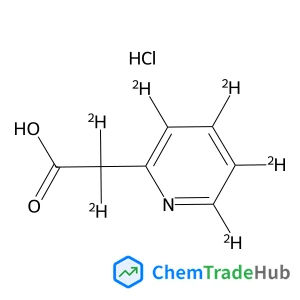
2,2-dideuterio-2-(3,4,5,6-tetradeuterio-2-pyridyl)acetic acid;hydrochloride
CAS番号:
1329799-67-8
分子式:
C7H2ClD6NO2
おすすめサプライヤー






免責事項
このページに表示される学術雑誌情報は、参考および研究目的のみを目的としています。当社は雑誌出版社とは提携しておらず、投稿の取り扱いも行っておりません。出版に関するお問い合わせは、各雑誌出版社に直接ご連絡ください。
表示されている情報に誤りがある場合は、support@chemtradehub.com までご連絡ください。迅速に確認し、対応いたします。