












Polyethenetetrathiolate or polytetrathiooxalate? Improved synthesis, a comparative analysis of a prominent thermoelectric polymer and implications to the charge transport mechanism
文献情報
出版日
2018-08-14
DOI
10.1039/C8PY00931G
インパクトファクター
5.582
著者
Lukas Stepien, Robert Grafe, Olga Guskova, Anton Kiriy, Frank Simon, Heiko Reith, Kornelius Nielsch, Gabi Schierning, Deepa Kasinathan
原文を見る
要旨
1,1,2,2-Ethenetetrathiolate (ett4−) coordination polymers, such as poly[Kx(Ni-ett)], have been known for decades for their excellent thermoelectric properties. However in reality, ett4− is neither a “true” comonomer which participates in the polymerization, nor represents a “true” repeat unit of the target polymer. Indeed, poly[K2(Ni-ett)], which is formally the product of Ni-induced polymerization of ett4−, has a poor conductivity and needs to be oxidized to show attractive thermoelectric characteristics. The polymerization and oxidation processes are poorly controllable which causes irreproducibility of the polymer properties. To improve the synthesis reproducibility, we studied polymerization of potassium tetrathiooxalate (K2tto), the convenient synthesis of which was developed in our recent work. Because K2tto is the “true monomer”, and not its precursor, a high quality product is reproducibly formed simply by mixing K2tto with NiCl2 at room temperature. The procedure does not require additional components (bases), or special conditions (prolonged heating), which are usually needed for the preparation of this polymer from the monomer precursor 1,3,4,6-tetrathiapentalene-2,5-dione (TPD). Furthermore, as tto2− is formally the product of two-electron oxidation of ett4−, the poorly controllable oxidation process is avoided and poly[Ni-tto] almost free from K is directly formed upon the complexation of Ni2+ and tto2−. Thus-obtained poly[Ni-tto] possesses conductivity in the range of 27–47 S cm−1 and a Seebeck coefficient in the range of −38 to −55 μV K−1, which are superior thermoelectric properties compared to poly[Kx(Ni-ett)] samples obtained by the previously reported methods. Redox and structural properties of poly[Ni-tto] were compared with those of poly[Kx(Ni-ett)] obtained by the reported methods. Furthermore, DFT calculations were performed to shed more light on generally promising properties of this class of materials. Particularly, possible packing models have been predicted for polymers, and the molecular dynamics simulations have been used to simulate the molecular arrangements under ambient conditions.
関連文献
An enantioselective fluorescence sensing assay for quantitative analysis of chiral carboxylic acids and amino acid derivatives
Christian Wolf, Shuanglong Liu, Brian C. Reinhardt
2006-09-01
Communication
DOI: 10.1039/B609880K
C–H bond chlorination using nickel(ii) complexes of tetradentate amido-quinoline ligands
Sanjay Adhikari, Aniruddha Sarkar, Basab Bijayi Dhar
2022-02-28
Communication
DOI: 10.1039/D2CC00639A
Study on the luminescence properties of ionic [Cu(N^N)(P^P)]+ complexes: influence of ligands, counteranions and weak interactions
Zi-Xi Li, Zhen-Zhou Sun, Guo Wang, Wei Yang, Hong-Liang Han, Yu-Ping Yang, Zhong-Feng Li, Yi-Shan Yao
2022-09-27
Paper
DOI: 10.1039/D2CE01177H
A possible means of realizing a sacrifice-free three component separation of lignocellulose from wood biomass using an amino acid ionic liquid
Yukoh Hamada, Kohei Yoshida, Ryo-ichi Asai, Shuichi Hayase, Toshiki Nokami, Shunsuke Izumi, Toshiyuki Itoh
2013-06-06
Communication
DOI: 10.1039/C3GC40445E
Bifunctional thioacetamide-mediated synthesis of few-layered MoOSx nanosheet-modified CdS hollow spheres for efficient photocatalytic H2 production
Siqin Tao, Wei Zhong, Yuxiao Chen, Feng Chen, Ping Wang
2022-08-18
Paper
DOI: 10.1039/D2CY01315K
A concentration-descending washing strategy with methanol for the enhancement of protein imaging in biological tissues by MALDI-MS
Kun Xue, Jinchao Feng, Yijun Zhou, Biao Liu, Gaopeng Li
2022-12-21
Paper
DOI: 10.1039/D2AN01678H
Easy conjugations between molecules via copper-catalyzed reactions of ortho-aromatic diamines with ketones
Haijun Yang, Yunhe Jin, Yuyang Jiang
2013-09-10
Communication
DOI: 10.1039/C3GC41585F
N-Alkylation of amines with alcohols over nanosized zeolite beta
Marri Mahender Reddy, Macharla Arun Kumar, Peraka Swamy, Mameda Naresh, Kodumuri Srujana, Lanka Satyanarayana, Akula Venugopal, Nama Narender
2013-09-09
Paper
DOI: 10.1039/C3GC41345D
Palladium catalysed enantioselective phosphination reactions using secondary phosphine-boranes and aryl iodide
Stéphanie Pican, Annie-Claude Gaumont
2005-03-15
Communication
DOI: 10.1039/B501078K
こちらもおすすめ
28770-01-62-(2-Isopropyl-1,3-o...
化合物よくある質問
「邻羟基阿托伐他汀内酯标准品」に適用される法規ガイドelinesは何ですか?
CAS番号163217-74-1の「邻羟基阿托伐他汀内酯标准品」は、GHS分類では危険物に分類されず、主にREACH規則とFDA/EPAの管理対象となります。R...
163217-74-1ortho-Hydroxy Atorva...
化合物よくある質問
メチル(3R)-3-アミノ-2,3-ジヒドロ-1-ベンゾファンラニン-5-カルボイル酸塩塩酸塩の主な用途は何ですか?
メチル(3R)-3-アミノ-2,3-ジヒドロ-1-ベンゾファンラニン-5-カルボイル酸塩塩酸塩は、医薬品や合成化学の研究に広く用いられます。また、特定の薬物の前...
2241594-15-8Methyl (3R)-3-amino-...
化合物よくある質問
トランス-4-メチルピロリジン-3-オール塩酸塩はどのように合成されますか?
トランス-4-メチルピロリジン-3-オール塩酸塩は、4-メチルピロリジンの塩酸塩化によって合成されます。一般的な合成方法では、4-メチルピロリジンを塩酸に加えて...
265108-42-7trans-4-Methylpyrrol...
化合物よくある質問
硫雜環丁烷-1,1-二氧化物は安全ですか?
硫雜環丁烷-1,1-二氧化物は安全ではありません。毒性は報告されていませんが、高温下で分解し、可燃性があるため、高圧ガスは注意が必要です。密閉した容器で保管し、...
5687-92-3Thietane 1,1-dioxide
6054-10-02H, 8H-Benzo[1,2-b
化合物よくある質問
9-ヒドロキシエリプチシネ塩酸塩はどのように合成されますか?
9-ヒドロキシエリプチシネ塩酸塩は、エリプチシネから塩酸を添加することで合成されます。選択性は高いですが、収率は約70%です。
52238-35-49-Hydroxyellipticine...
化合物よくある質問
5-塩素-2-(メチルアミノ)フェニル-(2-塩素フェニル)メタン酮の物理化学的性質は何ですか?
5-塩素-2-(メチルアミノ)フェニル-(2-塩素フェニル)メタン酮のCAS番号は5621-86-3です。この化合物は白色の結晶性粉末で、分子量は415.03で...
5621-86-3[5-Chloro-2-(methyla...
化合物よくある質問
1-[2-(4-甲氧基-苯氧基)-乙基]-哌嗪はどのように保存すればよいですか?
1-[2-(4-甲氧基-苯氧基)-乙基]-哌嗪は、直射日光を避けて暗所に、室温(15-25℃)で保管し、密閉容器に入れることで安定性を保つことができます。
117132-44-21-[2-(4-Methoxy-phen...
化合物よくある質問
2-[3-(4-甲氧基フェニル)プロピル]-4,4,5,5-四メチル-1,3,2-ドイボロロールアンの主な用途は何ですか?
2-[3-(4-甲氧基フェニル)プロピル]-4,4,5,5-四メチル-1,3,2-ドイボロロールアンは、医薬品の合成、有機合成化学、および新材料の研究で使用され...
1073371-72-82-[3-(4-Methoxypheny...
掲載誌
Polymer Chemistry

CiteScore:
8.6
自己引用率:
7.3%
年間論文数:
457
Polymer Chemistry welcomes submissions in all areas of polymer science that have a strong focus on macromolecular chemistry. Manuscripts may cover a broad range of fields, yet no direct application focus is required.
おすすめ化合物
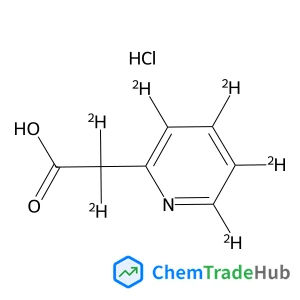
2,2-dideuterio-2-(3,4,5,6-tetradeuterio-2-pyridyl)acetic acid;hydrochloride
CAS番号:
1329799-67-8
分子式:
C7H2ClD6NO2
phosphoryl}methyl 4-methylbenzenesulfonate structure](https://static.chemtradehub.com/structs/864/864068-45-1-ba7c.webp "{[3-(Hexadecyloxy)propoxy](hydroxy)phosphoryl}methyl 4-methylbenzenesulfonate structure")
{[3-(Hexadecyloxy)propoxy](hydroxy)phosphoryl}methyl 4-methylbenzenesulfonate
CAS番号:
864068-45-1
分子式:
C27H49O7PS
おすすめサプライヤー





免責事項
このページに表示される学術雑誌情報は、参考および研究目的のみを目的としています。当社は雑誌出版社とは提携しておらず、投稿の取り扱いも行っておりません。出版に関するお問い合わせは、各雑誌出版社に直接ご連絡ください。
表示されている情報に誤りがある場合は、support@chemtradehub.com までご連絡ください。迅速に確認し、対応いたします。