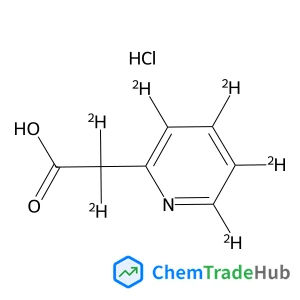
2,2-dideuterio-2-(3,4,5,6-tetradeuterio-2-pyridyl)acetic acid;hydrochloride
CAS番号:
1329799-67-8
分子式:
C7H2ClD6NO2
Anagh Bhaumik, Jagdish Narayan
Nano- and microstructures of phase-pure cubic boron nitride (c-BN) are synthesized by employing nanosecond pulsed-laser annealing techniques at room temperature and atmospheric pressure. In a highly non-equilibrium synthesis process, nanocrystalline h-BN is directly converted into phase-pure twinned c-BN from a highly undercooled melt state of BN. By changing nucleation and growth rates, we have synthesized a wide range of sizes (90 nm to 25 μm) of c-BN. The electron diffraction patterns show the formation of twinned c-BN with [11] as the twin axis. The twinning density in c-BN can be controlled by the degree of undercooling and quenching rates. The formation of twins predominantly occurs prior to the formation of amorphous quenched BN (Q-BN). Therefore, the defect density in nano c-BN formed under higher undercooling conditions is considerably larger than that in micro c-BN, which is formed under lower undercooling conditions. The temperature-dependent Raman studies show a considerable blue-shift of ∼6 cm−1 with a decrease in temperature from 300 to 78 K in nano c-BN as compared to micro c-BN. The size-effects of c-BN crystals in Raman spectra are modeled using spatial correlation theory, which can be used to calculate the correlation length and twin density in c-BN. It has also been found that the Raman blue-shift in nano c-BN is caused by anharmonic effects, and the decrease in Raman linewidth with decreasing temperature (300 to 78 K) is caused by three- and four-phonon decay processes. The bonding characteristics and crystalline nature of the synthesized c-BN are also demonstrated by using electron energy-loss spectroscopy and electron backscatter diffraction, respectively. We envisage that the controlled growth of phase-pure nano and microstructures of twinned c-BN and their temperature-dependent Raman-active vibrational mode studies will have a tremendous impact on low-temperature solid-state electrical and mechanical devices.

Chemistry Education Research and Practice

Acta Materialia

Russian Journal of Applied Chemistry

New Journal of Chemistry

Saudi Pharmaceutical Journal

Journal of Natural Medicines

Organic Process Research & Development

Russian Journal of General Chemistry

Russian Journal of Coordination Chemistry

Russian Journal of Bioorganic Chemistry
Raúl Montero, Iker Lamas, Iker León, José A. Fernández, Asier Longarte
DOI: 10.1039/C8CP06416D
Kai Li, Rik Van Deun
DOI: 10.1039/C9CP90014D
Shirin Behyan, Dimitrios Gritzalis, Eskedar Kebede
DOI: 10.1039/C8CP07186A
Pankaj Kumar Rastogi, Krishna Rani Sahoo, Pallavi Thakur, Rahul Sharma, Sumit Bawari, Ramakrishna Podila, Tharangattu N. Narayanan
DOI: 10.1039/C8CP06155F
Sean T. Holmes, Wei D. Wang, Guangjin Hou, Cecil Dybowski, Wei Wang
DOI: 10.1039/C8CP07673A
Xiakun Chu
DOI: 10.1039/C8CP06803H
Robert C. Sinclair, James L. Suter, Peter V. Coveney
DOI: 10.1039/C8CP07796G
D. Mihrin, J. Andersen, P. W. Jakobsen, R. Wugt Larsen
DOI: 10.1039/C8CP05985C
Akarsh Verma, Rajesh Kumar, Avinash Parashar
DOI: 10.1039/C9CP00362B
CAS番号163217-74-1の「邻羟基阿托伐他汀内酯标准品」は、GHS分類では危険物に分類されず、主にREACH規則とFDA/EPAの管理対象となります。R...
メチル(3R)-3-アミノ-2,3-ジヒドロ-1-ベンゾファンラニン-5-カルボイル酸塩塩酸塩は、医薬品や合成化学の研究に広く用いられます。また、特定の薬物の前...
トランス-4-メチルピロリジン-3-オール塩酸塩は、4-メチルピロリジンの塩酸塩化によって合成されます。一般的な合成方法では、4-メチルピロリジンを塩酸に加えて...
硫雜環丁烷-1,1-二氧化物は安全ではありません。毒性は報告されていませんが、高温下で分解し、可燃性があるため、高圧ガスは注意が必要です。密閉した容器で保管し、...
9-ヒドロキシエリプチシネ塩酸塩は、エリプチシネから塩酸を添加することで合成されます。選択性は高いですが、収率は約70%です。
5-塩素-2-(メチルアミノ)フェニル-(2-塩素フェニル)メタン酮のCAS番号は5621-86-3です。この化合物は白色の結晶性粉末で、分子量は415.03で...
1-[2-(4-甲氧基-苯氧基)-乙基]-哌嗪は、直射日光を避けて暗所に、室温(15-25℃)で保管し、密閉容器に入れることで安定性を保つことができます。
2-[3-(4-甲氧基フェニル)プロピル]-4,4,5,5-四メチル-1,3,2-ドイボロロールアンは、医薬品の合成、有機合成化学、および新材料の研究で使用され...

Physical Chemistry Chemical Physics (PCCP) is an international journal co-owned by 19 physical chemistry and physics societies from around the world. This journal publishes original, cutting-edge research in physical chemistry, chemical physics and biophysical chemistry. To be suitable for publication in PCCP, articles must include significant innovation and/or insight into physical chemistry; this is the most important criterion that reviewers and Editors will judge against when evaluating submissions. The journal has a broad scope and welcomes contributions spanning experiment, theory, computation and data science. Topical coverage includes spectroscopy, dynamics, kinetics, statistical mechanics, thermodynamics, electrochemistry, catalysis, surface science, quantum mechanics, quantum computing and machine learning. Interdisciplinary research areas such as polymers and soft matter, materials, nanoscience, energy, surfaces/interfaces, and biophysical chemistry are welcomed if they demonstrate significant innovation and/or insight into physical chemistry. Joined experimental/theoretical studies are particularly appreciated when complementary and based on up-to-date approaches.