












![Methyl 3-({2'-[(E)-(hydroxyhydrazono)methyl]-4-biphenylyl}methyl)-2-oxo-2,3-dihydro-1H-benzimidazole-4-carboxylate structure](https://static.chemtradehub.com/structs/149/1499167-72-4-034a.webp "Methyl 3-({2'-[(E)-(hydroxyhydrazono)methyl]-4-biphenylyl}methyl)-2-oxo-2,3-dihydro-1H-benzimidazole-4-carboxylate structure")
A spectroscopic and ab initio study of the hydrogen peroxide–formic acid complex: hindering the internal motion of H2O2
文献情報
出版日
2018-08-03
DOI
10.1039/C8CP03342K
インパクトファクター
3.676
著者
Leo Yuxiu Li, Nathan A. Seifert, Fan Xie, Matthias Heger, Yunjie Xu, Wolfgang Jäger
原文を見る
要旨
The microwave spectrum of the hydrogen-bonded hydrogen peroxide–formic acid complex was measured in the range from 4 to 17 GHz. Assignment of transitions and analyses of the spectrum were supported by ab initio wavefunction and density functional calculations. The detected conformer features a seven-membered hydrogen-bonded ring, in which the H-atom of one hydroxyl group of H2O2 and the O-atom of the other OH group are a hydrogen bond donor and acceptor, respectively, to the carboxyl group of formic acid. The rotational transitions show a tunnelling splitting, which is attributed to a wagging-like motion of the free H-atom of H2O2 from above to below the heavy atom plane of formic acid. Transitions between tunneling states are driven by the change in dipole moment accompanying this motion and were measured and analyzed. Ab initio analyses of the tunneling path reveal an asymmetric potential, which reflects the (transiently) chiral nature of the complex.
関連文献
Nucleation and anisotropic growth model for isothermal kaolinite dehydroxylation under controlled water vapour pressure
Kaïs Nahdi, Stéphane Perrin, Michèle Pijolat, Françoise Rouquerol, Najia Ariguib, Malika Ayadi
2002-04-05
Paper
DOI: 10.1039/B107804F
A non-rotatory isomerization path in ethene derivatives? Investigation of a stilbenophane and protonated azobenzenophanes (“pseudo-stilbenophanes”)‡
2002-04-17
Paper
DOI: 10.1039/B111483M
C–H stretching vibrations of benzene and toluene in their S1 states observed by double resonance vibrational spectroscopy in supersonic jets
Chika Minejima, Takayuki Ebata, Naohiko Mikami
2002-03-19
Paper
DOI: 10.1039/B108039C
A hybrid SAM phospholipid approach to fabricating a ‘free’ supported lipid bilayer
Arwel V. Hughes, Arach Goldar, Michael C. Gerstenberg, Steve J. Roser, Jeremy Bradshaw
2002-05-01
Paper
DOI: 10.1039/B200409G
The emission spectrum and the radiative lifetime of Eu3+ in luminescent lanthanide complexes
Martinus H. V. Werts, Ronald T. F. Jukes, Jan W. Verhoeven
2002-03-22
Paper
DOI: 10.1039/B107770H
Aggregation of azamethine dyes on hydrated glass surfaces: An evanescent wave-induced fluorescence study
Chetan K. Parmar, Garry Rumbles, Christopher J. Winscom
2002-04-08
Paper
DOI: 10.1039/B108865C
Dynamic channels of a porous coordination polymer responding to external stimuli
2002-04-16
Paper
DOI: 10.1039/B110899A
Gibbs energy of solvation of organic ions in aqueous and dimethyl sulfoxide solutions
Josefredo R. Pliego Jr, José M. Riveros
2002-03-22
Paper
DOI: 10.1039/B109595A
Coadsorption of CO and O2 on small free gold cluster anions at cryogenic temperatures: Model complexes for catalytic CO oxidation
Jan Hagen, Liana D. Socaciu, Maryam Elijazyfer, Ueli Heiz, Thorsten M. Bernhardt, Ludger Wöste
2002-04-15
Communication
DOI: 10.1039/B201236G
こちらもおすすめ
化合物よくある質問
4-アミノフェノール酸ナトリウム水和物とは何ですか?
4-アミノフェノール酸ナトリウム水和物は、CAS番号206557-08-6の化合物で、4-アミノフェノールとナトリウムが結合した塩と水和物です。この化合物は、白...
206557-08-64-Aminobenzoic acid ...
化合物よくある質問
Methyl 3-methyl-N-{[(2-methyl-2-propanyl)oxy]carbonyl}-L-histidinateの代替品はありますか?
この化合物は特定の合成プロセスに使用される可能性がありますが、代替品として、他の类似的な化合物、例えばMethyl 3-methyl-N-{[(2-methyl...
72212-51-2Methyl 3-methyl-N-{[...
化合物よくある質問
4-Boc-2-哌嗪甲酸の市場動向や研究トレンドはどうですか?
4-Boc-2-哌嗪甲酸は、薬品開発や合成化学分野で広く使用されており、その需要は継続的に推移しています。特に、新薬開発における合成化学分野での需要が高まってい...
192330-11-3(2R)-4-[(tert-butoxy...
化合物よくある質問
4,4'-二羟甲基联苯の物理化学的性質は何ですか?
4,4'-二羟甲基联苯のCAS番号は1667-12-5です。この化合物は白色の結晶粉末で、分子量は154.20です。水にわずかに溶けますが、アルコールや有機溶媒...
1667-12-54,4'-Biphenyldiyldim...
化合物よくある質問
5-甲硫基戊腈はどの業界で使用されていますか?
5-甲硫基戊腈は医薬品産業で使用される可能性があります。また、ポリマー合成の触媒として、センサー製造の一部として、半導体製造のプロセス改善に使用される可能性があ...
59121-25-45-(Methylsulfanyl)pe...
化合物よくある質問
CAS番号1311961-50-8の化合物はどのように合成されますか?
この化合物は、1-abieta-8,11,13-trien-19-イルと6'-メトキシシンコナナン-9-基を含有する窒素含有化合物から合成されます。一般的な合成...
1311961-50-81-Abieta-8,11,13-tri...
化合物よくある質問
6-ブロモベンジジミダゾール-2-カルビルデオキシドはどのように保存すればよいですか?
6-ブロモベンジジミダゾール-2-カルビルデオキシドは、避光・乾燥した容器(密閉容器)で-20℃~4℃の低温で保存してください。高温や直射日光、湿気は避けてくだ...
885280-26-25-Bromo-1H-benzimida...
化合物よくある質問
Boc-N-甲基氨甲环酸とは何ですか?
621-65-8のCAS番号を持つBoc-N-甲基氨甲环酸は、化学式C7H13NO5を有する化合物です。この化合物は白色の結晶性粉末で、吸湿性があります。
621-65-83-Hydroxy-1,2-propan...
化合物よくある質問
乙基三氟硼酸钾はどのように合成されますか?
乙基三氟硼酸钾は、トリフLUオール酸カリウムとエチルブロミドを反応させて合成されます。この反応は高い選択性と収率を持ち、触媒を用いることで効率的に進行します。
882871-21-8Potassium ethyltrifl...
化合物よくある質問
2-フロウロ-5-クロロ-4-アミノフェノールはどのように保存すればよいですか?
2-フロウロ-5-クロロ-4-アミノフェノールは、直射日光を避けて冷却された暗所で保存し、密閉容器に保管してください。温度は常温か低温が適しています。
847872-10-04-Amino-5-chloro-2-f...
掲載誌
Physical Chemistry Chemical Physics

CiteScore:
5.5
自己引用率:
10.3%
年間論文数:
3036
Physical Chemistry Chemical Physics (PCCP) is an international journal co-owned by 19 physical chemistry and physics societies from around the world. This journal publishes original, cutting-edge research in physical chemistry, chemical physics and biophysical chemistry. To be suitable for publication in PCCP, articles must include significant innovation and/or insight into physical chemistry; this is the most important criterion that reviewers and Editors will judge against when evaluating submissions. The journal has a broad scope and welcomes contributions spanning experiment, theory, computation and data science. Topical coverage includes spectroscopy, dynamics, kinetics, statistical mechanics, thermodynamics, electrochemistry, catalysis, surface science, quantum mechanics, quantum computing and machine learning. Interdisciplinary research areas such as polymers and soft matter, materials, nanoscience, energy, surfaces/interfaces, and biophysical chemistry are welcomed if they demonstrate significant innovation and/or insight into physical chemistry. Joined experimental/theoretical studies are particularly appreciated when complementary and based on up-to-date approaches.
おすすめ化合物
![Imidazo[1,2-c]pyrimidine structure](https://static.chemtradehub.com/structs/274/274-78-2-8b4c.webp "Imidazo[1,2-c]pyrimidine structure")
![N-{3-[Benzyl(methyl)amino]propyl}-9-chloro-5,6,7,8-tetrahydro-2-acridinecarboxamide structure](https://static.chemtradehub.com/structs/142/1426944-49-1-1e4c.webp "N-{3-[Benzyl(methyl)amino]propyl}-9-chloro-5,6,7,8-tetrahydro-2-acridinecarboxamide structure")
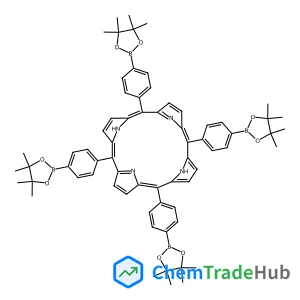
5,10,15,20-tetrakis(4-boronic acid pinacol ester phenyl) porphyrin
CAS番号:
1332748-00-1
分子式:
C68H74B4N4O8
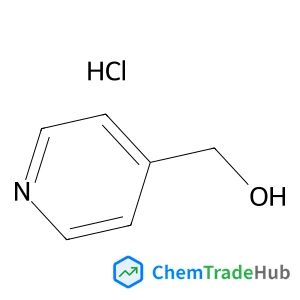
おすすめサプライヤー





免責事項
このページに表示される学術雑誌情報は、参考および研究目的のみを目的としています。当社は雑誌出版社とは提携しておらず、投稿の取り扱いも行っておりません。出版に関するお問い合わせは、各雑誌出版社に直接ご連絡ください。
表示されている情報に誤りがある場合は、support@chemtradehub.com までご連絡ください。迅速に確認し、対応いたします。