


Influence of polaron doping and concentration dependent FRET on luminescence of PAni–PMMA blends for application in PLEDs
文献情報
出版日
2018-08-20
DOI
10.1039/C8CP02968G
インパクトファクター
3.676
著者
Dhritiman Banerjee, Asit Kumar Kar
原文を見る
要旨
The role of quantum mechanical phenomena such as polaron–exciton quenching interaction and concentration-dependent FRET in determining the luminescence efficiency of PAni–PMMA polymer blends has been investigated. PAni samples prepared in different environments using different acids and bases show different absorbance and emission profiles indicating a direct relation between generated polarons in PAni by acid–base doping–dedoping and photoluminescence spectra of PAni. The observed low luminescence in PAni has been modeled using exciton quenching by polarons through charge transfer. The investigation also reveals that the effect of exciton quenching by polarons becomes pronounced when the polaron concentration in PAni reaches a density of ∼1017–1018 polarons cm−3. To overcome the low emission efficiency of PAni, poly(methyl methacrylate) (PMMA) has been blended with PAni. The blending of donor PMMA (D) with acceptor PAni (A) gives rise to another quantum phenomenon – donor PMMA concentration dependent FRET between PAni (A) and PMMA (D). It is experimentally observed from the photoluminescence measurements of blends that at high donor PMMA concentration above a critical value in the PAni–PMMA polymer blend the emission profile of blends drops sharply. Donor concentration dependent FRET is a contradictory observation with respect to standard concentration independent FRET theory due to competition between inter-layer donor–acceptor and donor–donor intra-layer energy transfer within the donor layer. At high donor concentration intra-donor interaction gradually overtakes inter-layer donor–acceptor FRET which modifies the lifetime of the donor. The modification decreases the quantum yield of the donor and hence emission efficiency of blends above a critical concentration of PMMA by reducing inter donor–acceptor FRET. Thus, polaron exciton quenching and concentration dependent FRET are two dominant physical phenomena controlling luminescence in PAni–PMMA polymer blends. Therefore, optimization of luminescence of PAni–PMMA should be achieved by tuning the factors like reduction of spectral overlap between polarons and excitons in PAni, the density of PAni, diffusion of excitons in blends, and intra donor FRET within the PMMA layer before consideration of the blend being used as an emissive layer in PLEDs.
おすすめジャーナル

Russian Journal of Coordination Chemistry

Nature Medicine

Journal of Saudi Chemical Society

Journal of Peptide Science

Drug Discovery Today

Organic Process Research & Development

Chemistry Education Research and Practice

Journal of Natural Medicines

Current Opinion in Colloid & Interface Science

Russian Journal of Applied Chemistry
関連文献
Correlation functions of singly and multiply scattered light analysed by the 3-D cross-correlation technique
2002-04-18
Paper
DOI: 10.1039/B109479C
Calorimetric and spectroscopic investigations of phytosphingosine ceramide membrane organisation
2002-04-17
Paper
DOI: 10.1039/B108769J
Synergism of cobalt and palladium in MFI zeolite of relevance to NO reduction with methane
Bin Wen, Jifei Jia, Shuyou Li, Tao Liu, Lin X. Chen, Wolfgang M. H. Sachtler
2002-04-05
Paper
DOI: 10.1039/B111200G
Rheology of glycocalix model at air/water interface
Matthias F. Schneider, Kwangmo Lim, Gerald G. Fuller, Motomu Tanaka
2002-04-04
Paper
DOI: 10.1039/B110631G
The spectroscopy of water vapour: Experiment, theory and applications
2002-03-28
Invited Article
DOI: 10.1039/B200372D
Electrochemistry of the aqueous ceric/cerous redox couple at conductive diamond and gold electrodes
Sergio Ferro, Achille De Battisti
2002-04-05
Paper
DOI: 10.1039/B109931K
Modern solid state double resonance NMR strategies for the structural characterization of adsorbate complexes involved in the MTG process
Leo van Wüllen, Hubert Koller, Martin Kalwei
2002-03-27
Paper
DOI: 10.1039/B108999B
Pore size engineering of mesoporous silicon nitride materials
Stefan Kaskel, Klaus Schlichte, Bodo Zibrowius
2002-03-20
Paper
DOI: 10.1039/B109708N
Effects of salt on the lamellar and bicontinuous cubic phases of fully hydrated monoacylglycerol (monoelaidin)
Hiroshi Takahashi, Akira Matsuo, Ichiro Hatta
2002-04-26
Paper
DOI: 10.1039/B110852B
Nanoscale electrodeposition of germanium on Au(111) from an ionic liquid: an in situ STM study of phase formation Part II. Ge from GeCl4
Frank Endres, Sherif Zein El Abedin
2002-03-22
Paper
DOI: 10.1039/B110560B
こちらもおすすめ
化合物よくある質問
4-アミノフェノール酸ナトリウム水和物とは何ですか?
4-アミノフェノール酸ナトリウム水和物は、CAS番号206557-08-6の化合物で、4-アミノフェノールとナトリウムが結合した塩と水和物です。この化合物は、白...
206557-08-64-Aminobenzoic acid ...
化合物よくある質問
Methyl 3-methyl-N-{[(2-methyl-2-propanyl)oxy]carbonyl}-L-histidinateの代替品はありますか?
この化合物は特定の合成プロセスに使用される可能性がありますが、代替品として、他の类似的な化合物、例えばMethyl 3-methyl-N-{[(2-methyl...
72212-51-2Methyl 3-methyl-N-{[...
化合物よくある質問
4-Boc-2-哌嗪甲酸の市場動向や研究トレンドはどうですか?
4-Boc-2-哌嗪甲酸は、薬品開発や合成化学分野で広く使用されており、その需要は継続的に推移しています。特に、新薬開発における合成化学分野での需要が高まってい...
192330-11-3(2R)-4-[(tert-butoxy...
化合物よくある質問
4,4'-二羟甲基联苯の物理化学的性質は何ですか?
4,4'-二羟甲基联苯のCAS番号は1667-12-5です。この化合物は白色の結晶粉末で、分子量は154.20です。水にわずかに溶けますが、アルコールや有機溶媒...
1667-12-54,4'-Biphenyldiyldim...
化合物よくある質問
5-甲硫基戊腈はどの業界で使用されていますか?
5-甲硫基戊腈は医薬品産業で使用される可能性があります。また、ポリマー合成の触媒として、センサー製造の一部として、半導体製造のプロセス改善に使用される可能性があ...
59121-25-45-(Methylsulfanyl)pe...
化合物よくある質問
CAS番号1311961-50-8の化合物はどのように合成されますか?
この化合物は、1-abieta-8,11,13-trien-19-イルと6'-メトキシシンコナナン-9-基を含有する窒素含有化合物から合成されます。一般的な合成...
1311961-50-81-Abieta-8,11,13-tri...
化合物よくある質問
6-ブロモベンジジミダゾール-2-カルビルデオキシドはどのように保存すればよいですか?
6-ブロモベンジジミダゾール-2-カルビルデオキシドは、避光・乾燥した容器(密閉容器)で-20℃~4℃の低温で保存してください。高温や直射日光、湿気は避けてくだ...
885280-26-25-Bromo-1H-benzimida...
化合物よくある質問
Boc-N-甲基氨甲环酸とは何ですか?
621-65-8のCAS番号を持つBoc-N-甲基氨甲环酸は、化学式C7H13NO5を有する化合物です。この化合物は白色の結晶性粉末で、吸湿性があります。
621-65-83-Hydroxy-1,2-propan...
化合物よくある質問
乙基三氟硼酸钾はどのように合成されますか?
乙基三氟硼酸钾は、トリフLUオール酸カリウムとエチルブロミドを反応させて合成されます。この反応は高い選択性と収率を持ち、触媒を用いることで効率的に進行します。
882871-21-8Potassium ethyltrifl...
化合物よくある質問
2-フロウロ-5-クロロ-4-アミノフェノールはどのように保存すればよいですか?
2-フロウロ-5-クロロ-4-アミノフェノールは、直射日光を避けて冷却された暗所で保存し、密閉容器に保管してください。温度は常温か低温が適しています。
847872-10-04-Amino-5-chloro-2-f...
掲載誌
Physical Chemistry Chemical Physics

CiteScore:
5.5
自己引用率:
10.3%
年間論文数:
3036
Physical Chemistry Chemical Physics (PCCP) is an international journal co-owned by 19 physical chemistry and physics societies from around the world. This journal publishes original, cutting-edge research in physical chemistry, chemical physics and biophysical chemistry. To be suitable for publication in PCCP, articles must include significant innovation and/or insight into physical chemistry; this is the most important criterion that reviewers and Editors will judge against when evaluating submissions. The journal has a broad scope and welcomes contributions spanning experiment, theory, computation and data science. Topical coverage includes spectroscopy, dynamics, kinetics, statistical mechanics, thermodynamics, electrochemistry, catalysis, surface science, quantum mechanics, quantum computing and machine learning. Interdisciplinary research areas such as polymers and soft matter, materials, nanoscience, energy, surfaces/interfaces, and biophysical chemistry are welcomed if they demonstrate significant innovation and/or insight into physical chemistry. Joined experimental/theoretical studies are particularly appreciated when complementary and based on up-to-date approaches.
おすすめ化合物
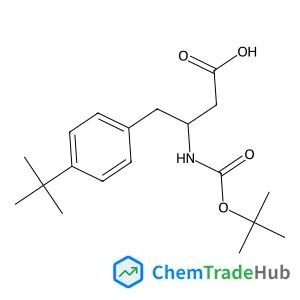
(S)-3-((tert-Butoxycarbonyl)amino)-4-(4-(tert-butyl)phenyl)butanoic acid
CAS番号:
403661-85-8
分子式:
C19H29NO4
![(4aR,5S,6R,8aS)-5-[2-(3-Furyl)ethyl]-8a-(hydroxymethyl)-5,6-dimethyl-3,4,4a,5,6,7,8,8a-octahydro-1-naphthalenecarboxylic acid structure](https://static.chemtradehub.com/structs/184/18411-75-1-d4cd.webp "(4aR,5S,6R,8aS)-5-[2-(3-Furyl)ethyl]-8a-(hydroxymethyl)-5,6-dimethyl-3,4,4a,5,6,7,8,8a-octahydro-1-naphthalenecarboxylic acid structure")
おすすめサプライヤー





免責事項
このページに表示される学術雑誌情報は、参考および研究目的のみを目的としています。当社は雑誌出版社とは提携しておらず、投稿の取り扱いも行っておりません。出版に関するお問い合わせは、各雑誌出版社に直接ご連絡ください。
表示されている情報に誤りがある場合は、support@chemtradehub.com までご連絡ください。迅速に確認し、対応いたします。