












Swelling properties of thermoresponsive/hydrophilic co-networks with functional crosslinked domain structures
文献情報
出版日
2018-01-03
DOI
10.1039/C7PY01793F
インパクトファクター
5.582
著者
Shohei Ida, Hironobu Kitanaka, Tatsuya Ishikawa, Shokyoku Kanaoka, Yoshitsugu Hirokawa
原文を見る
要旨
For the fine control of the thermoresponsive properties of polymer hydrogels, we focused on the monomer and crosslinker sequence in a network. In this paper, we designed novel thermoresponsive/hydrophilic polymer co-networks with functional crosslinked domain (CD) structures such as a thermoresponsive network with hydrophilic CDs (DCDN gel) and a hydrophilic network with thermoresponsive CDs (NCDD gel). The gel synthesis was based on post-polymerization crosslinking of triblock prepolymers with reactive sites in the outer blocks. The obtained gels showed larger, sharper, and more rapid volume transitions in response to temperature change as compared to the corresponding gel with a random monomer/crosslinker sequence as well as a randomly crosslinked polymer co-network with the same composition. In addition, significant differences were observed in the transition temperature and shrinking kinetics between DCDN and NCDD gels with the same composition and a similar network structure, and the swelling behavior was also controlled by the composition of the triblock prepolymers. These results indicated that the domain structure in the network could effectively function and the monomer/crosslinker sequence exerts a strong effect on the swelling behavior of the gels.
関連文献
Engineering the outcome of cofermentation processes by altering the feedstock sugar-to-protein ratio
R. Bevilacqua, M. Mauricio-Iglesias, S. Balboa, J. M. Lema, M. Carballa
2022-05-26
Paper
DOI: 10.1039/D2EW00144F
Facile access to 2-hydroxy-2-substituted indole-3-ones via a copper-catalyzed oxidative cyclization of 2-arylethynylanilines
Weiqiang Sun, Xueli Cui, Jing Qu, Xiaojia Cai, Jinhui Hu, Zhuang Xiong, Suqin Guo, Wen-Hua Chen, Jia-Qiang Wu
2023-05-15
Communication
DOI: 10.1039/D3CC01390A
Potential application of metallacarboranes as an internal reference: an electrochemical comparative study to ferrocene
Jewel Ann Maria Xavier, Clara Viñas, Francesc Teixidor
2022-03-04
Communication
DOI: 10.1039/D2CC00424K
Magnetic properties of charge-transfer complexes based on TEMPO radicals
Paper
DOI: 10.1039/A606293H
Mechanistic study of the complex photooxidation of allyl methyl sulfide (AMS): reaction paths and products of addition under different atmospheric conditions
Alejandro L. Cardona, María B. Blanco, Mariano A. Teruel, Oscar N. Ventura
2023-05-05
Paper
DOI: 10.1039/D3EA00010A
A switchable DNA origami/plasmonic hybrid device with a precisely tuneable DNA-free interparticle gap
Michael Erkelenz, Richard Kosinski, Helene Giesler, Oliver Sritharan, Jesil Jose, Barbara Saccà, Sebastian Schlücker
2022-11-10
Communication
DOI: 10.1039/D2CC05324A
Nanocomposites of bacterial cellulose nanofibers and chitin nanocrystals: fabrication, characterization and bactericidal activity
Núria Butchosa, Christian Brown, Lars A. Berglund, Vincent Bulone
2013-09-17
Paper
DOI: 10.1039/C3GC41700J
Hydrophosphinylation of unactivated alkenes with secondary phosphineoxides under visible-light photocatalysis
Woo-Jin Yoo, Shū Kobayashi
2013-05-01
Communication
DOI: 10.1039/C3GC40482J
Encapsulation of N-containing compounds in a new hydrophilic Cd-based crystalline sponge via coordinative alignment method
Faiza Habib, Derek A. Tocher, Claire J. Carmalt
2023-08-11
Paper
DOI: 10.1039/D3CE00592E
こちらもおすすめ
28770-01-62-(2-Isopropyl-1,3-o...
化合物よくある質問
「邻羟基阿托伐他汀内酯标准品」に適用される法規ガイドelinesは何ですか?
CAS番号163217-74-1の「邻羟基阿托伐他汀内酯标准品」は、GHS分類では危険物に分類されず、主にREACH規則とFDA/EPAの管理対象となります。R...
163217-74-1ortho-Hydroxy Atorva...
化合物よくある質問
メチル(3R)-3-アミノ-2,3-ジヒドロ-1-ベンゾファンラニン-5-カルボイル酸塩塩酸塩の主な用途は何ですか?
メチル(3R)-3-アミノ-2,3-ジヒドロ-1-ベンゾファンラニン-5-カルボイル酸塩塩酸塩は、医薬品や合成化学の研究に広く用いられます。また、特定の薬物の前...
2241594-15-8Methyl (3R)-3-amino-...
化合物よくある質問
トランス-4-メチルピロリジン-3-オール塩酸塩はどのように合成されますか?
トランス-4-メチルピロリジン-3-オール塩酸塩は、4-メチルピロリジンの塩酸塩化によって合成されます。一般的な合成方法では、4-メチルピロリジンを塩酸に加えて...
265108-42-7trans-4-Methylpyrrol...
化合物よくある質問
硫雜環丁烷-1,1-二氧化物は安全ですか?
硫雜環丁烷-1,1-二氧化物は安全ではありません。毒性は報告されていませんが、高温下で分解し、可燃性があるため、高圧ガスは注意が必要です。密閉した容器で保管し、...
5687-92-3Thietane 1,1-dioxide
6054-10-02H, 8H-Benzo[1,2-b
化合物よくある質問
9-ヒドロキシエリプチシネ塩酸塩はどのように合成されますか?
9-ヒドロキシエリプチシネ塩酸塩は、エリプチシネから塩酸を添加することで合成されます。選択性は高いですが、収率は約70%です。
52238-35-49-Hydroxyellipticine...
化合物よくある質問
5-塩素-2-(メチルアミノ)フェニル-(2-塩素フェニル)メタン酮の物理化学的性質は何ですか?
5-塩素-2-(メチルアミノ)フェニル-(2-塩素フェニル)メタン酮のCAS番号は5621-86-3です。この化合物は白色の結晶性粉末で、分子量は415.03で...
5621-86-3[5-Chloro-2-(methyla...
化合物よくある質問
1-[2-(4-甲氧基-苯氧基)-乙基]-哌嗪はどのように保存すればよいですか?
1-[2-(4-甲氧基-苯氧基)-乙基]-哌嗪は、直射日光を避けて暗所に、室温(15-25℃)で保管し、密閉容器に入れることで安定性を保つことができます。
117132-44-21-[2-(4-Methoxy-phen...
化合物よくある質問
2-[3-(4-甲氧基フェニル)プロピル]-4,4,5,5-四メチル-1,3,2-ドイボロロールアンの主な用途は何ですか?
2-[3-(4-甲氧基フェニル)プロピル]-4,4,5,5-四メチル-1,3,2-ドイボロロールアンは、医薬品の合成、有機合成化学、および新材料の研究で使用され...
1073371-72-82-[3-(4-Methoxypheny...
掲載誌
Polymer Chemistry

CiteScore:
8.6
自己引用率:
7.3%
年間論文数:
457
Polymer Chemistry welcomes submissions in all areas of polymer science that have a strong focus on macromolecular chemistry. Manuscripts may cover a broad range of fields, yet no direct application focus is required.
おすすめ化合物
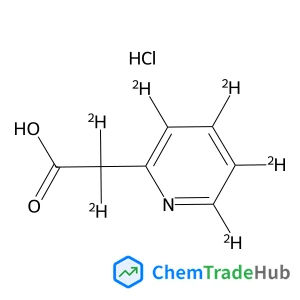
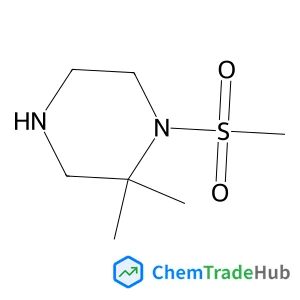
2,2-dideuterio-2-(3,4,5,6-tetradeuterio-2-pyridyl)acetic acid;hydrochloride
CAS番号:
1329799-67-8
分子式:
C7H2ClD6NO2
おすすめサプライヤー






免責事項
このページに表示される学術雑誌情報は、参考および研究目的のみを目的としています。当社は雑誌出版社とは提携しておらず、投稿の取り扱いも行っておりません。出版に関するお問い合わせは、各雑誌出版社に直接ご連絡ください。
表示されている情報に誤りがある場合は、support@chemtradehub.com までご連絡ください。迅速に確認し、対応いたします。