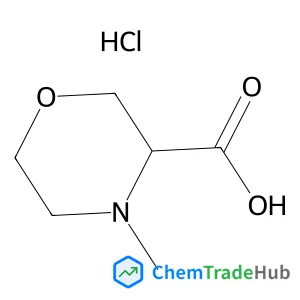
phosphoryl}methyl 4-methylbenzenesulfonate structure](https://static.chemtradehub.com/structs/864/864068-45-1-ba7c.webp "{[3-(Hexadecyloxy)propoxy](hydroxy)phosphoryl}methyl 4-methylbenzenesulfonate structure")
{[3-(Hexadecyloxy)propoxy](hydroxy)phosphoryl}methyl 4-methylbenzenesulfonate
CAS番号:
864068-45-1
分子式:
C27H49O7PS
T. Suzuki, T. Moriya, R. Endo, N. Iwasaki
In a solution of the copolymer, P(EHMA-APMA), consisting of ethylhexyl methacrylate (EHMA) and the photo-responsive azopyridine methacrylate (APMA), the E form of APMA showed photo-reversible isomerization to the Z form upon UV irradiation. After addition of the cobalt(II) Schiff base (CoS), the copolymer complex, P(EHMA-(E)-APMA)-CoS, was produced, and the (E)-APMA moieties coordinated to CoS no longer underwent photo-induced isomerization. The complexation-sensitive isomerization of (E)-APMA had a large extinction coefficient and the apparent equilibrium constant (Kapp) for the coordination reaction of (E)-APMA with CoS in a dilute solution was calculated to be 4.4 × 10⁴ M−1 ([APMA moiety] = 0.05 mM) and 1.0 × 10⁵ M−1 ([APMA moiety] = 0.003 mM) at 25 °C. The resulting concentration-dependent large Kapp values were due mainly to a micro-heterogeneous solution environment, consisting of a micro-suspension with a large solvent phase and a small polymer-domain phase caused by the extreme dilution, in addition to the thermodynamic stabilization of the five-coordinate CoS via the local concentration effect of the coordinating polymeric APMA ligands located only in the polymer domain.

Acta Materialia

Chemical Communications

Current Opinion in Colloid & Interface Science

Nature Medicine

Saudi Pharmaceutical Journal

Current Opinion in Solid State & Materials Science

Chemistry Education Research and Practice

Russian Journal of Bioorganic Chemistry

Journal of Saudi Chemical Society

Organic Process Research & Development
Jinbin Wang, Xiangli Zhong, Xiaoping Ouyang
DOI: 10.1039/D0CP00512F
Xiaofei Wang, Yuanzuo Li, Peng Song, Fengcai Ma, Yanhui Yang
DOI: 10.1039/C9CP06543A
Chuangchuang Wang, Yongpeng Yang, Xiaojing Liu, Yuanjie Li, Dandan Song, Yun Tian, Zhaojun Zhang
DOI: 10.1039/D0CP01005G
Chen-An Chung, Jou Wei Su
DOI: 10.1039/C9CP04168K
Santanu Roy, Lili Wu, Sriram Goverapet Srinivasan, Andrew G. Stack, Alexandra Navrotsky, Vyacheslav S. Bryantsev
DOI: 10.1039/D0CP00087F
Nicolás Rivas, Germán Sciaini, Ernesto Marceca
DOI: 10.1039/C9CP03342D
Mark A. Burton, Benjamin T. Russ, Matthew P. Bucchino, Phillip M. Sheridan, Lucy M. Ziurys
DOI: 10.1039/C9CP03465J
Jo Hsueh Lee, Cheng-Hung Cheng, Bo-Rong Liao, Shi-Hsin Lin
DOI: 10.1039/C9CP06469A
Paula Pla, Yang Wang
DOI: 10.1039/C9CP06977A
CAS番号163217-74-1の「邻羟基阿托伐他汀内酯标准品」は、GHS分類では危険物に分類されず、主にREACH規則とFDA/EPAの管理対象となります。R...
メチル(3R)-3-アミノ-2,3-ジヒドロ-1-ベンゾファンラニン-5-カルボイル酸塩塩酸塩は、医薬品や合成化学の研究に広く用いられます。また、特定の薬物の前...
トランス-4-メチルピロリジン-3-オール塩酸塩は、4-メチルピロリジンの塩酸塩化によって合成されます。一般的な合成方法では、4-メチルピロリジンを塩酸に加えて...
硫雜環丁烷-1,1-二氧化物は安全ではありません。毒性は報告されていませんが、高温下で分解し、可燃性があるため、高圧ガスは注意が必要です。密閉した容器で保管し、...
9-ヒドロキシエリプチシネ塩酸塩は、エリプチシネから塩酸を添加することで合成されます。選択性は高いですが、収率は約70%です。
5-塩素-2-(メチルアミノ)フェニル-(2-塩素フェニル)メタン酮のCAS番号は5621-86-3です。この化合物は白色の結晶性粉末で、分子量は415.03で...
1-[2-(4-甲氧基-苯氧基)-乙基]-哌嗪は、直射日光を避けて暗所に、室温(15-25℃)で保管し、密閉容器に入れることで安定性を保つことができます。
2-[3-(4-甲氧基フェニル)プロピル]-4,4,5,5-四メチル-1,3,2-ドイボロロールアンは、医薬品の合成、有機合成化学、および新材料の研究で使用され...

Polymer Chemistry welcomes submissions in all areas of polymer science that have a strong focus on macromolecular chemistry. Manuscripts may cover a broad range of fields, yet no direct application focus is required.
![N-[2-(4-Hydroxyphenoxy)-4-nitrophenyl]methanesulfonamide structure](https://static.chemtradehub.com/structs/109/109032-22-6-7c88.webp "N-[2-(4-Hydroxyphenoxy)-4-nitrophenyl]methanesulfonamide structure")