


Compression icing of room-temperature NaX solutions (X = F, Cl, Br, I)
文献情報
出版日
2016-04-25
DOI
10.1039/C6CP00648E
インパクトファクター
3.676
著者
Qingxin Zeng, Tingting Yan, Kai Wang, Yinyan Gong, Yong Zhou, Yongli Huang, Chang Q. Sun, Bo Zou
原文を見る
要旨
In situ Raman spectroscopy revealed that transiting H2O/NaX (∼64) solutions into an ice VI phase and then into an ice VII phase at a temperature of 298 K requires excessive pressures with respect to pure water. The increase of the critical pressures varies with the solute type in the Hofmeister series order: X = I > Br > Cl > F ∼ 0. The results suggest that the solute hydration creates electric fields that lengthen and soften the O:H nonbond and meanwhile shorten and stiffen the H–O bond through O–O Coulomb repulsion. Compression, however, does the opposite to solute electrification upon the O:H–O bond relaxation. Therefore, compression of the aqueous solutions recovers the electrification-deformed O:H–O bond first and then proceeds to the phase transitions, which requires excessive energy for the same sequence of phase transitions. Ice exclusion of solute disperses the frequencies of characteristic phonons and the critical pressures with unlikely new bond formation.
おすすめジャーナル

Saudi Pharmaceutical Journal

Journal of Saudi Chemical Society

Current Opinion in Solid State & Materials Science

Acta Materialia

Chemistry Education Research and Practice

Russian Journal of Applied Chemistry

Russian Chemical Bulletin

Russian Journal of Coordination Chemistry

Nature Medicine

Chemical Communications
関連文献
Singlet excitation in the intermediate magnetic equivalence regime and field-dependent study of singlet–triplet leakage
Boris Kharkov, Xueyou Duan, Emily S. Tovar, James W. Canary, Alexej Jerschow
2019-01-10
Paper
DOI: 10.1039/C8CP06883F
Assessing relative humidity dependent photoacoustics to retrieve mass accommodation coefficients of single optically trapped aerosol particles
Matus E. Diveky, Sandra Roy, Johannes W. Cremer, Grégory David, Ruth Signorell
2018-12-13
Paper
DOI: 10.1039/C8CP06980H
Theoretical predication of the high hydrogen evolution catalytic activity for the cubic and tetragonal SnP systems
Jingwei Liu, Guangtao Yu, Ran Zhang, Xuri Huang, Wei Chen
2019-02-08
Paper
DOI: 10.1039/C9CP00618D
Comparison of hydrogen vacancies in KDP and ADP crystals: a combination of density functional theory calculations and experiment
Tingting Sui, Yafei Lian, Mingxia Xu, Lisong Zhang, Yanlu Li, Xian Zhao, Xinguang Xu, Xun Sun
2019-02-22
Paper
DOI: 10.1039/C8CP07685E
How intermolecular interactions influence electronic absorption spectra: insights from the molecular packing of uracil in condensed phases
Fangjia Fu, Kang Liao, Jing Ma, Zheng Cheng, Dong Zheng, Liuzhou Gao, Chungen Liu, Shuhua Li, Wei Li
2019-01-16
Paper
DOI: 10.1039/C8CP06152A
Shape-selective synthesis of nanoceria for degradation of paraoxon as a chemical warfare simulant
Greta Camilla Magnano, Marie Alexandrine Bolzinger, Lucian Roiban, Frédéric Chaput, Isabelle Pitault, Stéphanie Briançon, Thierry Devers, Karine Masenelli-Varlot, Matthieu Bugnet, David Amans
2019-02-15
Paper
DOI: 10.1039/C9CP00179D
Direct conversion of carbon nanofibers into diamond nanofibers using nanosecond pulsed laser annealing
Anagh Bhaumik, Jagdish Narayan
2019-03-04
Paper
DOI: 10.1039/C9CP00063A
Deuterium isotope effect in fluorescence of gaseous oxazine dyes
Matthew Kusinski, Rebecca A. Jockusch
2019-02-21
Paper
DOI: 10.1039/C8CP05731A
Tuning cavitation and crazing in polymer nanocomposite glasses containing bimodal grafted nanoparticles at the nanoparticle/polymer interface
Rui Shi, Hu-Jun Qian, Zhong-Yuan Lu
2019-03-12
Paper
DOI: 10.1039/C9CP00208A
こちらもおすすめ
28770-01-62-(2-Isopropyl-1,3-o...
化合物よくある質問
「邻羟基阿托伐他汀内酯标准品」に適用される法規ガイドelinesは何ですか?
CAS番号163217-74-1の「邻羟基阿托伐他汀内酯标准品」は、GHS分類では危険物に分類されず、主にREACH規則とFDA/EPAの管理対象となります。R...
163217-74-1ortho-Hydroxy Atorva...
化合物よくある質問
メチル(3R)-3-アミノ-2,3-ジヒドロ-1-ベンゾファンラニン-5-カルボイル酸塩塩酸塩の主な用途は何ですか?
メチル(3R)-3-アミノ-2,3-ジヒドロ-1-ベンゾファンラニン-5-カルボイル酸塩塩酸塩は、医薬品や合成化学の研究に広く用いられます。また、特定の薬物の前...
2241594-15-8Methyl (3R)-3-amino-...
化合物よくある質問
トランス-4-メチルピロリジン-3-オール塩酸塩はどのように合成されますか?
トランス-4-メチルピロリジン-3-オール塩酸塩は、4-メチルピロリジンの塩酸塩化によって合成されます。一般的な合成方法では、4-メチルピロリジンを塩酸に加えて...
265108-42-7trans-4-Methylpyrrol...
化合物よくある質問
硫雜環丁烷-1,1-二氧化物は安全ですか?
硫雜環丁烷-1,1-二氧化物は安全ではありません。毒性は報告されていませんが、高温下で分解し、可燃性があるため、高圧ガスは注意が必要です。密閉した容器で保管し、...
5687-92-3Thietane 1,1-dioxide
6054-10-02H, 8H-Benzo[1,2-b
化合物よくある質問
9-ヒドロキシエリプチシネ塩酸塩はどのように合成されますか?
9-ヒドロキシエリプチシネ塩酸塩は、エリプチシネから塩酸を添加することで合成されます。選択性は高いですが、収率は約70%です。
52238-35-49-Hydroxyellipticine...
化合物よくある質問
5-塩素-2-(メチルアミノ)フェニル-(2-塩素フェニル)メタン酮の物理化学的性質は何ですか?
5-塩素-2-(メチルアミノ)フェニル-(2-塩素フェニル)メタン酮のCAS番号は5621-86-3です。この化合物は白色の結晶性粉末で、分子量は415.03で...
5621-86-3[5-Chloro-2-(methyla...
化合物よくある質問
1-[2-(4-甲氧基-苯氧基)-乙基]-哌嗪はどのように保存すればよいですか?
1-[2-(4-甲氧基-苯氧基)-乙基]-哌嗪は、直射日光を避けて暗所に、室温(15-25℃)で保管し、密閉容器に入れることで安定性を保つことができます。
117132-44-21-[2-(4-Methoxy-phen...
化合物よくある質問
2-[3-(4-甲氧基フェニル)プロピル]-4,4,5,5-四メチル-1,3,2-ドイボロロールアンの主な用途は何ですか?
2-[3-(4-甲氧基フェニル)プロピル]-4,4,5,5-四メチル-1,3,2-ドイボロロールアンは、医薬品の合成、有機合成化学、および新材料の研究で使用され...
1073371-72-82-[3-(4-Methoxypheny...
掲載誌
Physical Chemistry Chemical Physics

CiteScore:
5.5
自己引用率:
10.3%
年間論文数:
3036
Physical Chemistry Chemical Physics (PCCP) is an international journal co-owned by 19 physical chemistry and physics societies from around the world. This journal publishes original, cutting-edge research in physical chemistry, chemical physics and biophysical chemistry. To be suitable for publication in PCCP, articles must include significant innovation and/or insight into physical chemistry; this is the most important criterion that reviewers and Editors will judge against when evaluating submissions. The journal has a broad scope and welcomes contributions spanning experiment, theory, computation and data science. Topical coverage includes spectroscopy, dynamics, kinetics, statistical mechanics, thermodynamics, electrochemistry, catalysis, surface science, quantum mechanics, quantum computing and machine learning. Interdisciplinary research areas such as polymers and soft matter, materials, nanoscience, energy, surfaces/interfaces, and biophysical chemistry are welcomed if they demonstrate significant innovation and/or insight into physical chemistry. Joined experimental/theoretical studies are particularly appreciated when complementary and based on up-to-date approaches.
おすすめ化合物
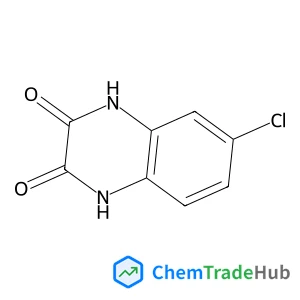

![1-[(4-Methylphenyl)sulfonyl]-3-(4,4,5,5-tetramethyl-1,3,2-dioxaborolan-2-yl)-1H-pyrrolo[2,3-b]pyridine-5-carbonitrile structure](https://static.chemtradehub.com/structs/143/1434747-57-5-fc0d.webp "1-[(4-Methylphenyl)sulfonyl]-3-(4,4,5,5-tetramethyl-1,3,2-dioxaborolan-2-yl)-1H-pyrrolo[2,3-b]pyridine-5-carbonitrile structure")
おすすめサプライヤー




免責事項
このページに表示される学術雑誌情報は、参考および研究目的のみを目的としています。当社は雑誌出版社とは提携しておらず、投稿の取り扱いも行っておりません。出版に関するお問い合わせは、各雑誌出版社に直接ご連絡ください。
表示されている情報に誤りがある場合は、support@chemtradehub.com までご連絡ください。迅速に確認し、対応いたします。