













Study of thiol–ene chemistry on polymer brushes and application to surface patterning and protein adsorption
文献情報
出版日
2015-12-16
DOI
10.1039/C5PY01687H
インパクトファクター
5.582
著者
Khooi Y. Tan, Madeleine Ramstedt, Wilhelm T. S. Huck
原文を見る
要旨
Polymer brushes are attractive polymeric coatings for biomedical applications such as tissue engineering, biosensor design and the purification of biological samples. In order to confer bioactivity to these coatings, their functionalisation with biomolecules, proteins and peptides, is required. In this respect, thiol–ene coupling offers interesting features as it is regioselective, efficient and can be controlled by photo-irradiation to allow surface patterning. The efficiency of thiol–ene and the related thiol–yne couplings to poly(glycidyl methacrylate) brushes was quantified. The impact of the structure of thiols to be tethered and reaction conditions on the brush loading and the kinetics of reaction were investigated. Thiol–ene reactions were then used to pattern brushes via direct irradiation through a mask or via reactive micro-contact printing. The resulting patterns were used to control albumin adsorption and the formation of protein patterns.
関連文献
Spin–orbit coupling as a probe to decipher halogen bonding
Jérôme Graton, Seyfeddine Rahali, Jean-Yves Le Questel, Gilles Montavon, Julien Pilmé, Nicolas Galland
2018-10-08
Paper
DOI: 10.1039/C8CP05690K
Optical properties and charge distribution in rod-shape DNA–silver cluster emitters
Matías Berdakin
2018-08-15
Paper
DOI: 10.1039/C8CP03895C
Oscillations of pH in the urea–urease system in a membrane reactor
František Muzika, Matěj Růžička, Lenka Schreiberová, Igor Schreiber
2019-04-02
Communication
DOI: 10.1039/C9CP00630C
Silicene-supported TiO2 nanostructures: a theoretical study of electronic and optical properties
Yesukhei Jagvaral, Qing Guo, Haiying He, Ravindra Pandey
2019-04-04
Paper
DOI: 10.1039/C9CP00894B
Understanding the influence of disorder on the exciton dynamics and energy transfer in Zn-phthalocyanine H-aggregates
Nicolò Azzaroli, Justin R. Caram, Timothy S. Sinclair, Lorenzo Cupellini, Sandro Jurinovich, Benedetta Mennucci, Gloria Zanotti, Anna Maria Paoletti, Giovanna Pennesi
2018-08-03
Paper
DOI: 10.1039/C8CP02172D
Defect generation in TiO2 nanotube anodes via heat treatment in various atmospheres for lithium-ion batteries
Andreas I. Savva, Kassiopeia A. Smith, Matthew Lawson, Sterling R. Croft, Ariel E. Weltner, Chris D. Jones, Hailey Bull, Paul J. Simmonds, Lan Li, Hui Xiong
2018-08-16
Paper
DOI: 10.1039/C8CP04368J
Effects of double-atom vacancies on the electronic properties of graphyne: a DFT investigation
Si Wu, Yuan Yuan, Hongqi Ai, Baotao Kang
2018-08-10
Paper
DOI: 10.1039/C8CP03359E
Strain controlled electronic and transport anisotropies in two-dimensional borophene sheets
Vivekanand Shukla, Anton Grigoriev, Naresh K. Jena
2018-08-14
Paper
DOI: 10.1039/C8CP03815E
Factors governing when a metal-bound water is deprotonated in proteins
Cédric Grauffel
2018-11-05
Paper
DOI: 10.1039/C8CP04776F
X-ray emission spectroscopy: an effective route to extract site occupation of cations
Anuj Bhargava, Cindy Y. Chen, Kenneth D. Finkelstein, Richard D. Robinson
2018-09-17
Paper
DOI: 10.1039/C8CP04628J
こちらもおすすめ
28770-01-62-(2-Isopropyl-1,3-o...
化合物よくある質問
「邻羟基阿托伐他汀内酯标准品」に適用される法規ガイドelinesは何ですか?
CAS番号163217-74-1の「邻羟基阿托伐他汀内酯标准品」は、GHS分類では危険物に分類されず、主にREACH規則とFDA/EPAの管理対象となります。R...
163217-74-1ortho-Hydroxy Atorva...
化合物よくある質問
メチル(3R)-3-アミノ-2,3-ジヒドロ-1-ベンゾファンラニン-5-カルボイル酸塩塩酸塩の主な用途は何ですか?
メチル(3R)-3-アミノ-2,3-ジヒドロ-1-ベンゾファンラニン-5-カルボイル酸塩塩酸塩は、医薬品や合成化学の研究に広く用いられます。また、特定の薬物の前...
2241594-15-8Methyl (3R)-3-amino-...
化合物よくある質問
トランス-4-メチルピロリジン-3-オール塩酸塩はどのように合成されますか?
トランス-4-メチルピロリジン-3-オール塩酸塩は、4-メチルピロリジンの塩酸塩化によって合成されます。一般的な合成方法では、4-メチルピロリジンを塩酸に加えて...
265108-42-7trans-4-Methylpyrrol...
化合物よくある質問
硫雜環丁烷-1,1-二氧化物は安全ですか?
硫雜環丁烷-1,1-二氧化物は安全ではありません。毒性は報告されていませんが、高温下で分解し、可燃性があるため、高圧ガスは注意が必要です。密閉した容器で保管し、...
5687-92-3Thietane 1,1-dioxide
6054-10-02H, 8H-Benzo[1,2-b
化合物よくある質問
9-ヒドロキシエリプチシネ塩酸塩はどのように合成されますか?
9-ヒドロキシエリプチシネ塩酸塩は、エリプチシネから塩酸を添加することで合成されます。選択性は高いですが、収率は約70%です。
52238-35-49-Hydroxyellipticine...
化合物よくある質問
5-塩素-2-(メチルアミノ)フェニル-(2-塩素フェニル)メタン酮の物理化学的性質は何ですか?
5-塩素-2-(メチルアミノ)フェニル-(2-塩素フェニル)メタン酮のCAS番号は5621-86-3です。この化合物は白色の結晶性粉末で、分子量は415.03で...
5621-86-3[5-Chloro-2-(methyla...
化合物よくある質問
1-[2-(4-甲氧基-苯氧基)-乙基]-哌嗪はどのように保存すればよいですか?
1-[2-(4-甲氧基-苯氧基)-乙基]-哌嗪は、直射日光を避けて暗所に、室温(15-25℃)で保管し、密閉容器に入れることで安定性を保つことができます。
117132-44-21-[2-(4-Methoxy-phen...
化合物よくある質問
2-[3-(4-甲氧基フェニル)プロピル]-4,4,5,5-四メチル-1,3,2-ドイボロロールアンの主な用途は何ですか?
2-[3-(4-甲氧基フェニル)プロピル]-4,4,5,5-四メチル-1,3,2-ドイボロロールアンは、医薬品の合成、有機合成化学、および新材料の研究で使用され...
1073371-72-82-[3-(4-Methoxypheny...
掲載誌
Polymer Chemistry

CiteScore:
8.6
自己引用率:
7.3%
年間論文数:
457
Polymer Chemistry welcomes submissions in all areas of polymer science that have a strong focus on macromolecular chemistry. Manuscripts may cover a broad range of fields, yet no direct application focus is required.
おすすめ化合物
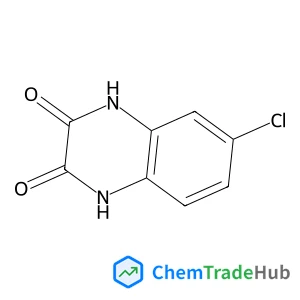
![N-[2-(4-Hydroxyphenoxy)-4-nitrophenyl]methanesulfonamide structure](https://static.chemtradehub.com/structs/109/109032-22-6-7c88.webp "N-[2-(4-Hydroxyphenoxy)-4-nitrophenyl]methanesulfonamide structure")
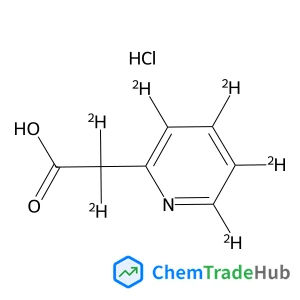
2,2-dideuterio-2-(3,4,5,6-tetradeuterio-2-pyridyl)acetic acid;hydrochloride
CAS番号:
1329799-67-8
分子式:
C7H2ClD6NO2

おすすめサプライヤー




免責事項
このページに表示される学術雑誌情報は、参考および研究目的のみを目的としています。当社は雑誌出版社とは提携しておらず、投稿の取り扱いも行っておりません。出版に関するお問い合わせは、各雑誌出版社に直接ご連絡ください。
表示されている情報に誤りがある場合は、support@chemtradehub.com までご連絡ください。迅速に確認し、対応いたします。