


Synthesis of poly(ethylene glycol)-b-poly(N-(2-hydroxypropyl) methacrylamide) block copolymers with well-defined structures and their influence on in vivo circulation and biodistribution
文献情報
出版日
2014-05-30
DOI
10.1039/C4PY00681J
インパクトファクター
5.582
著者
Chengyan Dong, Jiajing Zhang, Jiyun Shi, Bing Jia, Fan Wang
原文を見る
要旨
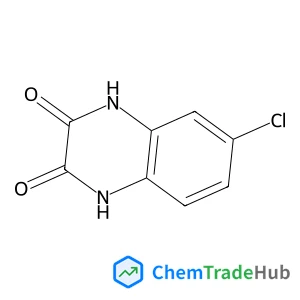
Well-defined water-soluble block copolymers poly(ethylene glycol)-b-poly(N-(2-hydroxypropyl) methacrylamide-co-N-methacryloylglycylglycine) (PEG-b-P(HPMA-co-MAGG)) with different compositions and narrow polydispersity were synthesized by reversible addition–fragmentation chain transfer (RAFT) polymerization. The in vivo blood clearance and biodistribution of copolymers with different compositions were studied in normal BALB/c mice. The results showed that the electronegative copolymers were rapidly eliminated from blood and tended to accumulate in the liver and spleen. However, the copolymers with neutral or a small amount of negative charges showed a prolonged circulation time and low non-specific organ uptake. Combined with the quantitative analysis of in vitro hepatocyte uptake, we conclude that this was due to the balance between (i) the electrostatic repulsion between the copolymer and the cell membrane and (ii) the tendency of macrophage-like cells to capture the negative charged copolymers. This work also revealed the significant roles of the PEG chain length, negative charge and molecular weight for the copolymers as anticancer drug carriers with prolonged circulation time and optimal biodistribution.
おすすめジャーナル

Russian Chemical Bulletin

Current Opinion in Colloid & Interface Science

New Journal of Chemistry

Chemistry Education Research and Practice

Russian Journal of Applied Chemistry

Crystallography Reports

Drug Discovery Today

Saudi Pharmaceutical Journal

Journal of Saudi Chemical Society

Organic Process Research & Development
関連文献
Revealing the thermodynamics of individual catalytic steps based on temperature-dependent single-particle nanocatalysis
Tao Chen
2019-09-24
Paper
DOI: 10.1039/C9CP04538D
On the linear geometry of lanthanide hydroxide (Ln-OH, Ln = La–Lu)
Hassan Harb, Lee M. Thompson, Hrant P. Hratchian
2019-09-20
Paper
DOI: 10.1039/C9CP01560D
Simulation guided design of silver nanostructures for plasmon-enhanced fluorescence, singlet oxygen generation and SERS applications
2020-02-07
Paper
DOI: 10.1039/C9CP06029D
Cu/SAPO-34 prepared by a facile ball milling method for enhanced catalytic performance in the selective catalytic reduction of NOx with NH3
Huazhen Chang, Xuan Qin, Lei Ma, Tao Zhang, Junhua Li
2019-09-24
Paper
DOI: 10.1039/C9CP04519H
Tailoring the structural and electronic properties of an SnSe2/MoS2 van der Waals heterostructure with an electric field and the insertion of a graphene sheet
Nguyen V. Hieu, Le T. P. Thao, Nguyen N. Hieu, Huynh V. Phuc, H. D. Bui, M. Idrees, B. Amin, Le M. Duc, Chuong V. Nguyen
2019-09-24
Paper
DOI: 10.1039/C9CP04689E
Formation of resonances and anionic fragments upon electron attachment to benzaldehyde
E. Arthur-Baidoo, J. Pereira-da-Silva, M. Ryszka, I. Carmichael, L. M. Cornetta, M. T. do N. Varella, F. Ferreira da Silva, S. Denifl
2020-03-16
Paper
DOI: 10.1039/D0CP00029A
Carbon sp chains in diamond nanocavities
Francesco Delodovici, Daniel S. Choi, Mohamed Al Fahim, Larry A. Burchfield, Nicola Manini
2019-09-18
Paper
DOI: 10.1039/C9CP03978C
Magnon-driven interfacial magnetoelectric coupling in Co/PMN-PT multiferroic heterostructures
Changjun Jiang
2019-09-03
Paper
DOI: 10.1039/C9CP04169A
Lanthanide-induced conformational change of methanol dehydrogenase involving coordination change of cofactor pyrroloquinoline quinone
2019-09-04
Paper
DOI: 10.1039/C9CP03953H
Unveiling the efficiency of microwave-assisted hydrothermal treatment for the preparation of SrTiO3 mesocrystals
Luís F. da Silva, Ariadne C. Catto, Waldir Avansi, Jr, Alexandre Mesquita, Lauro J. Q. Maia, Osmando F. Lopes, Máximo Siu Li, Mário L. Moreira, Elson Longo, Juan Andrés, Valmor R. Mastelaro
2019-09-16
Paper
DOI: 10.1039/C9CP02893E
こちらもおすすめ
28770-01-62-(2-Isopropyl-1,3-o...
化合物よくある質問
「邻羟基阿托伐他汀内酯标准品」に適用される法規ガイドelinesは何ですか?
CAS番号163217-74-1の「邻羟基阿托伐他汀内酯标准品」は、GHS分類では危険物に分類されず、主にREACH規則とFDA/EPAの管理対象となります。R...
163217-74-1ortho-Hydroxy Atorva...
化合物よくある質問
メチル(3R)-3-アミノ-2,3-ジヒドロ-1-ベンゾファンラニン-5-カルボイル酸塩塩酸塩の主な用途は何ですか?
メチル(3R)-3-アミノ-2,3-ジヒドロ-1-ベンゾファンラニン-5-カルボイル酸塩塩酸塩は、医薬品や合成化学の研究に広く用いられます。また、特定の薬物の前...
2241594-15-8Methyl (3R)-3-amino-...
化合物よくある質問
トランス-4-メチルピロリジン-3-オール塩酸塩はどのように合成されますか?
トランス-4-メチルピロリジン-3-オール塩酸塩は、4-メチルピロリジンの塩酸塩化によって合成されます。一般的な合成方法では、4-メチルピロリジンを塩酸に加えて...
265108-42-7trans-4-Methylpyrrol...
化合物よくある質問
硫雜環丁烷-1,1-二氧化物は安全ですか?
硫雜環丁烷-1,1-二氧化物は安全ではありません。毒性は報告されていませんが、高温下で分解し、可燃性があるため、高圧ガスは注意が必要です。密閉した容器で保管し、...
5687-92-3Thietane 1,1-dioxide
6054-10-02H, 8H-Benzo[1,2-b
化合物よくある質問
9-ヒドロキシエリプチシネ塩酸塩はどのように合成されますか?
9-ヒドロキシエリプチシネ塩酸塩は、エリプチシネから塩酸を添加することで合成されます。選択性は高いですが、収率は約70%です。
52238-35-49-Hydroxyellipticine...
化合物よくある質問
5-塩素-2-(メチルアミノ)フェニル-(2-塩素フェニル)メタン酮の物理化学的性質は何ですか?
5-塩素-2-(メチルアミノ)フェニル-(2-塩素フェニル)メタン酮のCAS番号は5621-86-3です。この化合物は白色の結晶性粉末で、分子量は415.03で...
5621-86-3[5-Chloro-2-(methyla...
化合物よくある質問
1-[2-(4-甲氧基-苯氧基)-乙基]-哌嗪はどのように保存すればよいですか?
1-[2-(4-甲氧基-苯氧基)-乙基]-哌嗪は、直射日光を避けて暗所に、室温(15-25℃)で保管し、密閉容器に入れることで安定性を保つことができます。
117132-44-21-[2-(4-Methoxy-phen...
化合物よくある質問
2-[3-(4-甲氧基フェニル)プロピル]-4,4,5,5-四メチル-1,3,2-ドイボロロールアンの主な用途は何ですか?
2-[3-(4-甲氧基フェニル)プロピル]-4,4,5,5-四メチル-1,3,2-ドイボロロールアンは、医薬品の合成、有機合成化学、および新材料の研究で使用され...
1073371-72-82-[3-(4-Methoxypheny...
掲載誌
Polymer Chemistry

CiteScore:
8.6
自己引用率:
7.3%
年間論文数:
457
Polymer Chemistry welcomes submissions in all areas of polymer science that have a strong focus on macromolecular chemistry. Manuscripts may cover a broad range of fields, yet no direct application focus is required.
おすすめ化合物
おすすめサプライヤー





免責事項
このページに表示される学術雑誌情報は、参考および研究目的のみを目的としています。当社は雑誌出版社とは提携しておらず、投稿の取り扱いも行っておりません。出版に関するお問い合わせは、各雑誌出版社に直接ご連絡ください。
表示されている情報に誤りがある場合は、support@chemtradehub.com までご連絡ください。迅速に確認し、対応いたします。