











Formation of electro-conductive titanium oxide fine particles by pulsed UV laser irradiation
文献情報
出版日
2010-06-08
DOI
10.1039/B923218D
インパクトファクター
3.676
著者
Tsutomu Ioroi, Hiroyuki Kageyama, Tomoki Akita, Kazuaki Yasuda
原文を見る
要旨
Nano-submicron particles of sub-stoichiometric titanium oxide (TiOx) were synthesized by irradiation of TiO2 particles dispersed in liquid with a Nd:YAG pulsed UV laser, and their physicochemical and electrochemical properties were examined. After laser irradiation for 1 h, spherical oxide particles of up to ca. 300 nm in diameter were formed regardless of the liquid used, however the reduction of TiO2 largely depended on the liquid: acetonitrile most strongly promoted the reduction of TiO2 by UV laser irradiation. The mean valence of titanium in TiOx synthesized in acetonitrile was ca. 3.5, which is comparable to that of the most-reduced Magnéli phase, Ti4O7. While the electrical conductivity of as-washed TiOx was significantly low, annealing at 900 °C in hydrogen dramatically improved conductivity. The oxidation resistance of TiOx was examined by cyclic voltammetry to a high potential (1.5 V) using a MEA under PEMFC operating conditions. TiOx showed a much lower anodic corrosion current at >1.0 V than XC-72R carbon, which suggests that TiOx may exhibit superior oxidation resistance as a catalyst support material at high potentials.
おすすめジャーナル
関連文献
An isothermal electrochemical biosensor for the sensitive detection of microRNA based on a catalytic hairpin assembly and supersandwich amplification
Hua Zhang, Qing Wang, Xiaohai Yang, Kemin Wang, Qing Li, Zhiping Li, Lei Gao, Wenyan Nie, Yan Zheng
2016-12-12
Paper
DOI: 10.1039/C6AN02390H
Analytical methods based on the light-scattering of plasmonic nanoparticles at the single particle level with dark-field microscopy imaging
Tian Li, Xi Wu, Feng Liu, Na Li
2016-11-21
Minireview
DOI: 10.1039/C6AN02384C
The use of a quartz crystal microbalance as an analytical tool to monitor particle/surface and particle/particle interactions under dry ambient and pressurized conditions: a study using common inhaler components
M. Bloxham, I. Chianella
2016-11-24
Paper
DOI: 10.1039/C6AN01572G
Bottom-up proteomics analysis of the secretome of murine islets of Langerhans in elevated glucose levels
Andrew Schmudlach, Jeremy Felton, Robert T. Kennedy, Norman J. Dovichi
2016-12-05
Paper
DOI: 10.1039/C6AN02268E
A review: the trend of progress about pH probes in cell application in recent years
Yongkang Yue, Fangjun Huo, Songyi Lee, Caixia Yin, Juyoung Yoon
2016-10-04
Tutorial Review
DOI: 10.1039/C6AN01942K
PCR free multiple ligase reactions and probe cleavages for the SNP detection of KRAS mutation with attomole sensitivity
2016-10-19
Communication
DOI: 10.1039/C6AN00909C
Uncertainty budgeting in fold change determination and implications for non-targeted metabolomics studies in model systems
Verena Charwat, Cornelia Kasper, Stephan Hann, Gunda Koellensperger
2016-09-30
Paper
DOI: 10.1039/C6AN01342B
こちらもおすすめ
化合物よくある質問
4-アミノフェノール酸ナトリウム水和物とは何ですか?
4-アミノフェノール酸ナトリウム水和物は、CAS番号206557-08-6の化合物で、4-アミノフェノールとナトリウムが結合した塩と水和物です。この化合物は、白...
206557-08-64-Aminobenzoic acid ...
化合物よくある質問
Methyl 3-methyl-N-{[(2-methyl-2-propanyl)oxy]carbonyl}-L-histidinateの代替品はありますか?
この化合物は特定の合成プロセスに使用される可能性がありますが、代替品として、他の类似的な化合物、例えばMethyl 3-methyl-N-{[(2-methyl...
72212-51-2Methyl 3-methyl-N-{[...
化合物よくある質問
4-Boc-2-哌嗪甲酸の市場動向や研究トレンドはどうですか?
4-Boc-2-哌嗪甲酸は、薬品開発や合成化学分野で広く使用されており、その需要は継続的に推移しています。特に、新薬開発における合成化学分野での需要が高まってい...
192330-11-3(2R)-4-[(tert-butoxy...
化合物よくある質問
4,4'-二羟甲基联苯の物理化学的性質は何ですか?
4,4'-二羟甲基联苯のCAS番号は1667-12-5です。この化合物は白色の結晶粉末で、分子量は154.20です。水にわずかに溶けますが、アルコールや有機溶媒...
1667-12-54,4'-Biphenyldiyldim...
化合物よくある質問
5-甲硫基戊腈はどの業界で使用されていますか?
5-甲硫基戊腈は医薬品産業で使用される可能性があります。また、ポリマー合成の触媒として、センサー製造の一部として、半導体製造のプロセス改善に使用される可能性があ...
59121-25-45-(Methylsulfanyl)pe...
化合物よくある質問
CAS番号1311961-50-8の化合物はどのように合成されますか?
この化合物は、1-abieta-8,11,13-trien-19-イルと6'-メトキシシンコナナン-9-基を含有する窒素含有化合物から合成されます。一般的な合成...
1311961-50-81-Abieta-8,11,13-tri...
化合物よくある質問
6-ブロモベンジジミダゾール-2-カルビルデオキシドはどのように保存すればよいですか?
6-ブロモベンジジミダゾール-2-カルビルデオキシドは、避光・乾燥した容器(密閉容器)で-20℃~4℃の低温で保存してください。高温や直射日光、湿気は避けてくだ...
885280-26-25-Bromo-1H-benzimida...
化合物よくある質問
Boc-N-甲基氨甲环酸とは何ですか?
621-65-8のCAS番号を持つBoc-N-甲基氨甲环酸は、化学式C7H13NO5を有する化合物です。この化合物は白色の結晶性粉末で、吸湿性があります。
621-65-83-Hydroxy-1,2-propan...
化合物よくある質問
乙基三氟硼酸钾はどのように合成されますか?
乙基三氟硼酸钾は、トリフLUオール酸カリウムとエチルブロミドを反応させて合成されます。この反応は高い選択性と収率を持ち、触媒を用いることで効率的に進行します。
882871-21-8Potassium ethyltrifl...
化合物よくある質問
2-フロウロ-5-クロロ-4-アミノフェノールはどのように保存すればよいですか?
2-フロウロ-5-クロロ-4-アミノフェノールは、直射日光を避けて冷却された暗所で保存し、密閉容器に保管してください。温度は常温か低温が適しています。
847872-10-04-Amino-5-chloro-2-f...
掲載誌
Physical Chemistry Chemical Physics

CiteScore:
5.5
自己引用率:
10.3%
年間論文数:
3036
Physical Chemistry Chemical Physics (PCCP) is an international journal co-owned by 19 physical chemistry and physics societies from around the world. This journal publishes original, cutting-edge research in physical chemistry, chemical physics and biophysical chemistry. To be suitable for publication in PCCP, articles must include significant innovation and/or insight into physical chemistry; this is the most important criterion that reviewers and Editors will judge against when evaluating submissions. The journal has a broad scope and welcomes contributions spanning experiment, theory, computation and data science. Topical coverage includes spectroscopy, dynamics, kinetics, statistical mechanics, thermodynamics, electrochemistry, catalysis, surface science, quantum mechanics, quantum computing and machine learning. Interdisciplinary research areas such as polymers and soft matter, materials, nanoscience, energy, surfaces/interfaces, and biophysical chemistry are welcomed if they demonstrate significant innovation and/or insight into physical chemistry. Joined experimental/theoretical studies are particularly appreciated when complementary and based on up-to-date approaches.
おすすめ化合物
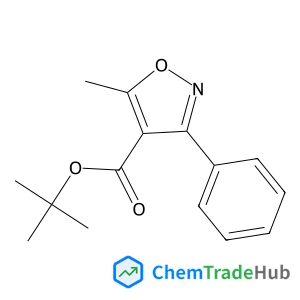
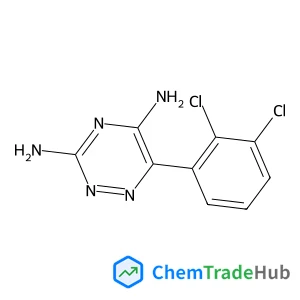
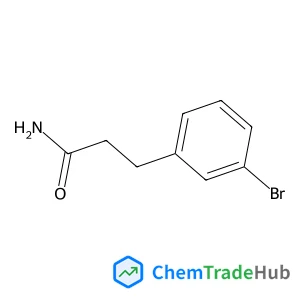
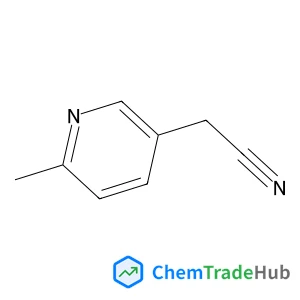
おすすめサプライヤー






免責事項
このページに表示される学術雑誌情報は、参考および研究目的のみを目的としています。当社は雑誌出版社とは提携しておらず、投稿の取り扱いも行っておりません。出版に関するお問い合わせは、各雑誌出版社に直接ご連絡ください。
表示されている情報に誤りがある場合は、support@chemtradehub.com までご連絡ください。迅速に確認し、対応いたします。