












Dimerization of ion radicals in ionic liquids. An example of favourable “Coulombic” solvation
文献情報
出版日
2010-06-02
DOI
10.1039/B920552G
インパクトファクター
3.676
著者
原文を見る
要旨
The irreversible dimerization of the acetophenone radical anion, chosen as an example of a carbon–carbon coupling reaction between two charged species, was investigated in a series of 1,3-dialkylimidazolium and 1,2,3-trialkylimidazolium ionic liquids. Indeed, such ion dimerizations which display slow kinetics despite small activation energies, are controlled by a subtle competition between bond formation, Coulombic repulsion and solvation. The effects of viscosity, “polarity” and ionic solvation on the reactivity of the radical anions were examined. The dimerization rate constants were demonstrated to be only weakly affected by the high viscosity of the medium or its apparent polarity. When the acetophenone radical anion is “solvated” in imidazolium-based ionic liquids, a strong interaction between the negatively-charged intermediates and the imidazolium cation occurs. The ensuing charge stabilization allows a fast dimerization step in all the ionic liquids used. The kinetic effect is even enhanced in the 1,3-dialkylimidazolium salts as compared to the 1,2,3-trialkylimidazolium ones because the interaction between the radical anions and the 1,3-dialkylimidazolium cations are stronger, probably due to the formation of H-bond. The reactivity of the ion radical is demonstrated not only to be mainly dominated by electrostatic interactions, but also that the nature of the ionic liquid cations with respect to that of the ion radical is a major factor that affects the reaction kinetics.
おすすめジャーナル
関連文献
Ground and excited electronic structure analysis of XM4 (X = N, P and M = Li, Na) and their anions
2021-06-30
Paper
DOI: 10.1039/D1CP02273C
The growth of a large GdPO4 crystal guided by theoretical simulation and the study of its phonon properties
Xinghong Gong, Yujin Chen, Jianhua Huang, Yanfu Lin, Zundu Luo, Shuiquan Deng, Yidong Huang
2021-09-16
Paper
DOI: 10.1039/D1CP02977K
Kinetic and thermodynamic stability comparison for the fibrillar form of small amyloid-β(1–42) oligomers using scaled molecular dynamics
Debasis Saha, Biman Jana
2021-07-06
Paper
DOI: 10.1039/D1CP01866C
Enhanced strain-induced magnetoelectric coupling in polarization-free Fe/BaTiO3 heterostructures
Carlos O. Amorim, João S. Amaral, Vítor S. Amaral
2021-07-01
Paper
DOI: 10.1039/D1CP00885D
Aggregation-induced negative differential resistance in graphene oxide quantum dots
Sonia Sharma, Chieh-An Cheng, Svette Reina Merden Santiago, Denice N. Feria, Chi-Tsu Yuan, Sheng-Hsiung Chang, Tai-Yuan Lin, Ji-Lin Shen
2021-08-01
Paper
DOI: 10.1039/D1CP01529J
Active Brownian particle in homogeneous media of different viscosities: numerical simulations
E. A. Lisin, O. S. Vaulina, I. I. Lisina, O. F. Petrov
2021-07-26
Paper
DOI: 10.1039/D1CP02511B
Chiral recognition via a stereodynamic vanadium probe using the electronic circular dichroism effect in differential Raman scattering
Davide Carraro, Giulia Licini, Petr Bouř, Cristiano Zonta
2021-09-21
Paper
DOI: 10.1039/D1CP03020E
Regression and clustering algorithms for AgCu nanoalloys: from mixing energy predictions to structure recognition
Cesare Roncaglia, Daniele Rapetti, Riccardo Ferrando
2021-10-11
Paper
DOI: 10.1039/D1CP02143E
Enhanced photocatalytic activity, transport properties and electronic structure of Mn doped GdFeO3 synthesized using the sol–gel process
Ritwik Maity, Alo Dutta, Saswata Halder, Santiranjan Shannigrahi, Kalyan Mandal, T. P. Sinha
2021-07-22
Paper
DOI: 10.1039/D1CP00621E
Assessing nickel oxide electrocatalysts incorporating diamines and having improved oxygen evolution activity using operando UV/visible and X-ray absorption spectroscopy
Takafumi Miura, Shun Tsunekawa, Sho Onishi, Toshiaki Ina, Kehsuan Wang, Genta Watanabe, Chechia Hu, Hiroshi Kondoh, Takeshi Kawai
2021-10-11
Paper
DOI: 10.1039/D1CP03323A
こちらもおすすめ
化合物よくある質問
4-アミノフェノール酸ナトリウム水和物とは何ですか?
4-アミノフェノール酸ナトリウム水和物は、CAS番号206557-08-6の化合物で、4-アミノフェノールとナトリウムが結合した塩と水和物です。この化合物は、白...
206557-08-64-Aminobenzoic acid ...
化合物よくある質問
Methyl 3-methyl-N-{[(2-methyl-2-propanyl)oxy]carbonyl}-L-histidinateの代替品はありますか?
この化合物は特定の合成プロセスに使用される可能性がありますが、代替品として、他の类似的な化合物、例えばMethyl 3-methyl-N-{[(2-methyl...
72212-51-2Methyl 3-methyl-N-{[...
化合物よくある質問
4-Boc-2-哌嗪甲酸の市場動向や研究トレンドはどうですか?
4-Boc-2-哌嗪甲酸は、薬品開発や合成化学分野で広く使用されており、その需要は継続的に推移しています。特に、新薬開発における合成化学分野での需要が高まってい...
192330-11-3(2R)-4-[(tert-butoxy...
化合物よくある質問
4,4'-二羟甲基联苯の物理化学的性質は何ですか?
4,4'-二羟甲基联苯のCAS番号は1667-12-5です。この化合物は白色の結晶粉末で、分子量は154.20です。水にわずかに溶けますが、アルコールや有機溶媒...
1667-12-54,4'-Biphenyldiyldim...
化合物よくある質問
5-甲硫基戊腈はどの業界で使用されていますか?
5-甲硫基戊腈は医薬品産業で使用される可能性があります。また、ポリマー合成の触媒として、センサー製造の一部として、半導体製造のプロセス改善に使用される可能性があ...
59121-25-45-(Methylsulfanyl)pe...
化合物よくある質問
CAS番号1311961-50-8の化合物はどのように合成されますか?
この化合物は、1-abieta-8,11,13-trien-19-イルと6'-メトキシシンコナナン-9-基を含有する窒素含有化合物から合成されます。一般的な合成...
1311961-50-81-Abieta-8,11,13-tri...
化合物よくある質問
6-ブロモベンジジミダゾール-2-カルビルデオキシドはどのように保存すればよいですか?
6-ブロモベンジジミダゾール-2-カルビルデオキシドは、避光・乾燥した容器(密閉容器)で-20℃~4℃の低温で保存してください。高温や直射日光、湿気は避けてくだ...
885280-26-25-Bromo-1H-benzimida...
化合物よくある質問
Boc-N-甲基氨甲环酸とは何ですか?
621-65-8のCAS番号を持つBoc-N-甲基氨甲环酸は、化学式C7H13NO5を有する化合物です。この化合物は白色の結晶性粉末で、吸湿性があります。
621-65-83-Hydroxy-1,2-propan...
化合物よくある質問
乙基三氟硼酸钾はどのように合成されますか?
乙基三氟硼酸钾は、トリフLUオール酸カリウムとエチルブロミドを反応させて合成されます。この反応は高い選択性と収率を持ち、触媒を用いることで効率的に進行します。
882871-21-8Potassium ethyltrifl...
化合物よくある質問
2-フロウロ-5-クロロ-4-アミノフェノールはどのように保存すればよいですか?
2-フロウロ-5-クロロ-4-アミノフェノールは、直射日光を避けて冷却された暗所で保存し、密閉容器に保管してください。温度は常温か低温が適しています。
847872-10-04-Amino-5-chloro-2-f...
掲載誌
Physical Chemistry Chemical Physics

CiteScore:
5.5
自己引用率:
10.3%
年間論文数:
3036
Physical Chemistry Chemical Physics (PCCP) is an international journal co-owned by 19 physical chemistry and physics societies from around the world. This journal publishes original, cutting-edge research in physical chemistry, chemical physics and biophysical chemistry. To be suitable for publication in PCCP, articles must include significant innovation and/or insight into physical chemistry; this is the most important criterion that reviewers and Editors will judge against when evaluating submissions. The journal has a broad scope and welcomes contributions spanning experiment, theory, computation and data science. Topical coverage includes spectroscopy, dynamics, kinetics, statistical mechanics, thermodynamics, electrochemistry, catalysis, surface science, quantum mechanics, quantum computing and machine learning. Interdisciplinary research areas such as polymers and soft matter, materials, nanoscience, energy, surfaces/interfaces, and biophysical chemistry are welcomed if they demonstrate significant innovation and/or insight into physical chemistry. Joined experimental/theoretical studies are particularly appreciated when complementary and based on up-to-date approaches.
おすすめ化合物
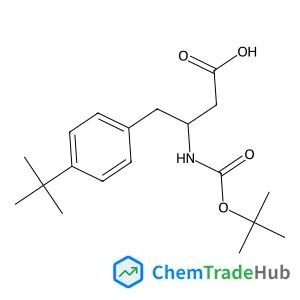
(S)-3-((tert-Butoxycarbonyl)amino)-4-(4-(tert-butyl)phenyl)butanoic acid
CAS番号:
403661-85-8
分子式:
C19H29NO4
![Imidazo[1,2-c]pyrimidine structure](https://static.chemtradehub.com/structs/274/274-78-2-8b4c.webp "Imidazo[1,2-c]pyrimidine structure")
おすすめサプライヤー





免責事項
このページに表示される学術雑誌情報は、参考および研究目的のみを目的としています。当社は雑誌出版社とは提携しておらず、投稿の取り扱いも行っておりません。出版に関するお問い合わせは、各雑誌出版社に直接ご連絡ください。
表示されている情報に誤りがある場合は、support@chemtradehub.com までご連絡ください。迅速に確認し、対応いたします。