











Optical and electrical characterization of a conducting polypyrrole composite prepared by insitu electropolymerization
文献情報
出版日
DOI
10.1039/A808632J
インパクトファクター
3.676
著者
原文を見る
要旨
A study of the optical and electrical properties of a conducting polypyrrole–polyoxyphenylene composite, PPy–POP, prepared by insitu electropolymerization is presented. Electropolymerization was performed potentiostatically in a solution of pH 9 which contained the monomers pyrrole, allylphenol and sodium 4-hydroxybenzenesulfonate (4HBS), by applying a potential of 1.25 V vs. SCE. The films obtained were characterized optically by UV/VIS and IR spectroscopy and electrically by measurements of the temperature dependence of the ac and dc conductivity. FTIR measurements indicated that the polymer blend obtained consists of PPy and the insulating polymer poly-2-allyloxyphenylene (POP), whereas the third monomer, 4HBS, is incorporated into the PPy–POP film as dopant for the conducting PPy. Furthermore, optical characterizations show a light degree of overoxidation of PPy in the PPy–POP composite. In the UV/VIS spectra, the formation of both polaron and bipolaron electronic states of the band structure of PPy can be seen, but the IR spectra demonstrate the transition of the PPy structure from a conducting quinoid to benzoid type with increasing polymerization potential. This is accompanied by the introduction of a carbonyl group into the PPy backbone and a reduction of the conjugation length of the polymer chain, which has a strong influence on the conductivity of the polymer composite. Despite this overoxidation process, the PPy–POP film retains a conductive character which allows the growth of thick films. The temperature dependence of the ac and dc conductivity of PPy–POP was investigated. The total ac conductivity, σtot(ω), in the frequency range 102–105 Hz, changes by approximately four orders of magnitude in the range from 77 to 300 K, showing a sub-linear dispersive behavior. The temperature dependence of the dc conductivity of such a polymer composite can be described by Mott's variable range hopping (VRH) model according to σ=σ0 exp[-(T0/T)γ], with γ=1/2
おすすめジャーナル
関連文献
Perfect spin filtering and large spin thermoelectric effects in organic transition-metal molecular junctions
X. F. Yang, Y. S. Liu, X. Zhang, L. P. Zhou, X. F. Wang, F. Chi, J. F. Feng
2014-04-15
Paper
DOI: 10.1039/C4CP00390J
Ternary Pt/SnOx/TiO2 photocatalysts for hydrogen production: consequence of Pt sites for synergy of dual co-catalysts
Quan Gu, Jinlin Long, Huaqiang Zhuang, Chaoqiang Zhang, Yangen Zhou, Xuxu Wang
2014-05-08
Paper
DOI: 10.1039/C4CP01496K
Effect of ozone exposure on the electrical characteristics of high-purity, large-diameter semiconducting carbon nanotubes
Jia Gao, Yueh-Lin Loo
2014-04-08
Paper
DOI: 10.1039/C4CP00665H
Effect of amide bonds on the self-assembly of gemini surfactants
Jiaul Hoque, Spandhana Gonuguntla, Venkateswarlu Yarlagadda, Vinod K. Aswal, Jayanta Haldar
2014-04-09
Paper
DOI: 10.1039/C3CP55244F
Dinuclear manganese complexes for water oxidation: evaluation of electronic effects and catalytic activity
Wael A. A. Arafa, Markus D. Kärkäs, Bao-Lin Lee, Torbjörn Åkermark, Rong-Zhen Liao, Hans-Martin Berends, Johannes Messinger, Per E. M. Siegbahn, Björn Åkermark
2014-01-27
Paper
DOI: 10.1039/C3CP54800G
Carbon dioxide interaction with isolated imidazole or attached on gold clusters and surface: competition between σ H-bond and π stacking interaction
Muthuramalingam Prakash, Kévin Mathivon, David M. Benoit, Gilberte Chambaud, Majdi Hochlaf
2014-05-07
Paper
DOI: 10.1039/C4CP01292E
Solvation dependence of valence electronic states of water diluted in organic solvents probed by soft X-ray spectroscopy
Takashi Tokushima, Yuka Horikawa, Osamu Takahashi, Koichiro Sadakane
2014-04-03
Paper
DOI: 10.1039/C4CP00762J
Confined H2O molecules as local probes of pressure-induced amorphisation in faujasite
Frederico Alabarse, Claire Levelut, Aude Isambert, Philippe Hébert, Shinji Kohara, David Maurin, Jean-Louis Bantignies, Olivier Cambon, Gaëlle Creff, Pascale Roy, Jean-Blaise Brubach, Tahar Hammouda, Denis Andrault, Julien Haines
2014-04-28
Paper
DOI: 10.1039/C4CP00186A
Effect of chromophore encapsulation on linear and nonlinear optical properties: the case of “miniSOG”, a protein-encased flavin
Nanna H. List, Frederico M. Pimenta, Lotte Holmegaard, Rasmus L. Jensen, Michael Etzerodt, Tobias Schwabe, Jacob Kongsted, Peter R. Ogilby, Ove Christiansen
2014-01-07
Paper
DOI: 10.1039/C3CP54470B
Clusters in the adsorbates of vapours and gases: Zeta isotherm approach
Seyed Hadi Zandavi, Charles A. Ward
2014-04-17
Paper
DOI: 10.1039/C4CP00843J
こちらもおすすめ
化合物よくある質問
4-アミノフェノール酸ナトリウム水和物とは何ですか?
4-アミノフェノール酸ナトリウム水和物は、CAS番号206557-08-6の化合物で、4-アミノフェノールとナトリウムが結合した塩と水和物です。この化合物は、白...
206557-08-64-Aminobenzoic acid ...
化合物よくある質問
Methyl 3-methyl-N-{[(2-methyl-2-propanyl)oxy]carbonyl}-L-histidinateの代替品はありますか?
この化合物は特定の合成プロセスに使用される可能性がありますが、代替品として、他の类似的な化合物、例えばMethyl 3-methyl-N-{[(2-methyl...
72212-51-2Methyl 3-methyl-N-{[...
化合物よくある質問
4-Boc-2-哌嗪甲酸の市場動向や研究トレンドはどうですか?
4-Boc-2-哌嗪甲酸は、薬品開発や合成化学分野で広く使用されており、その需要は継続的に推移しています。特に、新薬開発における合成化学分野での需要が高まってい...
192330-11-3(2R)-4-[(tert-butoxy...
化合物よくある質問
4,4'-二羟甲基联苯の物理化学的性質は何ですか?
4,4'-二羟甲基联苯のCAS番号は1667-12-5です。この化合物は白色の結晶粉末で、分子量は154.20です。水にわずかに溶けますが、アルコールや有機溶媒...
1667-12-54,4'-Biphenyldiyldim...
化合物よくある質問
5-甲硫基戊腈はどの業界で使用されていますか?
5-甲硫基戊腈は医薬品産業で使用される可能性があります。また、ポリマー合成の触媒として、センサー製造の一部として、半導体製造のプロセス改善に使用される可能性があ...
59121-25-45-(Methylsulfanyl)pe...
化合物よくある質問
CAS番号1311961-50-8の化合物はどのように合成されますか?
この化合物は、1-abieta-8,11,13-trien-19-イルと6'-メトキシシンコナナン-9-基を含有する窒素含有化合物から合成されます。一般的な合成...
1311961-50-81-Abieta-8,11,13-tri...
化合物よくある質問
6-ブロモベンジジミダゾール-2-カルビルデオキシドはどのように保存すればよいですか?
6-ブロモベンジジミダゾール-2-カルビルデオキシドは、避光・乾燥した容器(密閉容器)で-20℃~4℃の低温で保存してください。高温や直射日光、湿気は避けてくだ...
885280-26-25-Bromo-1H-benzimida...
化合物よくある質問
Boc-N-甲基氨甲环酸とは何ですか?
621-65-8のCAS番号を持つBoc-N-甲基氨甲环酸は、化学式C7H13NO5を有する化合物です。この化合物は白色の結晶性粉末で、吸湿性があります。
621-65-83-Hydroxy-1,2-propan...
化合物よくある質問
乙基三氟硼酸钾はどのように合成されますか?
乙基三氟硼酸钾は、トリフLUオール酸カリウムとエチルブロミドを反応させて合成されます。この反応は高い選択性と収率を持ち、触媒を用いることで効率的に進行します。
882871-21-8Potassium ethyltrifl...
化合物よくある質問
2-フロウロ-5-クロロ-4-アミノフェノールはどのように保存すればよいですか?
2-フロウロ-5-クロロ-4-アミノフェノールは、直射日光を避けて冷却された暗所で保存し、密閉容器に保管してください。温度は常温か低温が適しています。
847872-10-04-Amino-5-chloro-2-f...
掲載誌
Physical Chemistry Chemical Physics

CiteScore:
5.5
自己引用率:
10.3%
年間論文数:
3036
Physical Chemistry Chemical Physics (PCCP) is an international journal co-owned by 19 physical chemistry and physics societies from around the world. This journal publishes original, cutting-edge research in physical chemistry, chemical physics and biophysical chemistry. To be suitable for publication in PCCP, articles must include significant innovation and/or insight into physical chemistry; this is the most important criterion that reviewers and Editors will judge against when evaluating submissions. The journal has a broad scope and welcomes contributions spanning experiment, theory, computation and data science. Topical coverage includes spectroscopy, dynamics, kinetics, statistical mechanics, thermodynamics, electrochemistry, catalysis, surface science, quantum mechanics, quantum computing and machine learning. Interdisciplinary research areas such as polymers and soft matter, materials, nanoscience, energy, surfaces/interfaces, and biophysical chemistry are welcomed if they demonstrate significant innovation and/or insight into physical chemistry. Joined experimental/theoretical studies are particularly appreciated when complementary and based on up-to-date approaches.
おすすめ化合物
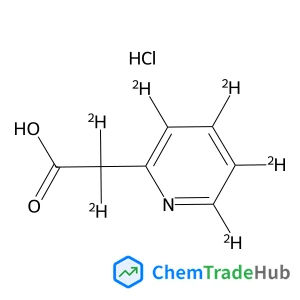
2,2-dideuterio-2-(3,4,5,6-tetradeuterio-2-pyridyl)acetic acid;hydrochloride
CAS番号:
1329799-67-8
分子式:
C7H2ClD6NO2
phosphoryl}methyl 4-methylbenzenesulfonate structure](https://static.chemtradehub.com/structs/864/864068-45-1-ba7c.webp "{[3-(Hexadecyloxy)propoxy](hydroxy)phosphoryl}methyl 4-methylbenzenesulfonate structure")
{[3-(Hexadecyloxy)propoxy](hydroxy)phosphoryl}methyl 4-methylbenzenesulfonate
CAS番号:
864068-45-1
分子式:
C27H49O7PS
![(2E)-3-(3-Chlorophenyl)-N-{2-[4-(methylsulfonyl)-1-piperazinyl]-2-oxoethyl}acrylamide structure](https://static.chemtradehub.com/structs/250/2505001-54-5-c1e9.webp "(2E)-3-(3-Chlorophenyl)-N-{2-[4-(methylsulfonyl)-1-piperazinyl]-2-oxoethyl}acrylamide structure")
(2E)-3-(3-Chlorophenyl)-N-{2-[4-(methylsulfonyl)-1-piperazinyl]-2-oxoethyl}acrylamide
CAS番号:
2505001-54-5
分子式:
C16H20ClN3O4S
おすすめサプライヤー






免責事項
このページに表示される学術雑誌情報は、参考および研究目的のみを目的としています。当社は雑誌出版社とは提携しておらず、投稿の取り扱いも行っておりません。出版に関するお問い合わせは、各雑誌出版社に直接ご連絡ください。
表示されている情報に誤りがある場合は、support@chemtradehub.com までご連絡ください。迅速に確認し、対応いたします。